


Your body’s organs don’t work in isolation. They depend on each other to keep you healthy. Among the most important partnerships is the heart and kidney connection. According to Junichi Ishigami, MD, PhD, assistant scientist in the department of epidemiology at Johns Hopkins Bloomberg School of Public Health, “Our study highlights the importance of protecting kidney health among individuals with cardiovascular disease, particularly heart failure.” These two organs constantly communicate to regulate blood pressure, fluid balance, and overall health.
When one is not functioning properly, the other often feels the impact. At Rural Health Network, Inc., we believe that understanding the link between heart and kidney health can help you take early steps to prevent complications and maintain long-term wellness. This is especially true for communities where access to regular care may be limited.
How the Heart and Kidneys Work Together
Your heart pumps oxygen-rich blood throughout your body, including your kidneys. The kidneys act like a sophisticated filter system. They remove waste, regulate fluid balance, control blood pressure, and maintain the levels of important minerals. These two organs are in constant communication. However, the presence of kidney lesions correlates with a risk for heart disease in patients who have chronic kidney disease, according to data published in JAMA Cardiology.
The kidneys help control blood pressure by managing fluid levels and releasing hormones. Simultaneously, the heart ensures that the kidneys receive sufficient blood to perform their functions. The heart and kidney connection is a beautiful, delicate partnership that keeps your whole body running smoothly.
What Happens When One Organ Is Not Healthy
The kidney and heart are so interdependent that when one organ fails, the other often fails as well. This is a condition medical professionals sometimes refer to as cardiorenal syndrome.
Heart Problems Can Affect the Kidneys
When the heart is unable to pump blood efficiently, it is a condition known as heart failure. The kidneys do not receive the oxygenated blood they need to function. In an attempt to help the heart, the kidneys may hold onto salt and water to increase blood volume. This extra fluid, however, puts even more strain on the heart, creating a dangerous cycle that can lead to permanent kidney damage. This is a primary example of how heart health affects the kidneys.
Kidney Problems Can Affect the Heart
Conversely, the heart is deeply impacted by the state of the kidneys. When kidneys are damaged, they cannot properly filter waste or regulate fluids. This leads to a buildup of toxins and fluid in the bloodstream, which increases blood pressure. High blood pressure is the leading cause of heart attacks and strokes. This illustrates how the kidneys affect the heart; the heart simply cannot maintain its rhythm and strength if the blood it pumps is full of waste and excess fluid.
Shared Risk Factors
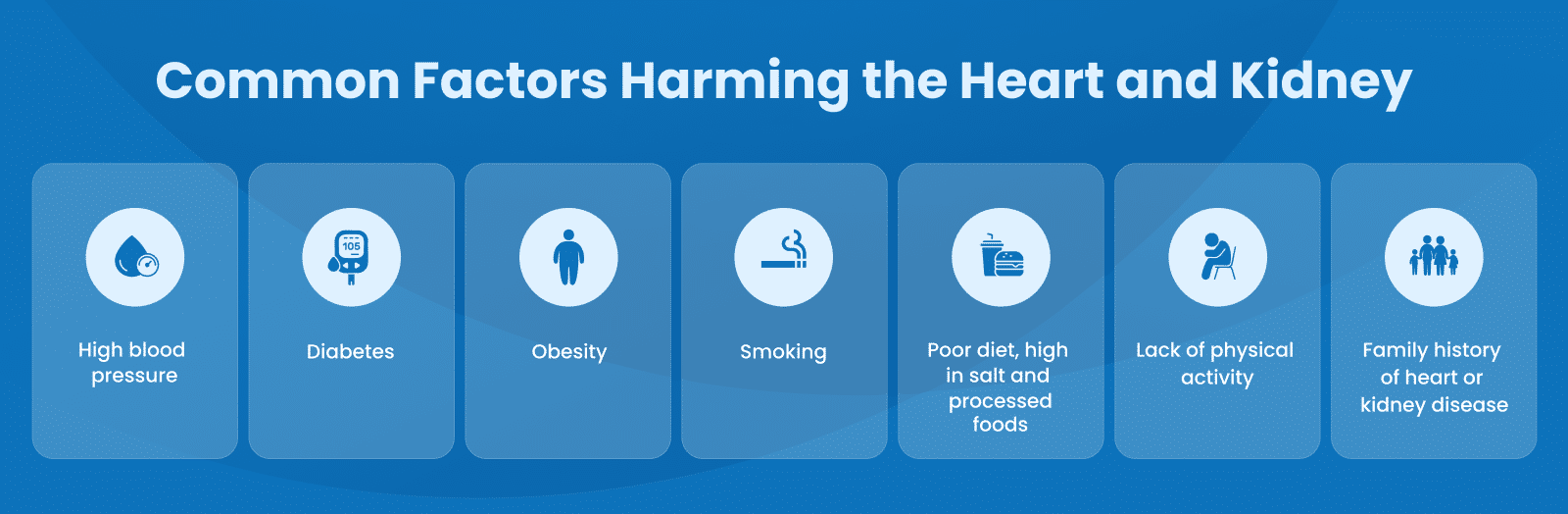
Many factors that harm heart and kidney health. The most common include:
- High blood pressure
- Diabetes
- Obesity
- Smoking
- Poor diet, high in salt and processed foods
- Lack of physical activity
- Family history of heart or kidney disease
In rural communities, these risk factors can be more challenging to manage due to limited access to healthy food options, fewer exercise facilities, and longer travel distances for medical care.
Warning Signs
The “silent” nature of these conditions makes them so dangerous. Often, symptoms do not appear until significant damage has occurred. Watch out for these warning signs:
- Swelling (Edema): Specifically in the ankles, feet, or legs, indicating fluid buildup.
- Shortness of Breath: Even during light activity or while lying down.
- Fatigue: Feeling unusually tired because waste products are building up in your blood.
- Changes in Urination: Going more or less often than usual, or seeing foamy urine.
- High Blood Pressure: That becomes difficult to control even with medication.
Steps to Protect Your Heart and Kidney Health
The good news is that many protective steps benefit both organs:
- Keep blood pressure and blood sugar under control
- Eat a heart-healthy, kidney-friendly diet (more fruits, vegetables, lean proteins, and less salt)
- Stay physically active, even walking helps
- Maintain a healthy weight
- Quit smoking and limit alcohol
- Take medications exactly as prescribed
- Stay hydrated, but follow your doctor’s guidance if you have kidney concerns
Small, consistent changes can have a powerful impact on your heart and kidney health. Here’s why regular health check-ups are essential.
Importance of Regular Screenings
These organs work “behind the scenes.” You cannot rely on how you feel to judge their health. Regular screenings are the only way to catch early signs of trouble. This is why you shouldn’t skip your annual physical exam. Simple blood and urine tests can tell your doctor how well your filters are working and if your heart is under stress long before you feel a symptom.
Supporting Health in Rural Communities
Living in a rural area can sometimes make it feel difficult to access specialized care. However, rural healthcare and regular health check-ups are essential to prevent the progression of chronic diseases. At Rural Health Network, we offer chronic care management to help our patients navigate the complexities of multi-organ health. We coordinate among your various needs to ensure that treatment for one organ isn’t inadvertently harming the other.
Final Thoughts
The heart-kidney connection is one of the most important relationships in your body. When one organ is affected, the other often follows. By understanding how kidneys affect the heart and how heart health affects kidneys, you can take proactive steps to protect both. Simple lifestyle changes, regular screenings, and ongoing care can go a long way in maintaining long-term wellness. Taking action today can help prevent serious complications tomorrow.