


Think of your annual physical as routine maintenance for your body. It is like checking the oil in your truck or inspecting your fence lines. You don’t wait for the engine to seize before you look under the hood. The same logic applies to your health.
Your annual physical exam is one of the smartest investments you can make in your health. It’s not just a quick check-up; it’s also your chance to catch small issues before they become big problems. At Rural Health Network, we believe preventive care should be simple, accessible, and tailored to where you are in life. Whether you’re in your 20s or your 70s, here’s what you can expect during your yearly physical exam and why staying consistent matters, especially in rural communities.
What Stays the Same at Every Annual Physical Examination
No matter your age, a good annual physical test includes:
- Review of your medical history and current concerns
- Vital signs check (blood pressure, heart rate, temperature)
- Basic physical examination
- Discussion about lifestyle, diet, exercise, and mental health
- Updated vaccinations and preventive screenings
This consistent foundation helps your provider track changes over time and build a complete picture of your health.
How Your Screenings Change as You Age
While the baseline exam remains familiar, the specific tests and preventative screenings your doctor orders will shift over time. Understanding how annual physical changes with age ensures you are always receiving the right care at the exact right moment.
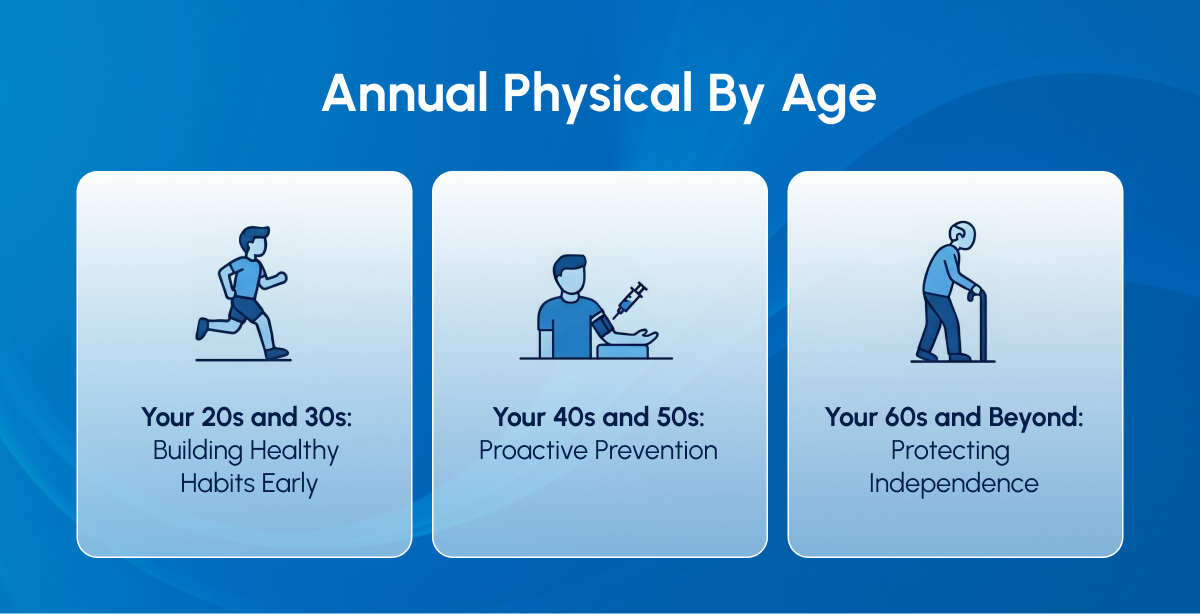
Your 20s and 30s: Building Healthy Habits Early
Ah, the golden years of feeling invincible. In your 20s and 30s, your annual physical focuses on:
- Baseline health tracking
- Vaccinations
- Mental health check-ins
- Lifestyle habits (hello, late nights and takeout)
This is where preventive care by age really begins. You might feel fine, but conditions like high blood pressure or early diabetes don’t always send warning texts. At Rural Health Network, routine check-ups help you:
- Build a health history
- Catch early warning signs
- Create personalized wellness plans
Think of it as setting your health GPS before the road gets complicated.
Your 40s and 50s: Proactive Prevention
These are critical decades. Chronic conditions often begin to show up, and early detection makes all the difference. In your 40s, you can expect a more aggressive screening at your annual physical exam. The key screenings include:
- Blood pressure (annually)
- Cholesterol (every 3-5 years, or more often if elevated)
- Diabetes screening (every 3 years starting at 45)
- Colorectal cancer screening (starting at 45)
- Skin exam annually
- Lung cancer screening (if smoking history)
- Women need to get a mammogram (every 1-2 years starting at 40), bone density screening (starting at 50 or earlier with risk factors)
- Men need to get a prostate discussion (starting at 50, or earlier for high-risk groups)
After the examinations, you can expect your provider to spend more time reviewing family history and discussing risk reduction. This is also when chronic condition management may begin if issues such as high blood pressure or elevated cholesterol arise.
Your 60s and Beyond: Protecting Independence
An annual physical for seniors is all about maintaining your independence, protecting your mobility, and enjoying your golden years with fewer medical complications. This includes-
- Bone & Sensory Health: Screenings shift to include bone density scans (DEXA searches) to evaluate for osteoporosis and prevent debilitating hip or spine fractures. Regular vision, hearing, and cognitive checks also become a standard part of your comprehensive wellness plans.
- Expanded Vaccinations:Your doctor will introduce age-appropriate vaccination programs designed to protect you from severe, preventable diseases, including shingles, pneumonia, and RSV.
- Safety & Fall Prevention: Exams frequently include balance assessments, home safety discussions, and screening for abdominal aortic aneurysms in specific risk groups.
How the Conversation With Your Doctor Evolves Over Time
In your 20s and 30s, conversations often center on prevention and family planning. By your 40s and 50s, the focus shifts to early detection of chronic conditions. In your 60s and beyond, discussions emphasize maintaining quality of life and managing multiple conditions effectively.
At Rural Health Network, we tailor these conversations to your individual needs and the realities of rural life.
How Chronic Condition Management Grows With Age
The reality is that chronic conditions don’t develop overnight; they build over time. These conditions include:
- High blood pressure
- Type 2 diabetes
- High cholesterol
These conditions often start silently. However, the regular yearly physical exam helps to:
- Detect these early
- Monitor progression
- Adjust treatment plans
With Rural Health Network’s chronic care management, you get ongoing monitoring, medication support, and lifestyle coaching. All of this together is not just about living longer but better.
Why Staying Consistent With Your Annual Physical Matters
Consistency is power. A single checkup catches what’s wrong today. But yearly physical exam consistency catches what’s trending in the wrong direction. Consider high blood pressure. One slightly elevated reading might be stress or a bad night’s sleep. But three years of creeping numbers tell a different story, and give you and your provider a chance to intervene before it becomes heart disease.
The same applies to weight, blood sugar, cholesterol, and mental health. Trends matter more than single snapshots.
Getting Age-Appropriate Care in Rural Communities
Right here in our rural town, staying healthy comes with unique challenges:
- Fewer local providers mean less room for “I’ll go later.”
- Long drives and transportation barriers make emergencies harder to handle.
- Chronic conditions are more common in rural areas.
- Preventive care reduces ER visits when local facilities are limited
At Rural Health Network, we make healthcare tell a different story. It is-
- Affordable: Sliding-scale fees and financial assistance available
- Convenient: Extended hours and telehealth options
- Connected: Coordinated care across all specialties
- Personal: The same caring team at every visit
No one will be denied access to services due to an inability to pay.
Final Thoughts: Your Health Isn’t a One-Time Project
Your health story is a lifelong journey, and your annual physical exam checklist by age is the best tool you have to keep that story a happy one. Taking just an hour out of your busy schedule today is an investment that protects your tomorrow. Don’t wait for a quiet health issue to turn into a medical emergency. Take control of your health journey and give yourself and your loved ones the ultimate gift of a healthier future. Contact the dedicated team at Rural Health Network to book your personalized wellness exam today.