

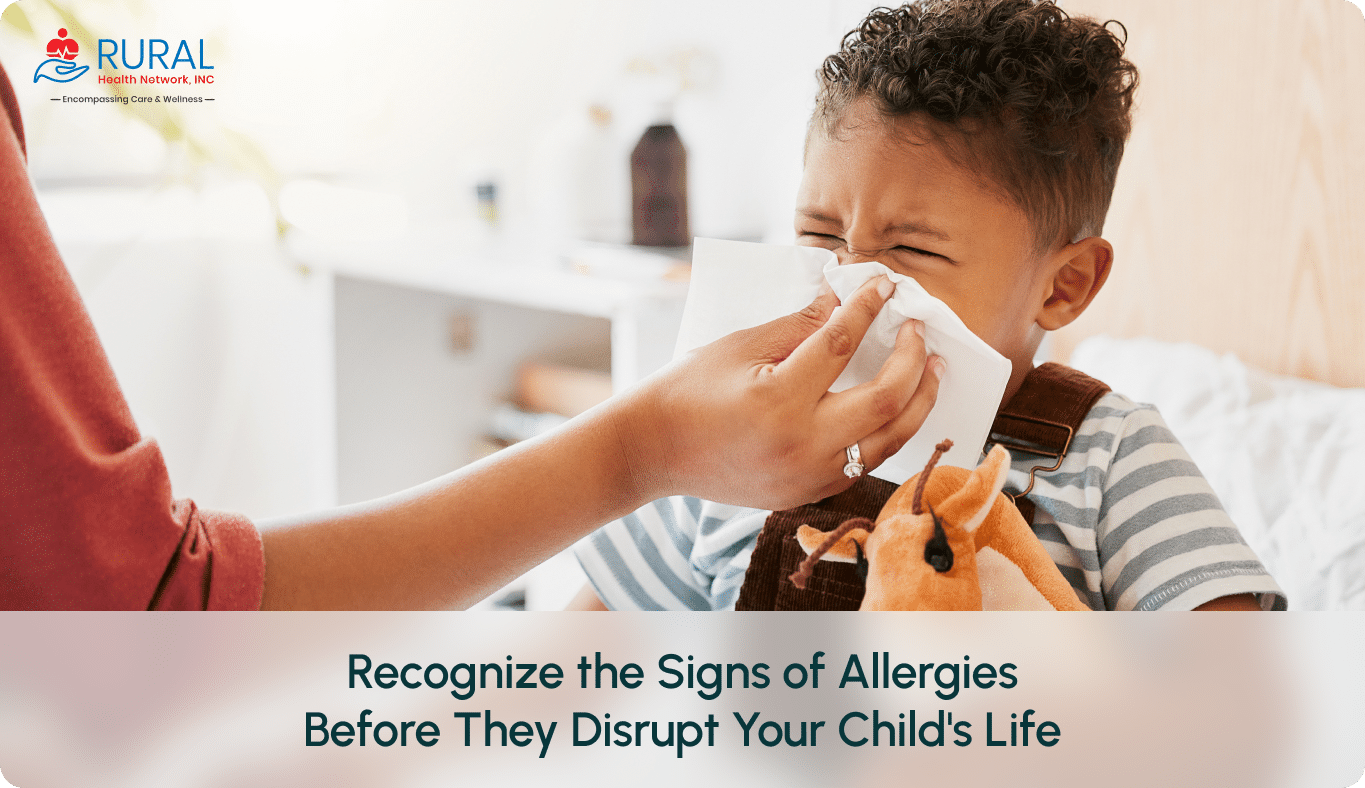
It often starts with something small. A sneeze here, a little itch there. At first, it seems harmless, just another passing annoyance in a child’s busy day. But over time, those small signs can grow into something that disrupts play, sleep, and even school. For parents and caregivers, especially in rural communities, these moments often bring a flood of questions.
Allergies in children can appear in many ways—sometimes subtle, sometimes as sudden allergic reaction symptoms, like swelling, hives, or breathing difficulties. They can be frustrating, worrying, and unpredictable, but they’re also manageable when you know what to look for and how to respond.
That’s why Rural Health Network is here. In this blog, we’ll walk you through the telltale signs of allergies, share tips for handling them at home, and help you recognize the moments when it’s time to call the pediatrician.
Start Your Child’s Allergy Action Plan
What Are Childhood Allergies?
Childhood allergies occur when a child’s immune system mistakenly identifies a harmless substance as a threat and reacts to it. These substances, known as allergens, can include foods, pollen, dust mites, pet dander, insect stings, medications, and mold.
When exposed to an allergen, the body releases chemicals such as histamine, which can trigger allergy symptoms ranging from mild sneezing and itching to severe allergic reactions that require emergency care.
Understanding childhood allergies and recognizing symptoms early can help parents take the right steps to protect their children’s health and prevent complications.
Understanding Common Childhood Allergies
Recognizing the types of childhood allergies, understanding how they affect your child, and knowing why early management matters can make all the difference in helping them feel their best.
Common Allergies Among Kids
Allergies can appear in many forms, and some children may even experience more than one type. The most common include:
- Food allergies – Peanuts, tree nuts, milk, eggs, soy, wheat, fish, and shellfish.
- Environmental allergies – Triggered by dust mites, pollen, mold, and pet dander.
- Insect sting allergies – Reactions to bees, wasps, or fire ants.
- Skin allergies (eczema/atopic dermatitis) – Causing dry, itchy, inflamed skin.
- Seasonal allergies – Often flare up in the spring or fall due to pollen.
Recognizing Allergy Symptoms in Children
Allergy symptoms can range from mild to severe, and knowing what to look for helps you respond quickly and appropriately.
Mild or common allergy symptoms include:
- Sneezing, runny nose, or congestion
- Itchy, watery eyes
- Mild skin rashes or eczema flare-ups
Severe allergy symptoms to watch out for:
- Swelling of the lips, tongue, or face
- Trouble breathing or wheezing
- Severe allergy hives or vomiting immediately after allergen exposure
Common Causes of Allergies in Children
Children can develop allergies at any age, and symptoms may vary depending on the trigger. Some of the most common causes of childhood allergies include:
Food Allergies
Food allergies are among the most common allergies in children. Common triggers include:
- Peanuts
- Tree nuts
- Milk
- Eggs
- Soy
- Wheat
- Fish
- Shellfish
Seasonal Allergies
Seasonal allergies occur when children react to pollen from trees, grasses, and weeds. Symptoms often worsen during spring, summer, and fall.
Pet Allergies
Proteins found in pet dander, saliva, and urine can trigger allergic reactions in sensitive children.
Dust Mite Allergies
Dust mites are tiny organisms that live in bedding, carpets, upholstered furniture, and stuffed toys.
Mold Allergies
Mold spores thrive in damp environments and may trigger allergy symptoms year-round.
Knowing your child’s allergy triggers can help reduce exposure and improve symptom management.
How Are Childhood Allergies Diagnosed?
If your child experiences recurring allergy symptoms, a pediatrician can help determine the underlying cause. Diagnosing childhood allergies often involves:
Reviewing Medical History
Your child’s healthcare provider will discuss symptoms, family history, environmental exposures, and possible allergy triggers.
Physical Examination
A thorough examination can help identify signs of allergic conditions such as eczema, allergic rhinitis, or asthma.
Allergy Testing
Depending on symptoms, your pediatrician may recommend:
- Skin prick testing
- Blood tests for allergy-specific antibodies
- Food elimination diets under medical supervision
Accurate diagnosis helps create a personalized treatment plan and reduces the risk of future allergic reactions.
When to See a Pediatrician
Recognizing the right time to visit your pediatrician is essential for keeping your child’s allergies under control and avoiding complications.
Schedule a pediatric visit if you notice:
- Common allergy symptoms that won’t go away
- Frequent ear, sinus, or respiratory infections
- Signs of a possible new allergy that hasn’t been diagnosed
Seek urgent care right away if your child has severe allergy symptoms such as difficulty breathing, significant swelling, or sudden vomiting after allergen exposure.
During this appointment, the pediatrician may recommend allergy testing, create or adjust a treatment plan, and, if needed, refer your child to an allergy specialist. This partnership ensures your little one gets personalized, tried-and-tested care.
Childhood Allergies Treatment and Management

After a diagnosis or a severe reaction, your pediatrician may recommend different treatment options to help stabilize your child’s allergies or avoid severe reactions in the future.
Over-the-Counter Relief
For mild symptoms, certain OTC medications can offer quick comfort:
- Pediatric-safe antihistamines help reduce sneezing, itching, and watery eyes.
- Hydrocortisone cream can ease mild skin irritation or rashes and is a common option for allergic rash treatment in children.
Prescription Treatments
When symptoms are more severe or persistent, your child’s doctor may recommend:
- Epinephrine auto-injectors for immediate treatment of severe allergic reactions.
- Nasal corticosteroids to ease inflammation in chronic allergic rhinitis.
- Inhalers for children with allergy-induced asthma to keep airways open.
Allergen Immunotherapy
For long-term relief, allergy shots or sublingual tablets can help the body build tolerance to specific allergens. This treatment requires commitment but can significantly reduce symptoms over time.
Everyday Management of Childhood Allergies
Once your child’s symptoms are addressed, the next step is prevention and daily management. Simple habits woven into your routine can promote consistent, lasting allergy relief.
Allergy-Proofing Your Home
Creating a safe space starts with reducing exposure to triggers. These small steps at home help keep allergies in check:
- Use dust-proof bedding and wash sheets weekly in hot water.
- Vacuum regularly with a HEPA-filter vacuum and avoid heavy carpets if possible.
- Keep windows closed on high pollen days.
- Use a HEPA air purifier in your child’s bedroom.
- Make your home a smoke-free zone to protect your child’s airways.
Meal Planning for Food Allergies
A little preparation can prevent accidental exposure. Find the time to:
- Shop for safe substitutes for common allergens (like oat milk instead of cow’s milk).
- Read labels carefully, even for foods you buy often, since recipes can change.
- Pack allergen-safe lunches so your child has safe options at school or during outings.
Skin Care for Eczema
Daily skin care helps prevent flare-ups. Make sure to:
- Apply moisturizer right after bathing to lock in moisture.
- Choose fragrance-free, hypoallergenic products.
- Avoid clothing or detergents that irritate the skin.
Emergency Allergy Preparedness
Even with the best management, severe reactions can still happen. Preparation ensures fast allergy help when your child needs it most.
Recognizing Anaphylaxis
Anaphylaxis is a life-threatening allergic reaction that can develop within minutes. Watch for:
- Sudden swelling of the lips, tongue, or throat
- Difficulty breathing or wheezing
- Rapid heartbeat
- Dizziness or fainting
Emergency Action Steps
If you suspect anaphylaxis, act immediately:
- Use an epinephrine auto-injector right away. Don’t wait to see if symptoms improve.
- Call emergency services immediately after administering epinephrine.
- Stay with your child and keep them lying down with legs slightly elevated until help arrives, unless breathing is easier in a sitting position.
Creating an Allergy Action Plan
Work with your child’s pediatrician to create a written allergy action plan. Make sure it includes:
- Specific symptoms to watch for
- Clear instructions for when and how to use medications
- Emergency contact numbers
When everyone around your child knows exactly what to do, you can feel confident that they’re protected, whether they’re at home, at school, or on the playground.
Special Considerations for Rural Communities
Living in a rural community can make managing childhood allergies a bit more challenging, but with the right resources, families can get immediate, effective care. Limited access to specialists or emergency facilities means parents must be proactive and prepared.
Here’s how rural families can stay ahead:
- Tap into telehealth for consultations, prescription refills, and follow-ups without long travel times.
- Connect with Rural Health Network, which offers on-site allergy management clinics, wellness exams, and checkups.
- Plan ahead for emergencies by knowing the nearest facility equipped to handle severe allergic reactions.
With these tools, rural families can close gaps and ensure children with allergies receive timely care.
Key Takeaways for Parents
- Childhood allergies can affect the skin, respiratory system, digestive system, or multiple body systems at once.
- Common allergy symptoms include sneezing, itchy eyes, congestion, rashes, and hives.
- Severe allergic reactions may cause swelling, breathing difficulties, dizziness, or anaphylaxis.
- Early diagnosis and treatment can help children manage allergies safely and comfortably.
- Regular pediatric visits help monitor symptoms and identify potential allergy triggers.
- Having an allergy action plan ensures that caregivers know how to respond during emergencies.
Help Your Child Enjoy Allergy-Free Moments
Allergies may feel overwhelming at times, but with the right care and support, managing them becomes second nature. A pediatrician’s guidance is key to making sure your child’s common allergy symptoms are properly addressed and that they get the treatment they need to thrive.
For families in rural areas, staying connected with trusted providers like Rural Health Network can make all the difference. Regular checkups and open communication with your care team help your child stay safe and equipped to overcome severe reactions. With proper management, children with allergies can continue to grow, explore, and enjoy life to the fullest.
Let Your Child Breathe Easier