

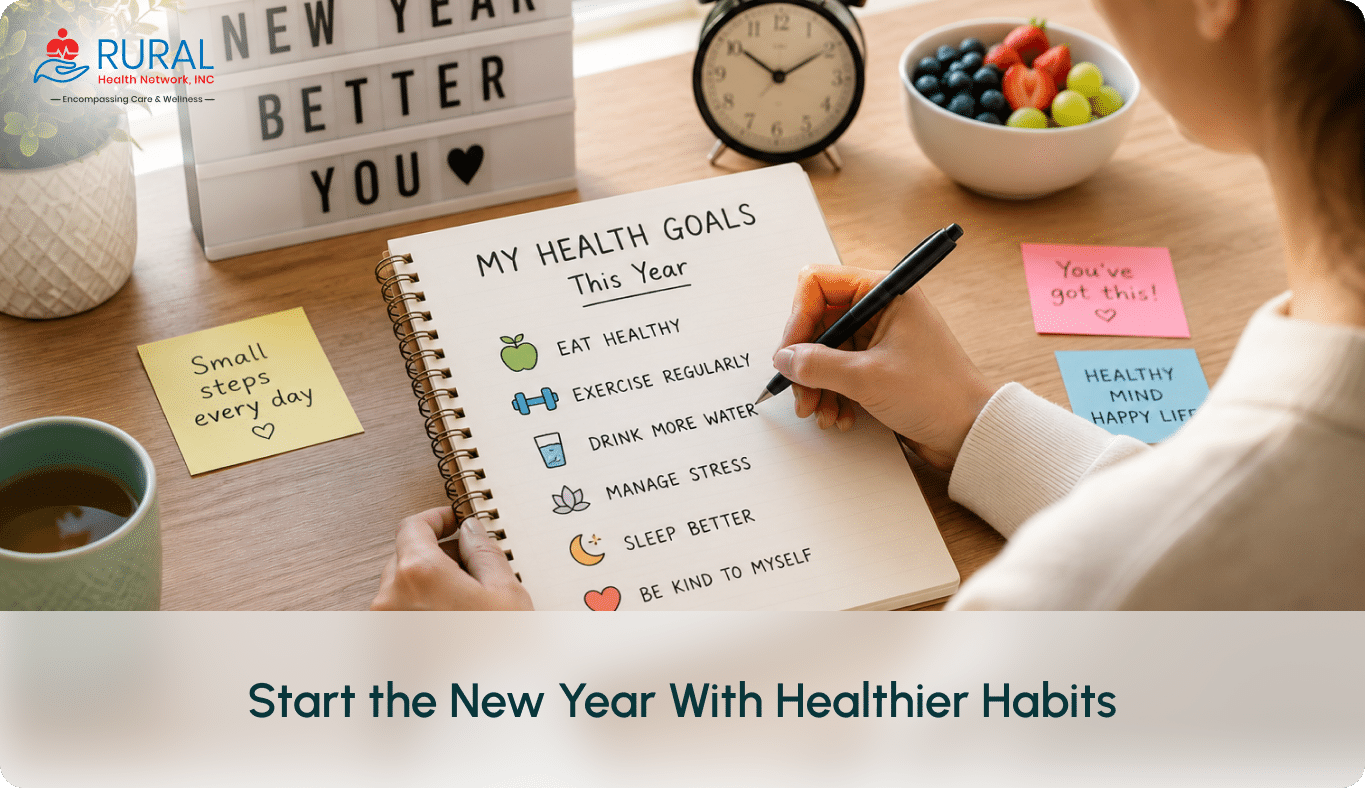
The start of a new year is a natural time to reflect on your health and think about what you want to improve in the months ahead. While traditional New Year’s resolutions often focus on big changes, setting realistic health goals can help you build sustainable habits that support your long-term well-being.
Your goals do not have to involve an intense workout routine or a restrictive diet. They can be simple, practical steps such as scheduling an annual checkup, getting more sleep, eating more nutritious foods, staying active, or managing an ongoing health condition.
If you want to make your health a priority this year, Rural Health Network can help you create a healthcare plan based on your needs, lifestyle, and personal priorities.
Make This the Year Your Health Comes First
Why Should You Set Health Goals Instead of New Year’s Resolutions?
New Year’s resolutions can be motivating, but they are often broad or difficult to maintain. Goals are more effective when they are specific, realistic, measurable, and connected to your everyday life.
For example, instead of saying, “I want to get healthier,” you could set a goal to:
- Walk for 20 minutes three times a week.
- Schedule your annual physical exam.
- Add one additional serving of vegetables to your meals each day.
- Establish a consistent bedtime.
- Take prescribed medications as directed.
- Follow up with your healthcare provider about an ongoing health concern.
Having specific goals gives you something practical to work toward and makes it easier to recognize your progress.
Small changes can also add up over time. You do not need to completely change your lifestyle overnight to make meaningful improvements.
What Health Goals Should You Set for the New Year?
The best health goals depend on your age, lifestyle, health history, and personal priorities. Rather than trying to change everything at once, choose one or two areas that matter most to you right now.
Here are several areas to consider.
1. Prioritize Preventive Care
Preventive healthcare can help you stay informed about your health and identify potential concerns early.
Consider making goals such as:
- Scheduling your annual physical.
- Staying up to date on recommended vaccinations.
- Completing age-appropriate health screenings.
- Following up on abnormal test results.
- Discussing new or ongoing health concerns with your provider.
Regular preventive care is an important part of maintaining your health throughout the year. Learn more about the importance of annual physical exams.
You can also review our guide to an annual physical exam checklist by age to learn more about what to discuss during your next visit.
2. Improve Your Physical Health
Improving your physical health does not necessarily require an intense exercise program or restrictive diet.
Start with achievable changes, such as:
- Adding more movement to your daily routine.
- Taking regular walks.
- Eating more fruits and vegetables.
- Drinking enough water.
- Getting adequate sleep.
- Following your healthcare provider’s recommendations for managing chronic conditions.
If you are managing an ongoing health condition, working with your healthcare team can help you create realistic goals that fit your needs.
3. Support Your Mental and Emotional Well-Being
Your health goals should include more than physical health. Mental and emotional well-being also deserve attention.
Consider goals such as:
- Finding healthy ways to manage stress.
- Making time for rest and recovery.
- Maintaining meaningful connections with family and friends.
- Spending time on activities you enjoy.
- Talking with a healthcare professional when you need additional support.
You do not have to accomplish everything at once. Even creating more time for rest or connection can be a meaningful step.
4. Build Healthier Daily Habits
Your everyday habits can influence your long-term health.
Some practical goals include:
- Taking medications as prescribed.
- Drinking more water.
- Limiting habits that may negatively affect your health.
- Preparing more meals at home.
- Establishing a consistent sleep routine.
- Keeping regular healthcare appointments.
The goal is not perfection. The goal is to develop habits that you can realistically maintain.
5. Improve Access to Healthcare
Sometimes the most important health goal is simply making sure you have access to the care you need.
You might set a goal to:
- Establish care with a primary care provider.
- Schedule a long-overdue appointment.
- Keep up with follow-up visits.
- Ask questions about your medications or treatment plan.
- Learn about healthcare resources available in your community.
If you live in a rural community, finding convenient access to healthcare can be especially important. Rural Health Network is committed to helping individuals and families access the care and resources they need.
How Can You Set Realistic Health Goals?

The best health goals are specific enough to guide your actions but flexible enough to fit your real life.
Instead of setting a vague goal such as “exercise more,” make it more specific:
“I will walk for 20 minutes after dinner three days a week.”
Instead of saying “eat healthier,” try:
“I will add a serving of vegetables to lunch or dinner each day.”
Specific goals make it easier to understand what you need to do and track your progress.
Start Small
Large lifestyle changes can feel overwhelming. Start with one small action that feels achievable.
For example, if you want to become more active, begin with short walks rather than committing to an unrealistic daily workout schedule.
Once a habit becomes easier to maintain, you can gradually build on it.
Focus on One or Two Priorities
Trying to change everything at once can make it harder to maintain your progress.
Choose one or two priorities based on what matters most to you. You might focus on improving sleep, increasing physical activity, scheduling preventive care, or managing an existing health concern.
Once those goals become part of your routine, you can consider adding another goal.
Make Your Goals Measurable
A measurable goal allows you to track your progress.
For example:
- Walk three times a week.
- Drink water throughout the day.
- Schedule your annual checkup by the end of the month.
- Go to bed at a consistent time on weeknights.
Tracking small accomplishments can help you stay motivated.
Be Flexible
Life does not always go according to plan. Work, family responsibilities, illness, travel, or unexpected events can affect your routine.
If you miss a workout or fall behind on a goal, that does not mean you have failed. Adjust your goal and continue moving forward.
Flexibility is part of creating a sustainable health plan.
Focus on Consistency, Not Perfection
You do not need to follow your plan perfectly to make progress.
A realistic habit that you can maintain for months is generally more sustainable than an extreme change that lasts only a few weeks.
Give yourself room to adjust, learn from setbacks, and continue working toward your goals.
Why Are Annual Checkups Important for New Year Health Goals?
An annual checkup can be a useful starting point for setting health goals because it gives you an opportunity to discuss your overall health with a healthcare provider.
Depending on your age, health history, and individual needs, your provider may discuss:
- Preventive screenings
- Vaccinations
- Nutrition and physical activity
- Blood pressure and other health measurements
- Medications
- Lifestyle habits
- Existing health conditions
- Recommended follow-up care
Learn more about the importance of annual checkups and how routine healthcare can support your long-term well-being.
How Can Rural Health Network Help You Reach Your Health Goals?
Setting health goals is easier when you have the right support.
Rural Health Network can help you identify appropriate healthcare priorities and connect you with services that support your overall health. Whether you need preventive care, help managing an ongoing condition, or guidance about your health, your healthcare provider can help you determine the next steps.
Our Family Medicine services provide healthcare support for individuals and families at different stages of life.
For people managing chronic conditions, working with a healthcare team can also help you stay on track with treatment, follow-up care, and healthy lifestyle changes.
Your health journey is personal. You do not have to make every change at once. Start with one realistic goal, take one step at a time, and build from there.
Whenever You’re Ready, We’re Here