

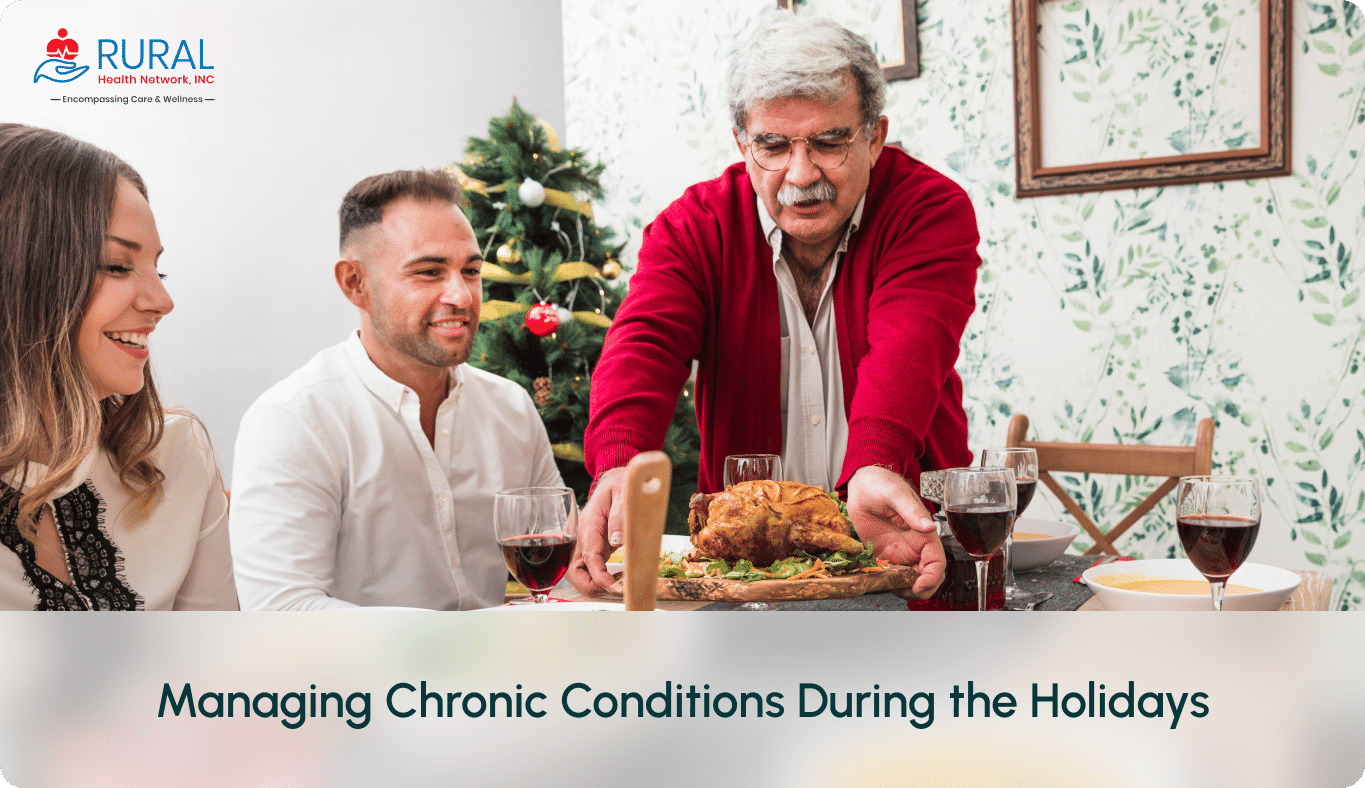
The holidays bring plenty to look forward to—time with loved ones, favorite traditions, travel, and meals shared around the table. But if you are managing a chronic condition such as diabetes, high blood pressure, heart disease, COPD, or arthritis, the holiday season can also make it harder to stick to your usual health routine.
Changes in meal times, medications, sleep, physical activity, travel, and stress can all affect chronic disease management.
The good news is that you do not have to choose between enjoying the holidays and taking care of your health. With some planning and a few practical habits, you can celebrate with family and friends while continuing to follow your healthcare plan.
At Rural Health Community Center, we are here to support you throughout the year. Our Chronic Care Management services can help eligible patients stay connected with their healthcare team and better manage ongoing health needs.
How Can You Manage a Chronic Condition During the Holidays?
The best way to manage a chronic condition during the holidays is to plan ahead, continue taking medications as prescribed, make balanced food choices, stay active when appropriate, prioritize sleep, manage stress, and maintain communication with your healthcare team.
You do not need to avoid every holiday treat or skip every celebration. Instead, focus on maintaining the habits that support your health while making reasonable adjustments for special occasions.
Why Can the Holidays Be Challenging for People With Chronic Conditions?
Holiday routines can make chronic disease management more difficult for several reasons.
Holiday Meals Can Change Your Normal Eating Routine
Holiday meals may include more desserts, processed foods, salty dishes, sugary beverages, and larger portions than your usual meals.
Depending on your condition and individual treatment plan, changes in food intake can affect blood sugar, blood pressure, weight, or other health measures.
If you have diabetes, for example, keeping meals close to your usual schedule and planning carbohydrate choices can help you stay closer to your regular eating plan.
Daily Routines Can Get Disrupted
Holiday shopping, family gatherings, travel, and late nights can make it easier to:
- Forget or delay medications
- Skip regular meals
- Exercise less
- Sleep at different times
- Miss healthcare appointments
- Forget to monitor blood sugar or blood pressure when your care plan requires it
CDC recommends taking chronic disease medications as prescribed and following the treatment plan developed with your healthcare provider.
Travel Can Make Chronic Care More Complicated
Travel can mean being away from your regular pharmacy, healthcare provider, medical equipment, or familiar foods.
If you are traveling with a chronic condition, planning ahead can help you avoid unnecessary disruptions. CDC recommends making sure medications and necessary supplies are available and discussing medication schedules or other concerns with your healthcare provider when needed.
Holiday Stress Can Affect Your Well-Being
Financial concerns, family responsibilities, travel, grief, loneliness, and busy schedules can all contribute to holiday stress.
Long-term stress can affect sleep, mood, energy, and cardiovascular health, making stress management an important part of overall wellness.
Tip 1: Stay Consistent With Your Medications
One of the most important ways to manage a chronic condition during the holidays is to continue taking your medications as prescribed.
A change in your holiday schedule does not automatically mean your medication schedule should change.
Refill Prescriptions Before the Holidays
Check your prescriptions before holiday closures or travel plans begin.
Make sure you have enough medication for your planned trip and account for possible travel delays.
If you are unsure whether you have enough medication, contact your healthcare provider or pharmacist before leaving.
Create a Holiday Health Kit
If you are traveling or spending several days away from home, consider packing:
- Prescription medications
- Necessary medical supplies
- A current medication list
- Your healthcare provider’s contact information
- Your pharmacy’s contact information
- Important medical information or your care plan
- Any monitoring equipment recommended by your healthcare team
For people with diabetes, CDC recommends keeping diabetes medications and supplies accessible during travel rather than packing them where they may be difficult to reach.
Use Medication Reminders
Holiday schedules can make it easier to lose track of time.
Phone alarms, medication reminder apps, or other tools may help you stay on schedule.
Do not stop, skip, or change a prescribed medication without discussing it with your healthcare provider.
Tip 2: Enjoy Holiday Foods With Balance
Managing a chronic condition does not necessarily mean avoiding your favorite holiday foods.
Instead, focus on balance, portions, and the dietary recommendations provided by your healthcare team.
Watch Your Portions
Holiday meals often include several foods you may want to try.
Rather than feeling like you have to avoid everything, consider smaller portions of the foods you enjoy and balance your plate with vegetables, lean proteins, whole grains, or other foods that fit your nutrition plan.
Don’t Skip Meals to “Save Up” for Dinner
Skipping meals before a large holiday gathering can make it harder to make balanced food choices later.
For people with diabetes, CDC recommends staying close to usual meal times and planning ahead for carbohydrate choices rather than skipping meals to prepare for a feast.
Choose Beverages Carefully
Holiday drinks can add significant amounts of sugar and calories.
When appropriate for your health needs, choose water or unsweetened beverages more often.
If your healthcare provider has given you specific fluid or dietary restrictions, follow those recommendations.
Bring a Dish You Can Enjoy
Heading to a family dinner or holiday potluck?
Consider bringing a nutritious dish that fits your dietary needs.
This gives you an option you can enjoy while still participating in the celebration.
Tip 3: Keep Moving During the Holidays
Staying physically active can support overall health and help with the management of several chronic conditions.
You do not need to turn your holiday break into an intense workout program. Focus on safe, consistent movement that fits your abilities.
Take a Short Walk
If walking is safe for you, take a short walk after a meal or during a family gathering.
A walk can also be a simple way to spend time with family while adding movement to your day.
Turn Holiday Activities Into Movement
Everyday activities can help you avoid sitting for long periods.
You might:
- Walk while visiting with family
- Help prepare meals
- Decorate your home
- Clean up after dinner
- Take the stairs when appropriate
- Play an active game with family
- Take short movement breaks during long periods of sitting
Focus on Consistency, Not Intensity
If you have a chronic condition, the appropriate amount and intensity of physical activity can vary.
Adults are generally encouraged to get at least 150 minutes of moderate-intensity aerobic activity per week, but people with chronic conditions should discuss appropriate activity levels with their healthcare provider.
Tip 4: Prioritize Sleep and Rest
Sleep is an important part of maintaining your overall health, especially when you are managing a chronic condition.
Holiday parties, travel, shopping, and family responsibilities can make it tempting to stay up late or change your normal sleep schedule.
Try to:
- Keep a consistent bedtime when possible.
- Give yourself enough time to sleep.
- Take breaks during busy days.
- Avoid scheduling too many activities back-to-back.
- Create a relaxing bedtime routine.
- Give yourself permission to rest.
Good sleep is closely connected with physical activity, diet, stress, mood, and overall well-being.
Tip 5: Manage Holiday Stress
Taking care of your emotional well-being is part of taking care of your physical health.
You do not have to attend every event, host every gathering, or say yes to every request.
Set Healthy Boundaries
It is okay to say no when your schedule becomes overwhelming.
Choose the activities that matter most to you and give yourself permission to skip or shorten activities when you need rest.
Take Short Breaks
If a gathering becomes stressful, step away for a few minutes.
You might:
- Take a short walk
- Practice slow breathing
- Sit somewhere quiet
- Listen to music
- Talk with someone you trust
- Spend a few minutes away from a busy environment
Small healthy habits such as movement, rest, mindfulness, and social connection can support stress management.
Stay Connected
If the holidays bring feelings of loneliness, sadness, or emotional distress, reach out to someone you trust.
If these feelings persist or interfere with your daily life, consider speaking with a healthcare professional.
Tip 6: Plan Ahead for Holiday Travel
People living with chronic conditions can often travel safely, but preparation is important.
Before traveling:
- Make sure you have enough medication.
- Keep medications accessible during your trip.
- Bring necessary medical supplies.
- Carry a current medication list.
- Know how to contact your healthcare provider.
- Identify healthcare facilities or pharmacies near your destination if necessary.
- Ask your healthcare provider about any condition-specific travel concerns.
If you have diabetes, for example, travel can affect meal schedules, activity, blood sugar, and medication timing. CDC recommends planning ahead and discussing medication adjustments with your healthcare provider when travel changes your normal routine.
Tip 7: Prepare for Cold Weather
Winter weather can create additional challenges for people with certain chronic conditions.
Cold temperatures and indoor environments may affect people with respiratory conditions such as COPD or asthma, while cold weather and reduced activity may make it harder for some people with arthritis to stay active.
Dress appropriately for the weather and follow the treatment plan provided by your healthcare professional.
If cold weather consistently worsens your symptoms, talk with your healthcare provider about ways to manage them.
Tip 8: Keep Up With Your Healthcare
Your chronic condition does not take a holiday, so your healthcare plan should remain a priority.
Continue with scheduled appointments, monitoring, medications, and other recommendations from your healthcare team.
If you are due for a routine checkup, medication review, or chronic care follow-up, schedule it before your holiday calendar becomes too busy.
For ongoing primary care, explore Family Medicine services at Rural Health Community Center.
Tip 9: Stay Connected With Your Care Team
Managing a chronic condition is easier when you know where to turn for support.
Depending on your healthcare provider and individual needs, chronic care management, routine follow-ups, and telehealth services may be available.
If you have questions about:
- Medication changes
- New symptoms
- Blood sugar or blood pressure readings
- Diet and nutrition
- Physical activity
- Travel
- Managing your condition during the holidays
contact your healthcare team rather than trying to make significant changes on your own.
At Rural Health Community Center, our goal is to provide accessible, compassionate care for individuals and families in the communities we serve.
Know When to Seek Medical Care

Holiday celebrations should never prevent you from seeking medical attention when you need it.
Contact your healthcare provider if you notice new or worsening symptoms related to your chronic condition.
Seek emergency medical attention for serious symptoms such as:
- Severe difficulty breathing
- Severe or persistent chest pain or pressure
- Fainting or loss of consciousness
- Sudden confusion
- Sudden weakness or numbness
- Difficulty speaking
- Severe allergic reactions
- Other symptoms that may indicate a medical emergency
If you are unsure how serious your symptoms are, contact a healthcare professional for guidance.
Quick Holiday Chronic Care Checklist
Before the holiday season gets busy, use this checklist to stay on track.
Medications
- Check prescription refills.
- Pack enough medication for travel.
- Keep medications accessible.
- Set medication reminders.
- Keep your medication list updated.
Food
- Plan for holiday meals.
- Pay attention to portions.
- Include vegetables and other nutrient-dense foods.
- Choose water or unsweetened beverages when appropriate.
- Follow your individualized nutrition plan.
Physical Activity
- Take short walks when appropriate.
- Avoid sitting for long periods.
- Include movement in family activities.
- Follow your healthcare provider’s activity recommendations.
Sleep and Stress
- Maintain a regular sleep schedule.
- Schedule time to rest.
- Set reasonable boundaries.
- Make time for people who support you.
- Take breaks when you feel overwhelmed.
Healthcare
- Keep scheduled appointments.
- Continue recommended monitoring.
- Know how to contact your healthcare team.
- Know where to access care while traveling.
- Seek medical attention for concerning symptoms.
Enjoy the Holidays While Staying on Track With Your Health
Living with a chronic condition does not mean you have to miss out on holiday traditions.
The goal is not perfection. Instead, plan ahead, maintain the habits that support your health, and give yourself flexibility when your routine changes.
Take your medications as prescribed. Make balanced food choices. Stay active when appropriate. Get enough rest. Manage stress. And stay connected with your healthcare team.
One holiday meal or a few days outside your normal routine do not define your overall health. What matters is returning to the habits that support you and continuing to follow your personalized care plan.
At Rural Health Community Center, we are committed to supporting individuals and families with accessible, compassionate healthcare throughout the year.
Learn more about our Chronic Care Management services or Family Medicine services.
This holiday season, make time for what matters most—your health, your family, and the moments you want to remember.