

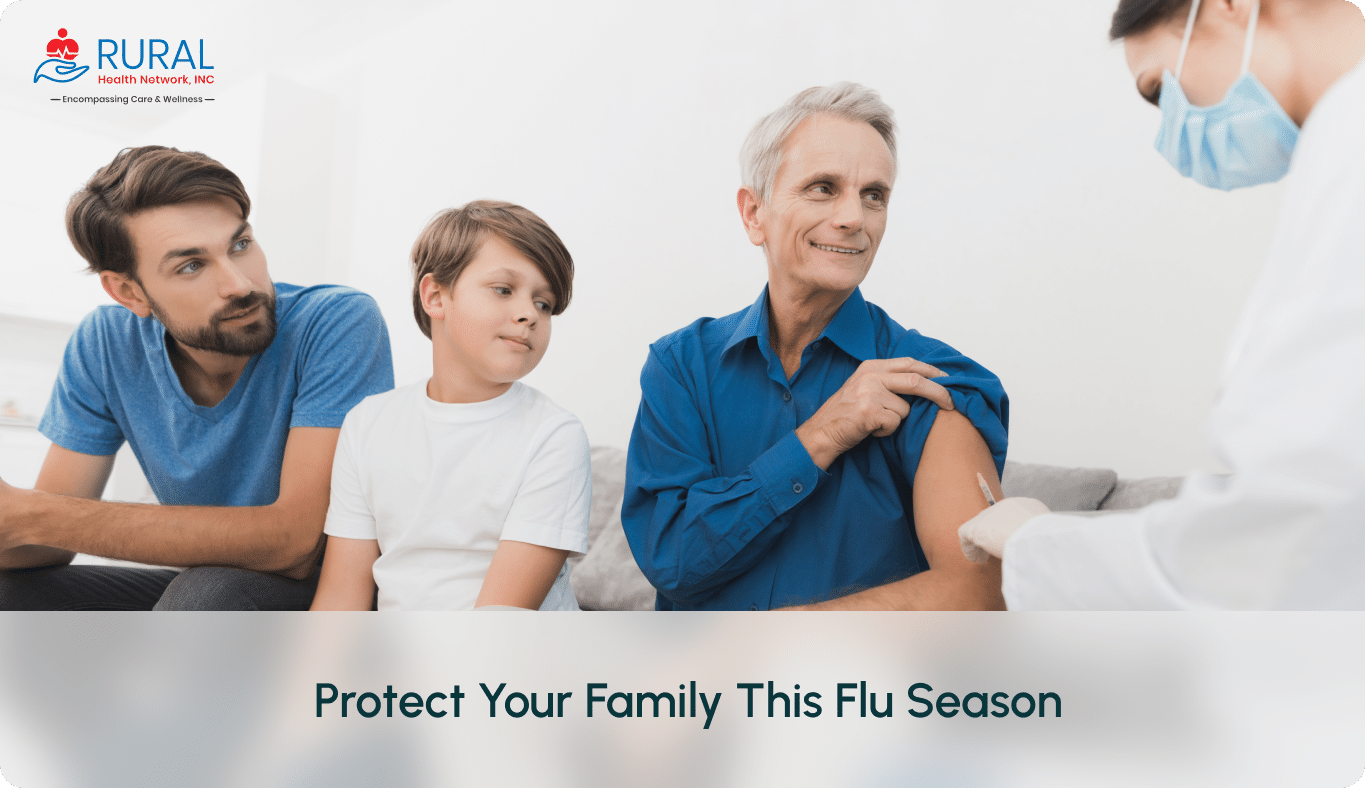
As temperatures cool and children return to school, flu season becomes an important health consideration for families. Influenza, commonly called the flu, is more than a bad cold. It can cause serious illness, hospitalization, and complications—especially among young children, adults age 65 and older, pregnant people, and people with certain chronic health conditions.
The good news is that annual flu vaccination is one of the best ways to reduce your risk of flu and its potentially serious complications. For the 2026–2027 flu season, CDC recommends annual influenza vaccination for everyone age 6 months and older who does not have a contraindication.
If you are due for your annual flu vaccine, talk with your healthcare provider about the best timing and vaccine option for you and your family.
What Is the Flu?
Influenza is a contagious respiratory illness caused by influenza viruses. It can affect the nose, throat, and lungs and may cause symptoms such as:
- Fever or feeling feverish
- Cough
- Sore throat
- Runny or stuffy nose
- Muscle or body aches
- Headache
- Chills
- Fatigue
Some people may experience vomiting or diarrhea, particularly children.
Unlike a typical cold, influenza can lead to serious complications, including pneumonia and worsening of certain underlying health conditions.
Is the Flu More Serious Than a Cold?
Yes. Influenza can be more serious than the common cold.
While both illnesses can cause respiratory symptoms, flu symptoms often begin more suddenly and may cause significant fever, body aches, fatigue, and cough. Flu can also result in complications that require medical care or hospitalization.
During an average flu season in the United States, influenza causes millions of illnesses, hundreds of thousands of hospitalizations, and thousands to tens of thousands of deaths.
That is why preventing flu is important—even if you are generally healthy.
Who Is at Higher Risk of Serious Flu Complications?
Anyone can get the flu, but some people are more likely to develop serious complications.
Higher-risk groups include:
- Children, particularly young children
- Adults age 65 and older
- Pregnant people
- People with certain chronic medical conditions
- People with weakened immune systems
For these individuals, influenza may increase the risk of complications and hospitalization. Annual vaccination is particularly important for people at higher risk.
Why Should Your Family Get a Flu Shot Every Year?
Annual flu vaccination helps reduce the risk of getting influenza and can reduce the severity of illness if you do get sick.
CDC recommends yearly flu vaccination for everyone age 6 months and older, with rare exceptions. There are two main reasons vaccination is recommended every year:
- Protection decreases over time. Immune protection from vaccination can decline.
- Flu viruses change. The viruses circulating each season can differ, so vaccine composition is reviewed and updated as needed.
For the 2026–2027 U.S. flu season, all three components of seasonal flu vaccines were updated compared with the previous season.
How Does the Flu Vaccine Help Protect Your Family?
The flu vaccine offers several important benefits.
1. It Can Reduce Your Risk of Getting Flu
Flu vaccination can reduce the likelihood of becoming sick with influenza and needing a flu-related medical visit.
Vaccine effectiveness varies from season to season depending on factors such as the viruses circulating and how well they match the vaccine. Even when the match is not perfect, vaccination can still help prevent illness and serious outcomes.
2. It Can Reduce the Risk of Serious Illness
Getting vaccinated does not guarantee that you will never get the flu. However, vaccination can reduce the risk of severe illness, hospitalization, and other serious complications.
CDC estimates that flu vaccination prevented approximately 180,000 flu-related hospitalizations in the United States during the 2024–2025 flu season.
3. It Helps Protect Children
Children can experience serious complications from influenza. Flu vaccination has been associated with lower risks of flu-related emergency visits, hospitalization, and severe illness in children.
If your child is due for a flu vaccine, ask their pediatric healthcare provider which vaccine and dosing schedule are appropriate.
You can also learn more about routine children’s care through our General Pediatrics services.
4. It Is Especially Important During Pregnancy
Pregnancy can increase the risk of serious flu complications. Flu vaccination during pregnancy can help protect the pregnant person and can also provide protection to the baby during the first few months after birth, when infants are too young to receive a flu vaccine.
Pregnant people should discuss influenza vaccination with their healthcare provider.
5. It Can Help Reduce Missed School and Work
Flu can keep children home from school and adults away from work. Preventing flu can help families maintain their normal routines and reduce disruptions caused by illness.
Common Flu Shot Myths—What Is True?

There are many misconceptions about flu vaccination. Here are some common questions.
Can the flu shot give you the flu?
No. The flu shot cannot cause influenza.
Injectable flu vaccines use inactivated viruses or specific viral components that cannot cause flu illness. The nasal spray vaccine uses weakened influenza viruses that are designed not to cause flu.
Some people experience temporary side effects after vaccination, such as soreness at the injection site, headache, muscle aches, or fever. These effects are generally mild and short-lived.
Does the flu vaccine work if I can still get the flu?
Yes. Flu vaccines are not 100% effective, but they can reduce the risk of illness and serious complications.
Effectiveness varies from season to season. Factors include the influenza viruses circulating in the community, how well they match the vaccine, and the person’s age and health.
Even when vaccinated people become infected, vaccination may reduce the severity of illness.
Do healthy people need a flu shot?
Yes. CDC recommends annual flu vaccination for everyone age 6 months and older, with rare exceptions.
Healthy people can still get influenza and spread it to others. Vaccination is particularly important if you live with or regularly spend time around people who are at higher risk of serious complications.
Why do I need a flu shot every year?
Because flu viruses change and protection from vaccination decreases over time.
Each year’s vaccine is reviewed and updated as needed to provide protection against influenza viruses expected to circulate during the upcoming season.
When Should You Get the Flu Shot?
For most people, September and October are generally good months to receive a flu vaccine, and vaccination should continue throughout the flu season while influenza viruses are circulating.
CDC recommends that people ideally be vaccinated by the end of October when possible. However, getting vaccinated later can still provide protection if flu is circulating.
It generally takes about two weeks after vaccination for antibodies that protect against flu to develop.
Some children need two doses of flu vaccine. If your child needs two doses, the first dose should be given as soon as vaccine is available so there is enough time for the second dose, which must be given at least four weeks later.
Your healthcare provider can help determine the appropriate vaccination schedule for your family.
Who Should Get a Flu Vaccine?
In general, CDC recommends annual flu vaccination for:
- Adults and children age 6 months and older
- Older adults
- Pregnant people
- Children
- People with certain chronic health conditions
- People who may be at higher risk of serious flu complications
Children younger than 6 months are too young to receive a flu vaccine. Your healthcare provider can help determine whether vaccination is appropriate based on age, medical history, allergies, and other factors.
How Can Families Prevent the Flu Besides Vaccination?
Vaccination is an important part of flu prevention, but healthy habits can also help reduce the spread of respiratory viruses.
Encourage your family to:
- Wash hands regularly with soap and water.
- Avoid close contact with people who are sick when possible.
- Cover coughs and sneezes.
- Avoid touching your eyes, nose, and mouth with unwashed hands.
- Stay home when sick when possible.
- Improve ventilation and indoor airflow when appropriate.
- Follow your healthcare provider’s recommendations for vaccination and treatment.
These habits can help reduce exposure to influenza and other respiratory illnesses.
Why Flu Prevention Matters in Rural Communities
Preventing influenza can be especially important for families in rural communities where access to healthcare services may involve longer travel distances or fewer local healthcare resources.
Taking preventive steps before flu activity increases can help families respond sooner when illness occurs.
At Rural Health Community Center, our goal is to make preventive and primary healthcare more accessible to individuals and families in the communities we serve.
Whether you need a routine checkup, vaccination guidance, or help managing a chronic health condition, our healthcare team can help you understand your options.
You can also explore our Family Medicine services for ongoing primary care.
When Should You Contact a Healthcare Provider?
Most people with mild flu symptoms recover at home. However, some people are at greater risk of complications and may benefit from contacting a healthcare provider early.
Seek medical attention for concerning symptoms such as:
- Difficulty breathing or shortness of breath
- Chest pain or pressure
- Severe weakness or confusion
- Signs of dehydration
- Symptoms that improve and then become significantly worse
- Severe or concerning symptoms in a young child, older adult, pregnant person, or someone with a chronic medical condition
If you are unsure whether symptoms require medical attention, contact your healthcare provider for guidance.
Protect Your Family This Flu Season
The flu may be common, but that does not mean it should be taken lightly. Annual vaccination can reduce your risk of influenza and help lower the chance of serious complications.
For the 2026–2027 flu season, make flu prevention part of your family’s routine. Talk with your healthcare provider about vaccination, especially if you have young children, older family members, are pregnant, or live with someone who has a chronic health condition.
Ready to protect your family this flu season? Contact Rural Health Community Center to learn more about flu vaccination and preventive care.
A healthy family starts with preventive care—and a flu shot can be an important part of that plan.