

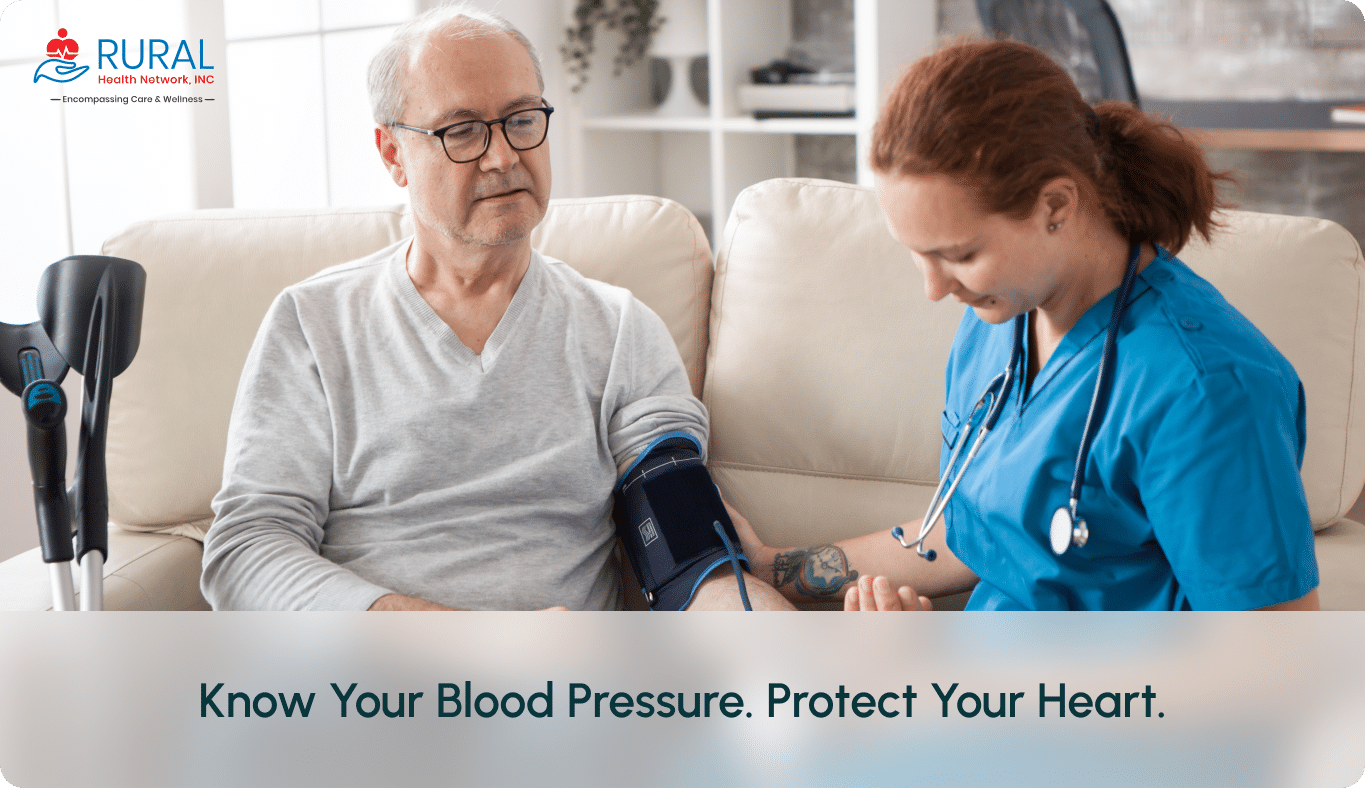
High blood pressure, also called hypertension, is one of the most common chronic health conditions. It often develops without noticeable symptoms, which is why it is sometimes called the “silent killer.” Regular blood pressure checks are important because untreated hypertension can increase the risk of heart disease, stroke, kidney disease, and other serious health problems.
So, who is at risk for high blood pressure?
Anyone can develop hypertension, but your risk may increase with age, family history, certain health conditions, diet, physical inactivity, tobacco use, excessive alcohol consumption, and other lifestyle and environmental factors.
The good news is that many risk factors can be addressed. Knowing your blood pressure numbers, maintaining healthy habits, attending regular checkups, and following your healthcare provider’s treatment plan can help you manage your blood pressure and protect your long-term health.
At Rural Health Network, we believe preventive care should be accessible to everyone. Whether you live on a farm, in a small rural community, or in a nearby town, understanding your blood pressure is an important part of protecting your heart and overall health.
What Is High Blood Pressure?
Blood pressure is the force of blood pushing against the walls of your arteries as your heart pumps blood throughout your body.
A blood pressure reading contains two numbers:
- Systolic blood pressure: The top number measures the pressure in your arteries when your heart contracts and pumps blood.
- Diastolic blood pressure: The bottom number measures the pressure in your arteries when your heart relaxes between beats.
For example, a blood pressure reading of 120/80 mmHg has a systolic pressure of 120 and a diastolic pressure of 80.
A healthcare professional considers your blood pressure readings over time, along with other health factors, when determining whether you have hypertension. A single reading does not necessarily establish a diagnosis.
Blood Pressure Categories
For most adults, the American Heart Association classifies blood pressure as follows:
| Blood Pressure Category | Systolic | Diastolic |
| Normal | Less than 120 | Less than 80 |
| Elevated | 120–129 | Less than 80 |
| Stage 1 Hypertension | 130–139 | 80–89 |
| Stage 2 Hypertension | 140 or higher | 90 or higher |
| Severe Hypertension | Higher than 180 | and/or higher than 120 |
If your blood pressure is consistently above the normal range, talk with your healthcare provider about what your numbers mean and whether additional monitoring or treatment is appropriate.
Who Is at Risk for High Blood Pressure?
High blood pressure can affect people of all ages. Some risk factors cannot be changed, while others can be reduced through lifestyle changes and appropriate medical care.
Understanding your individual risk factors can help you take action earlier.
Risk Factors You Cannot Change
Some factors increase your risk even though you cannot control them.
Age
The risk of high blood pressure generally increases with age. However, hypertension can affect younger adults as well, so regular blood pressure checks are important throughout adulthood.
Family History
Having a parent, sibling, or other close family member with hypertension can increase your risk.
If high blood pressure runs in your family, regular monitoring becomes especially important.
Race and Ethnicity
Blood pressure risk and outcomes can vary among racial and ethnic groups because of a combination of genetic, social, environmental, and healthcare-access factors.
Rather than assuming that race determines an individual’s health, healthcare providers should consider the person’s complete health history and risk profile.
Certain Medical Conditions
Some health conditions can increase the likelihood of developing high blood pressure or make it more difficult to control.
These can include:
- Diabetes
- Obesity
- Kidney disease
- Sleep apnea
- High cholesterol
- Certain hormonal conditions
Managing these conditions can be an important part of overall cardiovascular health.
Lifestyle Factors That Can Increase Blood Pressure
The good news is that several risk factors can be addressed.
1. Eating Too Much Sodium
A diet high in sodium can contribute to higher blood pressure. Much of the sodium in many people’s diets comes from processed, packaged, and restaurant foods.
A heart-healthy eating pattern such as the DASH diet emphasizes vegetables, fruits, whole grains, beans, nuts, low-fat dairy, and other nutrient-rich foods while limiting sodium and foods high in saturated fat.
2. Not Getting Enough Physical Activity
Regular physical activity helps support cardiovascular health and can help manage blood pressure.
A practical goal for many adults is approximately 150 minutes of moderate-intensity physical activity per week, although your healthcare provider can help determine an appropriate activity level based on your health.
For people living in rural communities, activity does not have to mean going to a gym. Walking, gardening, cycling, swimming, and other active daily tasks can contribute to an active lifestyle.
3. Having Overweight or Obesity
Carrying excess weight can increase the risk of high blood pressure and other cardiovascular conditions.
Even modest, sustainable changes in eating habits and physical activity may support better blood pressure control.
4. Tobacco Use
Smoking and other tobacco use can damage blood vessels and increase cardiovascular risk. Nicotine can also temporarily raise blood pressure.
If you smoke or use tobacco, talk with your healthcare provider about resources that can help you quit.
5. Drinking Too Much Alcohol
Excessive alcohol consumption can raise blood pressure.
If you drink alcohol, discuss an appropriate amount with your healthcare provider, particularly if you have hypertension or take blood pressure medication.
6. Poor Sleep and Sleep Apnea
Sleep problems can affect cardiovascular health. Sleep apnea, in particular, is associated with an increased risk of high blood pressure.
If you regularly snore loudly, wake up gasping for air, or feel excessively tired during the day, talk with your healthcare provider about whether a sleep evaluation may be appropriate.
7. Chronic Stress
Stress can temporarily raise blood pressure. Ongoing stress may also make it more difficult to maintain healthy habits such as exercising regularly, eating well, and getting enough sleep.
Healthy stress-management strategies can include physical activity, relaxation techniques, adequate sleep, social connection, and speaking with a healthcare professional when needed.
What Are the Symptoms of High Blood Pressure?
One of the biggest challenges with hypertension is that most people do not have noticeable symptoms.
You can have high blood pressure and feel completely healthy.
That is why waiting until you experience symptoms is not a reliable way to detect hypertension. Regular blood pressure checks are one of the best ways to know whether your numbers are elevated.
Very high blood pressure can sometimes occur with symptoms such as:
- Severe headache
- Chest pain
- Shortness of breath
- Vision changes
- Weakness or numbness
- Difficulty speaking
- Back pain
These symptoms should not be ignored, particularly when blood pressure is extremely high.
What Happens If High Blood Pressure Is Not Managed?
Over time, uncontrolled high blood pressure can damage blood vessels and place extra strain on the heart.
Possible complications include:
Heart Disease
Hypertension can increase the risk of coronary artery disease, heart attack, heart failure, and other cardiovascular problems.
Stroke
High blood pressure can damage blood vessels in the brain and significantly increase the risk of stroke.
Kidney Disease
The kidneys contain many small blood vessels that can be damaged by long-term high blood pressure. This can contribute to chronic kidney disease and, in severe cases, kidney failure.
Vision Problems
High blood pressure can damage blood vessels supplying the eyes and contribute to vision problems.
Atherosclerosis
High blood pressure can contribute to damage of the artery walls and increase the risk of plaque buildup, which can narrow arteries and increase cardiovascular risk.
How Can You Manage High Blood Pressure?

Managing hypertension is usually a long-term process. Your treatment plan may include lifestyle changes, regular monitoring, medication, or a combination of these approaches.
Here are practical steps that can help.
1. Follow a Heart-Healthy Diet
Consider a dietary pattern such as DASH that emphasizes:
- Fruits and vegetables
- Whole grains
- Beans and legumes
- Nuts and seeds
- Low-fat or fat-free dairy
- Lean sources of protein
Limit foods that are high in sodium, saturated fat, and added sugars.
2. Reduce Sodium Intake
Reducing sodium can help support healthier blood pressure levels.
The appropriate sodium target can vary depending on your health and treatment plan, so ask your healthcare provider or dietitian what target is right for you.
3. Stay Physically Active
Aim for regular physical activity that fits your abilities and health needs.
Walking is an excellent starting point for many people. Other options include:
- Cycling
- Swimming
- Gardening
- Dancing
- Strength training
- Recreational activities
If you have a chronic condition or have been inactive for a long time, talk with your healthcare provider before starting a new exercise program.
4. Work Toward a Healthy Weight
If you have overweight or obesity, gradual and sustainable weight loss may help improve blood pressure and overall cardiovascular health.
Focus on realistic habits rather than short-term diets.
5. Avoid Tobacco
Quitting smoking and avoiding tobacco can help protect your heart and blood vessels.
If quitting feels difficult, ask your healthcare provider about evidence-based cessation resources and medications.
6. Limit Alcohol
If you drink alcohol, staying within recommended limits may help reduce the risk of elevated blood pressure.
Your healthcare provider can help determine what is appropriate for you based on your health, medications, and other risk factors.
7. Get Enough Sleep
Make sleep a priority and discuss persistent sleep problems with your healthcare provider.
If you have symptoms of sleep apnea, seek evaluation rather than assuming that poor sleep is simply part of getting older.
8. Manage Stress
Find healthy ways to manage daily stress.
You might try:
- Deep breathing
- Walking
- Meditation
- Yoga
- Spending time outdoors
- Connecting with friends and family
- Relaxation exercises
Stress management should complement—not replace—medical treatment when hypertension is present.
9. Take Blood Pressure Medication as Prescribed
Some people need medication to control high blood pressure.
If your healthcare provider prescribes medication:
- Take it exactly as directed.
- Do not stop medication because you feel better unless your provider tells you to.
- Ask about side effects or concerns.
- Keep track of your medications.
- Attend recommended follow-up appointments.
Medication needs can change over time, so ongoing communication with your healthcare team is important.
10. Monitor Your Blood Pressure at Home
Home monitoring can help you and your healthcare provider understand your blood pressure patterns.
When checking your blood pressure:
- Use a validated monitor when possible.
- Sit quietly before taking the measurement.
- Keep your back supported.
- Keep both feet flat on the floor.
- Support your arm at heart level.
- Avoid talking during the measurement.
- Record your readings and share them with your healthcare provider.
A single elevated reading does not necessarily mean you have hypertension. Repeated measurements and professional evaluation provide a more complete picture.
When Is High Blood Pressure an Emergency?
If your blood pressure is higher than 180/120 mmHg, wait at least one minute and take another reading.
If it remains that high, contact your healthcare professional promptly.
If blood pressure is higher than 180/120 mmHg and you experience symptoms such as chest pain, shortness of breath, back pain, numbness, weakness, vision changes, or difficulty speaking, call 911 immediately. These can be signs of a hypertensive emergency.
Do not wait for severe symptoms to develop before seeking routine care for high blood pressure.
Why Regular Blood Pressure Checks Matter
Because hypertension often has no symptoms, routine blood pressure checks are an important part of preventive healthcare.
A blood pressure check can:
- Identify elevated blood pressure early.
- Help track changes over time.
- Guide treatment decisions.
- Help identify whether lifestyle changes are working.
- Reduce the risk of complications when hypertension is appropriately managed.
Regular preventive visits can also help your healthcare provider identify other cardiovascular risk factors.
You can learn more about preventive care through our wellness exams.
For additional information about maintaining your health through routine preventive care, explore our health and wellness resources.
High Blood Pressure in Rural Communities
People living in rural communities can face unique barriers to preventive healthcare, including transportation challenges, limited access to healthcare providers, and difficulty attending regular appointments.
That makes accessible primary and preventive care particularly important.
Rural residents can take practical steps to stay on top of their blood pressure:
- Schedule regular primary care visits.
- Ask about blood pressure monitoring during routine appointments.
- Keep a record of home blood pressure readings.
- Take medications consistently.
- Discuss diet and physical activity with your provider.
- Ask for help managing other conditions such as diabetes or kidney disease.
If you are a farmer or agricultural worker, maintaining cardiovascular health is especially important because managing chronic conditions can help you stay active and continue participating in the work and activities that matter to you.
You can also learn more about diabetes care for farmers, particularly if diabetes and hypertension are both part of your health picture.
Take Control of Your Blood Pressure
High blood pressure may be common, but it should never be ignored.
Knowing your numbers, understanding your risk factors, maintaining healthy habits, and keeping up with regular healthcare visits can help you protect your heart, brain, kidneys, and overall health.
At Rural Health Network, our goal is to make quality healthcare accessible to rural communities. Whether you need routine blood pressure monitoring, preventive care, or support managing a chronic condition, our healthcare team can help you understand your options and develop a care plan that fits your needs.
Learn more about our family medicine services or contact Rural Health Network to schedule an appointment.
Know Your Numbers. Protect Your Heart. Take Control of Your Health.