


You wake up feeling terrible. Your throat hurts, your head is pounding, and your nose won’t stop running. But what exactly do you have? A cold? The flu? Something more serious, like strep throat or a sinus infection?
Getting the right answer matters because the treatment is completely different for each one. Here’s everything you need to know to figure it out.
What Are Common Cold Symptoms?
The common cold is caused by a virus, usually a rhinovirus, and it tends to come on gradually. You might notice a scratchy throat one day, then a runny nose the next.
Classic cold symptoms include:
- Runny or stuffy nose (often the first sign)
- Sneezing
- Mild sore throat
- Low-grade fever or no fever at all
- Mild fatigue
- Coughing (usually mild)
One hallmark of a cold: nasal discharge that starts clear and turns yellow or green after a few days. This is normal and doesn’t automatically mean you need antibiotics.
How Long Do Cold Symptoms Last?
Most colds run their course in 7 to 10 days. If your symptoms worsen significantly after day 3 or 4 rather than gradually improving, that’s a signal that something else may be going on, like a sinus infection.
What Are Common Flu Symptoms?
Unlike a cold, the flu hits fast and hard. Most people can tell you the exact hour they started feeling sick.
Classic flu symptoms include
- High fever (often 101°F–104°F)
- Severe body aches and chills
- Intense fatigue and weakness
- Headache
- Dry cough
- Sore throat
- Runny or stuffy nose (less prominent than with a cold)
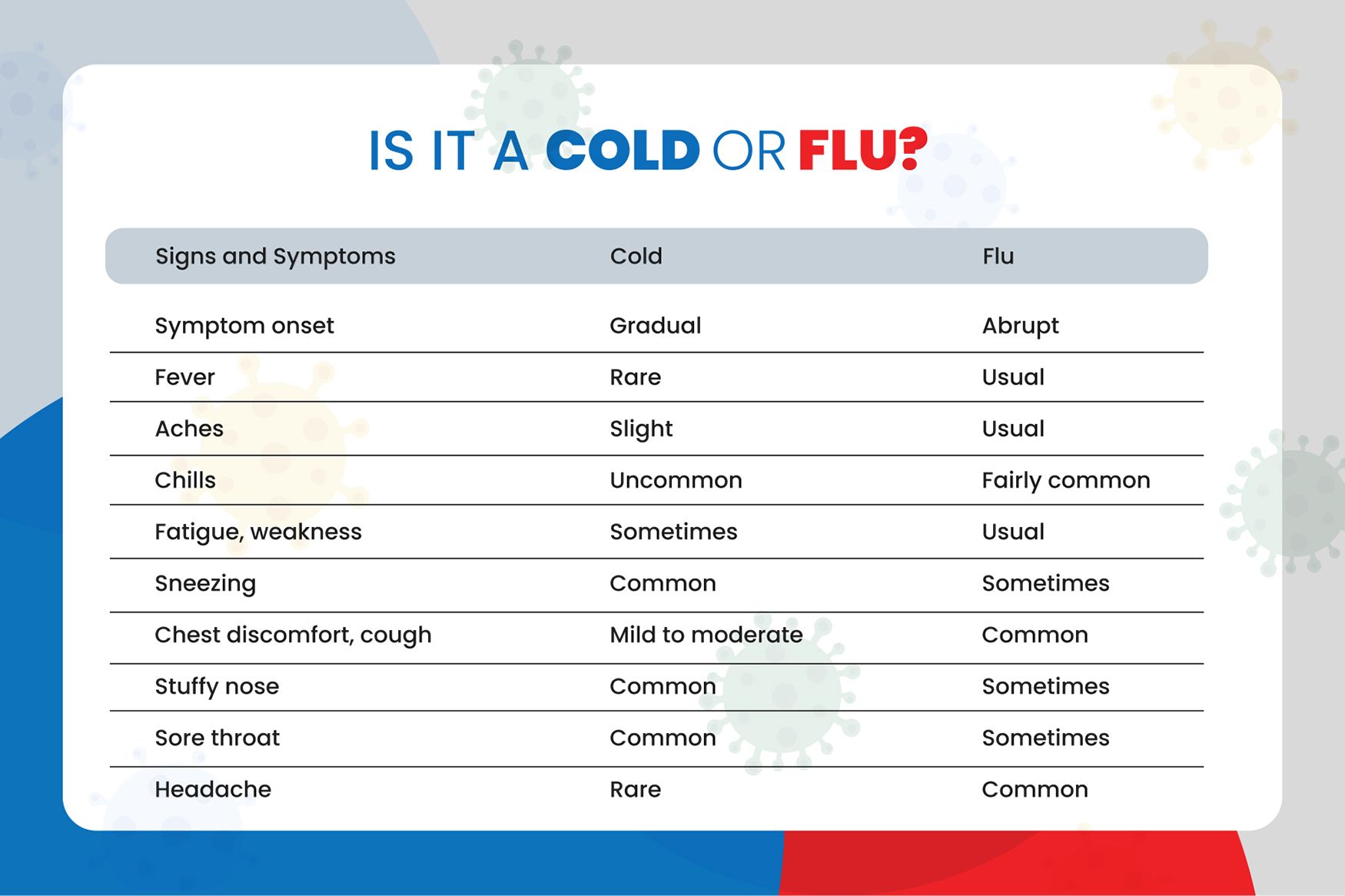
The biggest difference between cold and flu? Body aches and fever. If you’re wiped out, aching all over, and running a high fever, that’s the flu until proven otherwise.
Flu symptoms typically peak around days 2-4 and improve over 5-7 days, though fatigue can linger for 1-2 weeks.
For a broader look at respiratory illnesses, see our Respiratory Illness Guide: How to Identify Flu, RSV, and Bird Flu.
Is It the Flu or a Cold? A Quick Comparison
Could It Be a Sinus Infection?
Sinus infections (sinusitis) often start as a cold or the flu and then linger longer than they should. If your cold symptoms don’t improve after 10 days, or if they worsen around day 5-7 after an initial improvement, a sinus infection may have developed.
Signs that point to a sinus infection:
- Pressure or pain around your forehead, cheeks, or eyes
- Thick, colored nasal discharge that won’t clear up
- Postnasal drip causing a cough or sore throat
- Reduced sense of smell
- Tooth pain or jaw pain (from sinus pressure)
- Fatigue
Most sinus infections are still viral, meaning antibiotics won’t help. However, if symptoms are severe or persist for more than 10 days without improvement, your doctor may consider bacterial sinusitis, which can be treated with antibiotics.
What About Strep Throat?
Streptococcus pyogenes bacteria cause strep throat, and it behaves very differently from a cold or the flu. One key clue: strep throat typically comes WITHOUT cold symptoms like a runny nose or cough. Classic strep throat symptoms include:
- Suddenly, a severe sore throat
- Pain when swallowing
- Red and swollen tonsils, sometimes with white patches or streaks
- Fever (usually above 101°F)
- Swollen lymph nodes in the neck
- Headache
- Stomach pain or nausea (especially in children)
If you have a sore throat, a runny nose, and a cough, it’s more likely viral. If your sore throat is severe, come on quickly, and if there’s no runny nose, get tested for strep.
For a deeper dive, read our article “Is It Strep Throat?” Signs to Watch and When to Seek Care. According to the CDC, untreated strep can lead to complications like rheumatic fever, so early diagnosis matters.
Can You Prevent Flu or Cold Symptoms?
Yes, and the most effective tool you have is the flu vaccine. Getting an annual flu shot significantly reduces your risk of contracting influenza and, if you do get sick, reduces the severity of symptoms. The CDC recommends that everyone 6 months and older get vaccinated each flu season. Read more about why it matters in our post Why Your Family Shouldn’t Skip the Flu Shot This Year.
Beyond the flu vaccine, these habits help reduce your exposure to both cold and flu viruses:
- Wash your hands frequently with soap and water for at least 20 seconds
- Avoid touching your eyes, nose, and mouth
- Stay away from people who are visibly sick
- Disinfect high-touch surfaces regularly
- Support your immune system with sleep, hydration, and a balanced diet
There is currently no vaccine for the common cold because the virus that causes it can vary widely.
If your symptoms feel more like allergies, persistent sneezing with no fever, check out our guide on Preventing Seasonal Allergies: Tips for Rural Families.
When Do I Call the Doctor?
Most colds and mild cases of flu can be managed at home with rest, fluids, and over-the-counter remedies. But certain symptoms warrant a call to your healthcare provider:
See a doctor if you experience:
- A fever above 103°F that doesn’t respond to medication
- Difficulty breathing or shortness of breath
- Chest pain or pressure
- Severe sore throat without cold symptoms (possible strep)
- Symptoms that improve, then suddenly worsen
- Cold or flu symptoms that last more than 10 days without improvement
- Confusion, dizziness, or extreme weakness
- Severe vomiting or dehydration
For children, infants under 3 months with any fever, children with high fevers, or those who seem unusually lethargic should be seen by a doctor promptly.
Final Thoughts
The bottom line: timing and symptom patterns are your best diagnostic tools. Gradual onset with a runny nose? Probably a cold. Sudden fever with body aches? Likely the flu. Pain in your sinuses after a week of being sick? Possible sinus infection. Sudden, severe sore throat with no runny nose? Get tested for strep. When in doubt, the team at Rural Health Network is here to help you get the right diagnosis fast.