

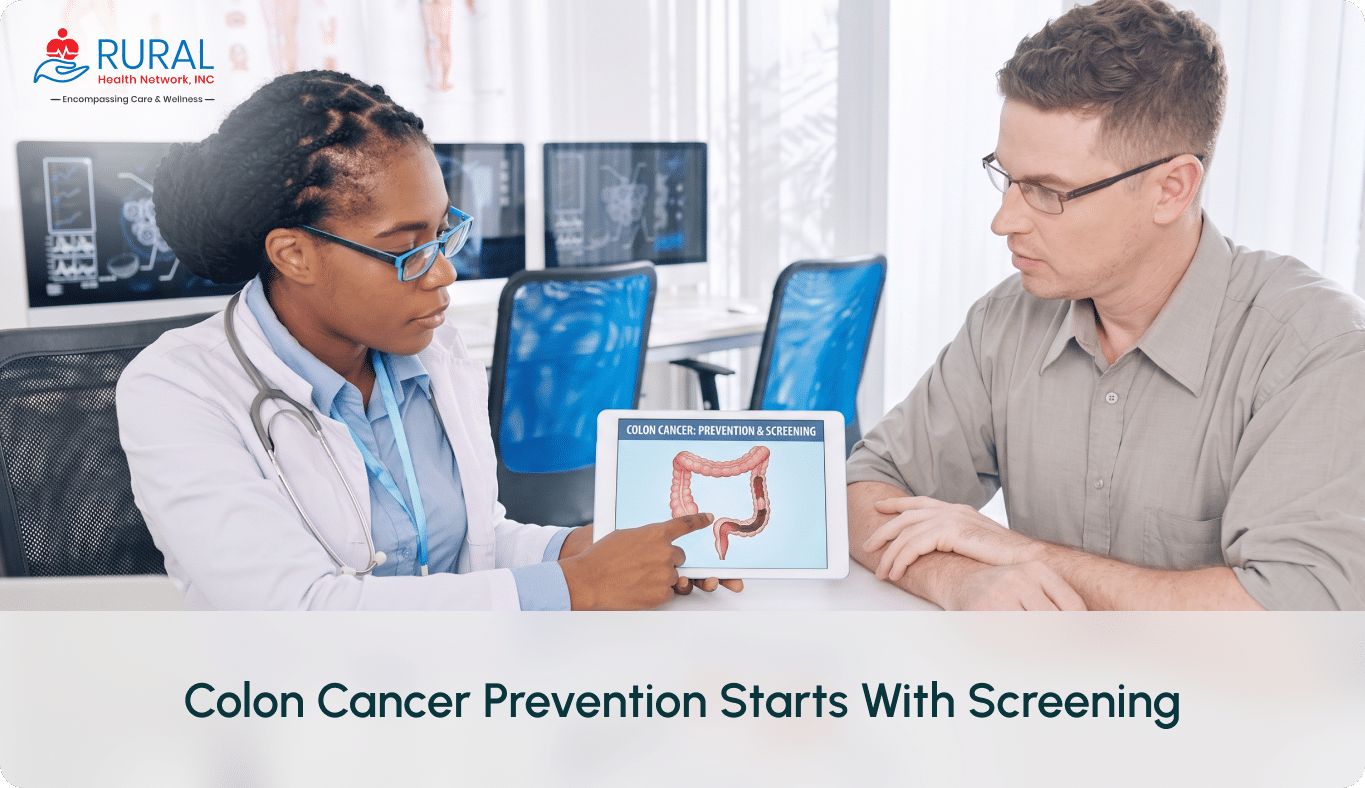
Colon cancer is one of the most common types of cancer, but it is also one of the cancers that can often be prevented or detected early through regular screening. Understanding the risk factors, symptoms, screening options, treatment approaches, and prevention strategies can help you take proactive steps toward better health.
Colon cancer begins in the colon, which is part of the large intestine. It often develops from abnormal growths called polyps. Some polyps can become cancerous over time, which is why screening plays an important role in preventing colorectal cancer or finding it at an earlier, more treatable stage.
For people living in rural communities, accessing preventive care and follow-up services can sometimes be challenging. Rural Health Network is committed to helping individuals understand their preventive healthcare needs and connect with appropriate medical services.
What Is Colon Cancer?
Colon cancer is a type of colorectal cancer that begins in the colon. It commonly develops from polyps, which are abnormal growths on the inner lining of the colon.
Not all polyps become cancerous. However, certain types can gradually develop into cancer over several years. Screening can help identify and remove some precancerous polyps before they become cancer.
Colon cancer can also develop without noticeable symptoms, particularly in its early stages. This makes routine screening important even when you feel healthy.
What Causes Colon Cancer?
There is no single cause of colon cancer. Instead, several factors can increase a person’s risk.
Common colon cancer risk factors include:
- Age: The risk of colorectal cancer increases with age, although younger adults can also develop the disease.
- Family history: Having a parent, sibling, or child with colorectal cancer or certain types of polyps can increase your risk.
- Personal history: Previous colorectal polyps or colorectal cancer can increase the likelihood of developing the disease again.
- Inflammatory bowel disease: Conditions such as Crohn’s disease and ulcerative colitis can increase colorectal cancer risk.
- Diet: Diets high in red and processed meats and low in fruits, vegetables, and whole grains may increase risk.
- Physical inactivity: Regular physical activity is associated with a lower risk of colorectal cancer.
- Excess body weight: Overweight and obesity are associated with an increased risk.
- Tobacco use: Smoking is linked to an increased risk of colorectal cancer.
- Alcohol use: Drinking alcohol, particularly heavier consumption, can increase colorectal cancer risk.
- Inherited conditions: Certain genetic conditions can significantly increase the risk of colorectal cancer.
Having one or more risk factors does not mean you will develop colon cancer. Talk with your healthcare provider about your individual risk and whether you should begin screening earlier or undergo additional testing.
What Are the Symptoms of Colon Cancer?
Colon cancer may not cause symptoms during its early stages. When symptoms do occur, they can vary depending on the location and size of the cancer.
Possible symptoms include:
- Blood in the stool or rectal bleeding
- A persistent change in bowel habits, including diarrhea or constipation
- Stools that are narrower than usual
- Abdominal pain, cramping, or discomfort
- A feeling that your bowel does not completely empty
- Unexplained weight loss
- Persistent fatigue or weakness
These symptoms can also be caused by conditions other than colon cancer. However, blood in the stool, unexplained weight loss, or persistent changes in bowel habits should not be ignored.
If you experience concerning or persistent symptoms, speak with a healthcare professional.
How Is Colon Cancer Diagnosed?
Colon cancer cannot be diagnosed based on symptoms alone. If your healthcare provider identifies concerning symptoms or an abnormal screening result, additional testing may be recommended.
Colonoscopy
A colonoscopy allows a healthcare professional to examine the inside of the colon using a flexible tube with a camera.
During a colonoscopy, the provider may be able to:
- Identify abnormal areas or polyps
- Remove certain polyps
- Collect tissue samples for laboratory testing
- Evaluate areas that may be causing symptoms
A colonoscopy can therefore serve as both a screening and diagnostic procedure.
Stool-Based Tests
Several colorectal cancer screening options use stool samples. Depending on the test, they may look for hidden blood or other signs associated with colorectal cancer.
One common option is the fecal immunochemical test (FIT), which can be completed at home.
If a stool-based screening test produces an abnormal result, a follow-up colonoscopy is generally needed.
Other Diagnostic Tests
Depending on the situation, healthcare providers may use imaging studies, blood tests, biopsies, or other procedures to evaluate suspected colorectal cancer and determine whether it has spread.
When Should You Start Colon Cancer Screening?
For adults at average risk, colorectal cancer screening generally begins at age 45.
However, the appropriate screening schedule depends on factors such as:
- Age
- Family history
- Personal medical history
- Previous polyps
- Inflammatory bowel disease
- Certain inherited conditions
- Results from previous screening tests
There is no single screening test or schedule that is right for everyone.
If you are younger than 45 but have a family history or other risk factors, talk with your healthcare provider about whether earlier screening is appropriate.
Why Is Screening Important?
Screening can detect colorectal cancer before symptoms appear. Some screening methods can also identify precancerous polyps that can be removed before they develop into cancer.
You do not need to wait for symptoms to begin screening.
Ask your healthcare provider which colorectal cancer screening option is appropriate for you.
What Are the Treatment Options for Colon Cancer?
If colon cancer is diagnosed, treatment depends on several factors, including:
- The stage of the cancer
- The location of the tumor
- Whether the cancer has spread
- The characteristics of the cancer cells
- Your overall health and preferences
Your healthcare team will develop a treatment plan based on your individual situation.
Surgery
Surgery is an important treatment for many people with localized colon cancer.
Depending on the cancer’s location and stage, surgery may involve removing the tumor and a portion of the colon, along with nearby lymph nodes.
Some polyps or very early cancers may be removed during a colonoscopy.
Chemotherapy
Chemotherapy uses medications to destroy cancer cells or prevent them from growing.
It may be recommended before or after surgery depending on the cancer’s stage and individual circumstances.
Radiation Therapy
Radiation therapy is used more commonly for rectal cancer than colon cancer. In certain situations, however, radiation may be part of a colorectal cancer treatment plan.
Targeted Therapy
Targeted therapies are medications designed to act on specific characteristics of cancer cells. They may be appropriate for certain advanced colorectal cancers based on the tumor’s molecular features.
Immunotherapy
Immunotherapy helps the body’s immune system recognize and attack cancer cells.
It is not appropriate for every person with colon cancer. Certain tumors with specific molecular characteristics may be more likely to respond to immunotherapy.
How Can You Reduce Your Risk of Colon Cancer?

You cannot control every colorectal cancer risk factor, such as age or family history. However, several lifestyle choices may help lower your risk.
Get Recommended Screenings
Regular colorectal cancer screening is one of the most important steps you can take.
Screening can detect cancer earlier and, with some tests, identify precancerous polyps before they become cancerous.
Talk with your healthcare provider about the screening method and schedule that best fits your risk level.
Eat a Healthy Diet
A balanced diet can support overall health and may help reduce colorectal cancer risk.
Focus on:
- Fruits and vegetables
- Whole grains
- Beans and other fiber-rich foods
- A variety of nutrient-dense foods
Try to limit excessive consumption of red and processed meats.
Stay Physically Active
Regular physical activity is associated with a lower risk of colorectal cancer and provides many other health benefits.
Choose activities that fit your abilities and lifestyle, such as walking, cycling, gardening, or other forms of moderate exercise.
Maintain a Healthy Weight
Maintaining a healthy weight may help reduce colorectal cancer risk while also supporting heart health, blood sugar control, and overall wellness.
Avoid Tobacco
Smoking is associated with an increased risk of colorectal cancer and many other serious health conditions. If you use tobacco, talk with a healthcare professional about resources that can help you quit.
Limit Alcohol
Alcohol consumption is associated with colorectal cancer risk. Limiting alcohol or avoiding it altogether can help reduce this risk.
Colon Cancer Prevention in Rural Communities
Accessing preventive healthcare can be more difficult for people living in rural areas.
Challenges may include:
- Longer travel distances to specialists
- Limited availability of gastroenterology services
- Transportation difficulties
- Time away from work or family responsibilities
- Insurance and financial barriers
- Longer wait times for certain appointments
These challenges can make it easier to postpone preventive care.
However, living in a rural community should not mean putting off important cancer screening. Primary care providers can help patients understand their risk, recommend appropriate screening, and coordinate referrals when specialized testing is needed.
How Rural Health Network Can Support Preventive Care
Rural Health Network focuses on helping individuals and families access preventive healthcare and understand the importance of early detection.
Our healthcare services can help support:
Preventive Health Assessments
Routine wellness visits provide an opportunity to discuss your health history, risk factors, family history, and recommended preventive screenings.
Screening Guidance
Your healthcare provider can help you understand available colorectal cancer screening options and determine when screening or follow-up testing may be appropriate.
Care Coordination
If additional evaluation or specialized care is needed, your primary care team can help coordinate referrals and guide you through the next steps.
Personalized Wellness Planning
Healthy eating, physical activity, weight management, tobacco cessation, and other lifestyle changes can all contribute to better overall health.
Take the Next Step for Your Health
Colon cancer can affect people of different ages and backgrounds, but screening and healthy lifestyle choices can play an important role in prevention and early detection.
Don’t wait for symptoms before talking with your healthcare provider about colorectal cancer screening. Understanding your personal risk and following recommended screening guidelines can help you take an active role in protecting your health.
If you live in a rural community and need help understanding preventive care or screening options, Rural Health Network can help you take the next step.
Schedule a wellness visit and talk with your healthcare provider about your colorectal cancer screening needs.
This article is for educational purposes only and does not replace personalized medical advice, diagnosis, or treatment. Screening recommendations may vary based on age, medical history, family history, and individual risk factors.