

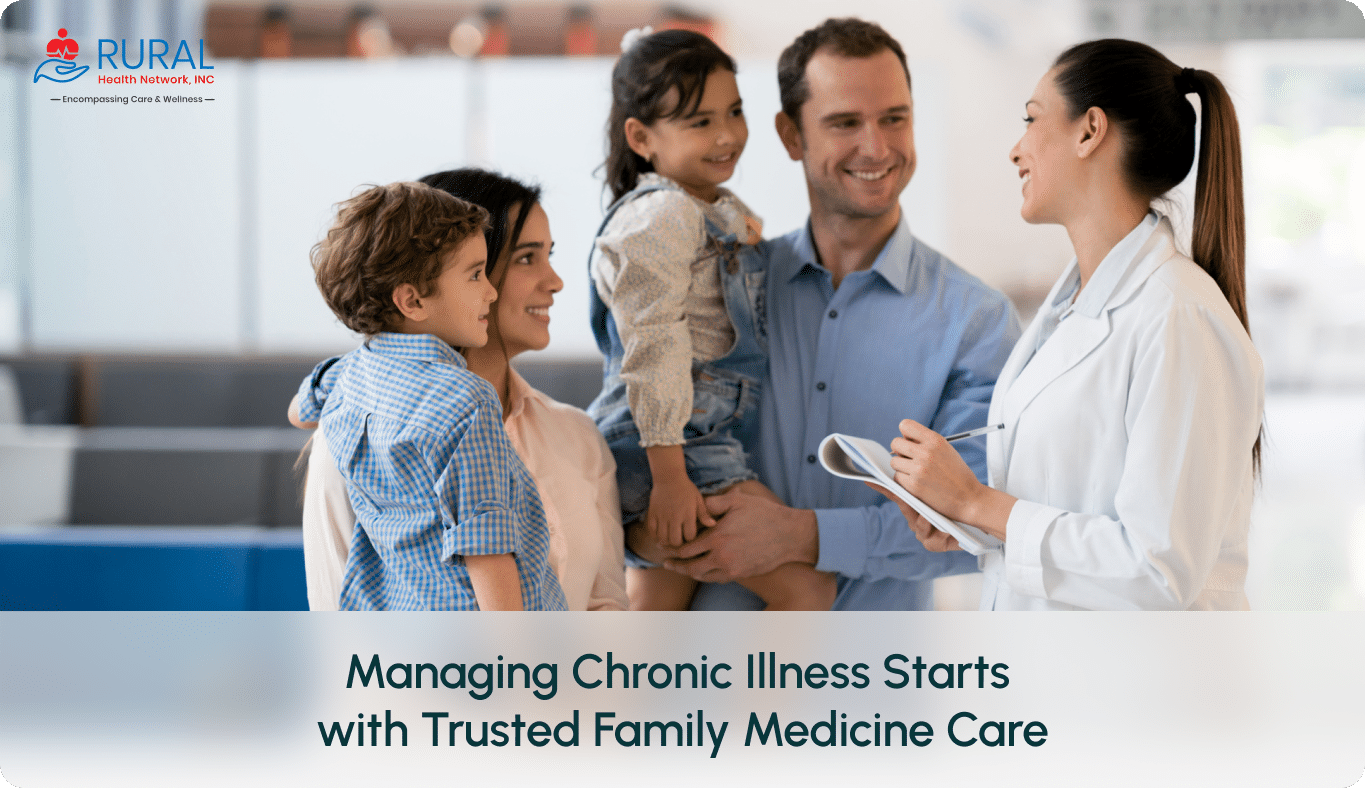
Managing a chronic illness requires more than treating symptoms—it requires ongoing support, preventive care, and a healthcare provider who understands your unique needs. Whether you’re living with diabetes, hypertension, asthma, or another long-term condition, effective chronic disease management can help improve your quality of life while reducing healthcare costs and complications.
A family medicine doctor serves as a trusted partner throughout your healthcare journey. By building long-term relationships with patients and families, family physicians can develop personalized treatment plans, monitor health changes, and coordinate care with specialists when needed.
At Rural Health Network, our family medicine providers are dedicated to helping patients successfully manage chronic conditions and achieve better long-term health outcomes.
Why Chronic Disease Management Matters
Chronic diseases are among the leading causes of disability, hospitalization, and healthcare expenses. Effective management can help:
- Prevent disease progression
- Reduce emergency room visits and hospitalizations
- Improve daily quality of life
- Lower healthcare costs
- Support healthier aging
- Reduce the risk of serious complications
Working closely with a family medicine doctor allows patients to take a proactive approach to managing chronic conditions and maintaining overall wellness.
Understanding Chronic Diseases and Long-Term Care
Chronic health diseases are lifelong conditions requiring continuous management and care. In contrast, acute illnesses are sudden and often brief. Managing chronic conditions involves regular medical treatment, informed choices, goal-setting, and proactive health strategies. Common chronic conditions often require continuous monitoring, medication management, lifestyle modifications, and preventive healthcare services. Early intervention and consistent medical care are key components of successful chronic condition management.
Here’s a look at some of the most common chronic diseases:
Diabetes Management
Family medicine doctors play a critical role in diabetes management by monitoring blood glucose levels, prescribing medications, recommending lifestyle changes, and helping patients prevent diabetes-related complications.
Hypertension Management
Effective hypertension management includes routine blood pressure monitoring, medication adjustments, dietary guidance, and preventive care to reduce the risk of heart disease and stroke.
Asthma Management
Through personalized treatment plans and regular monitoring, family medicine providers help patients control asthma symptoms, avoid triggers, and improve respiratory health.
How Family Medicine Doctors Support Chronic Disease Management
Family medicine physicians are uniquely positioned to oversee chronic disease treatment because they provide comprehensive healthcare services for patients of all ages. Their broad medical expertise allows them to address multiple conditions simultaneously while considering the patient’s overall health and lifestyle.
Let’s break down how family doctors handle chronic conditions.
Personalized Care Plans
Family medicine doctors are experts at customizing care plans for your unique needs, especially when it comes to managing chronic illnesses.
Here are five examples of personalized treatment strategies:
- Customized Medication Regimens Example: For hypertension, the doctor prescribes a specific antihypertensive and adjusts the dosage based on blood pressure readings and other medications.
- Individualized Diet Plans Example: A person with Type 2 diabetes gets a diet plan tailored to their habits and glucose goals, focusing on low-glycemic foods and personalized carbohydrate counting.
- Personalized Exercise Programs Example: For someone with COPD, the doctor recommends a low-intensity aerobic and breathing exercise program designed to improve lung function and stamina while considering physical limitations.
- Tailored Stress Management Techniques Example: A patient with chronic anxiety may use stress reduction methods like guided imagery or progressive muscle relaxation customized to their unique stressors.
- Behavioral Health Integration Example: An individual with major depressive disorder might receive a treatment plan that includes a combination of personalized psychotherapy and medication, with adjustments based on response and side effects.
Coordinating Comprehensive Care
Family medicine doctors are pivotal in a patient’s healthcare journey, serving as coordinators between you and specialists and other providers. Chronic conditions often require a team to address all facets of a patient’s health, resulting in more coordinated and effective treatment.
Here’s a glimpse into how this collaborative approach works in practice:
- Diabetes Management A patient with diabetes might work with a family medicine doctor, an endocrinologist, a dietitian, and a diabetes educator. They manage blood sugar levels, optimize medication, create dietary plans, and educate the patient on self-care strategies.
- Heart Disease Care For a patient with heart disease, a cardiologist, family medicine doctor, nutritionist, and physical therapist often team up to provide comprehensive care. They work together to monitor heart function, adjust medications, design a heart-healthy diet, and craft an exercise plan to enhance cardiovascular health.
- Asthma Care Managing chronic asthma or chronic obstructive pulmonary disease (COPD) involves a pulmonologist, allergist, family medicine doctor, and respiratory therapist. This team focuses on symptom management, addressing allergy triggers, optimizing medication use, and improving breathing techniques.
- Chronic Pain Management A person with chronic pain might see a pain specialist, family medicine doctor, physical therapist, and mental health counselor. These professionals collaborate on pain relief strategies, physical rehabilitation, and psychological support.
Preventive Care and Health Maintenance

Family medicine emphasizes preventive care, aiming to tackle health issues before they become problems. Focusing on prevention enhances your long-term health and helps you do your part in reducing the pressure on the healthcare system.
Here’s how a proactive approach makes a difference:
Regular Check-Ups and Screenings
Routine check-ups and screenings catch potential issues early, allowing for timely intervention. For example, assessing blood pressure for heart disease or monitoring blood sugar levels for diabetes can prevent complications and improve management.
Vaccinations
Staying up to date with vaccinations is essential, especially for those with chronic conditions. For instance, flu vaccines can help prevent respiratory infections that might worsen conditions like asthma or COPD.
Lifestyle Modifications
Lifestyle changes can profoundly impact the management of chronic conditions and overall health. This includes:
- Nutrition: A balanced diet manages diabetes and hypertension by reducing sodium and increasing fiber.
- Exercise: Regular physical activity helps control weight and improve cardiovascular health. Engage in activities like walking or swimming as needed.
- Mental Health: Mindfulness and therapy enhance overall health and chronic condition management by reducing stress, improving mental health, and promoting healthier lifestyle choices.
Education and Self-Management
Educating patients about their conditions and providing self-management strategies help them make informed decisions, adhere to treatment plans, and reduce the risk of complications.
Medication Adherence
Taking prescribed medications as directed is paramount in managing chronic conditions. Regular reviews and adjustments ensure medications remain effective and help prevent adverse outcomes.
Benefits of Choosing a Family Medicine Doctor for Chronic Care
Patients who establish long-term relationships with a family medicine provider often benefit from:
- Consistent and coordinated healthcare
- Better medication management
- Improved preventive care
- Early detection of complications
- Personalized treatment strategies
- Stronger patient-provider relationships
- Better health outcomes over time
Technology Enhancing Chronic Disease Management
Technology has transformed how family medicine doctors deliver care and support patients with chronic illnesses. Digital health tools improve communication, monitoring, and treatment adherence, making chronic disease management more convenient and effective than ever.
Here’s how family doctors are using technology to enhance care:
Electronic Health Records
EHRs centralize your health information into one system, enabling doctors to monitor progress, make informed decisions, and coordinate with specialists more effectively.
Telemedicine
Virtual appointments make it easy to stay in touch with your doctor for follow-ups or quick consultations, reducing in-person visits and allowing you to manage your condition from home.
Remote Monitoring Tools
Devices like blood pressure cuffs and blood glucose monitors send real-time data to your doctor, helping you catch issues early and manage your condition without frequent office visits.
Patient Portals and Health Apps
Patient portals allow access to medical records, test results, and direct messaging with your doctor. Health apps offer medication reminders, symptom tracking, and personalized tips for convenience.
Family Medicine at the Forefront of Chronic Disease Management
Partner with a Family Medicine Doctor for Better Long-Term Health
Successfully managing chronic illnesses requires ongoing care, education, and support. A trusted family medicine doctor can help you navigate every stage of your healthcare journey through personalized treatment plans, preventive services, and coordinated care.
At Rural Health Network, we are committed to providing comprehensive family medicine services and expert chronic disease management for patients throughout Newman, California. Whether you’re managing diabetes, hypertension, asthma, or multiple chronic conditions, our experienced healthcare team is here to help you achieve your health goals.
Take control of your health with personalized chronic illness care from Rural Health Network. Contact our team today to schedule an appointment and learn how family medicine can support your long-term wellness.