

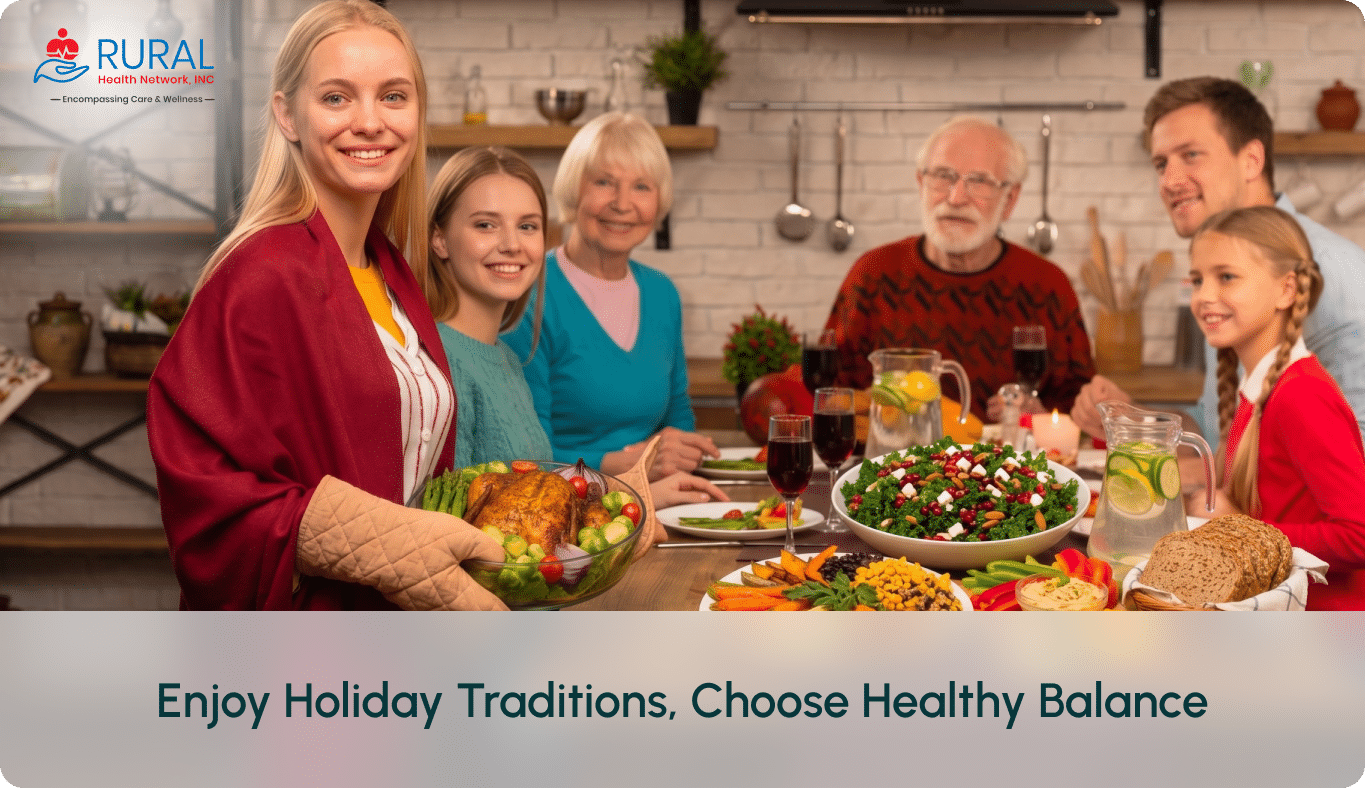
The holidays are a time to gather around the table with the people we love, share traditional meals, and enjoy recipes passed down through generations.
But with larger portions, rich foods, desserts, and frequent gatherings, it can be challenging to maintain healthy eating habits during the holiday season.
The good news is that you do not have to give up your favorite holiday foods to eat well. The key is balance, portion awareness, nutritious choices, and staying active.
Small changes can help you enjoy traditional holiday meals while continuing to support your overall health.
If you have not had a recent health checkup, the holiday season can also be a good reminder to prioritize preventive care. Learn more about the importance of annual physical exams.
Make Your Health a Priority This Season
How Can You Eat Healthy During the Holidays?
You can eat healthy during the holidays without avoiding your favorite foods. Focus on reasonable portions, include nutritious foods on your plate, stay hydrated, and remain physically active.
Here are some practical ways to maintain balance:
- Enjoy your favorite holiday foods in moderation.
- Fill part of your plate with vegetables and fruit.
- Choose lean protein and whole grains when available.
- Drink water regularly.
- Avoid skipping meals to “save calories” for a holiday dinner.
- Stay active through walks and other activities.
- Give yourself flexibility rather than aiming for perfection.
Healthy holiday eating is about your overall pattern of choices, not one meal or one celebration.
Why Is Holiday Eating Challenging?
Holiday eating can be different from your usual routine for several reasons.
There Is More Food Available
Family dinners, office parties, community events, and social gatherings can mean more opportunities to eat throughout the season.
When several celebrations happen close together, it can be difficult to maintain your normal eating routine.
Holiday Foods Have Emotional and Cultural Meaning
Food is often an important part of family and cultural traditions. Favorite recipes may remind us of family members, celebrations, and special moments.
You do not have to eliminate these foods to maintain a healthy lifestyle. Instead, consider enjoying them mindfully and balancing richer dishes with nutritious options.
Healthy Food Access Can Be Challenging in Rural Communities
For some rural families, access to fresh or affordable food may be affected by distance, transportation, availability, or seasonal factors.
Planning meals ahead, choosing affordable staples such as beans and whole grains, and using frozen fruits and vegetables when appropriate can help make nutritious meals more accessible.
What Are Some Healthy Holiday Eating Tips?
1. Enjoy Your Favorite Foods Without Guilt
You do not have to skip your favorite holiday dishes.
Instead, serve yourself a portion that allows you to enjoy the food while leaving room for other nutritious options. Eating slowly can also help you recognize when you are comfortably full.
2. Build a Balanced Plate
When possible, include a combination of:
- Vegetables and fruits
- Lean protein
- Whole grains
- Other nutrient-rich foods
You can still enjoy traditional sides and desserts. The goal is to create balance rather than make every part of the meal “perfect.”
3. Stay Hydrated
Drink water regularly throughout the day, including between meals.
Staying hydrated is an important part of maintaining overall health. If you are unsure whether you are drinking enough fluids, pay attention to signs such as thirst and dark-colored urine.
4. Avoid Skipping Meals
Skipping breakfast or lunch to compensate for a large holiday dinner can leave you extremely hungry later in the day.
Instead, maintain a relatively normal eating routine and choose balanced meals throughout the day.
5. Make Simple Ingredient Swaps
You can sometimes make traditional recipes more nutritious without completely changing them.
Depending on the recipe, consider:
- Adding more vegetables.
- Using whole-grain ingredients when appropriate.
- Reducing added sugar.
- Using lower-fat dairy ingredients where suitable.
- Roasting vegetables instead of frying them.
- Preparing smaller portions of particularly rich dishes.
You do not have to change every family recipe. Even one small adjustment can make a difference.
How Can You Make Traditional Holiday Recipes Healthier?
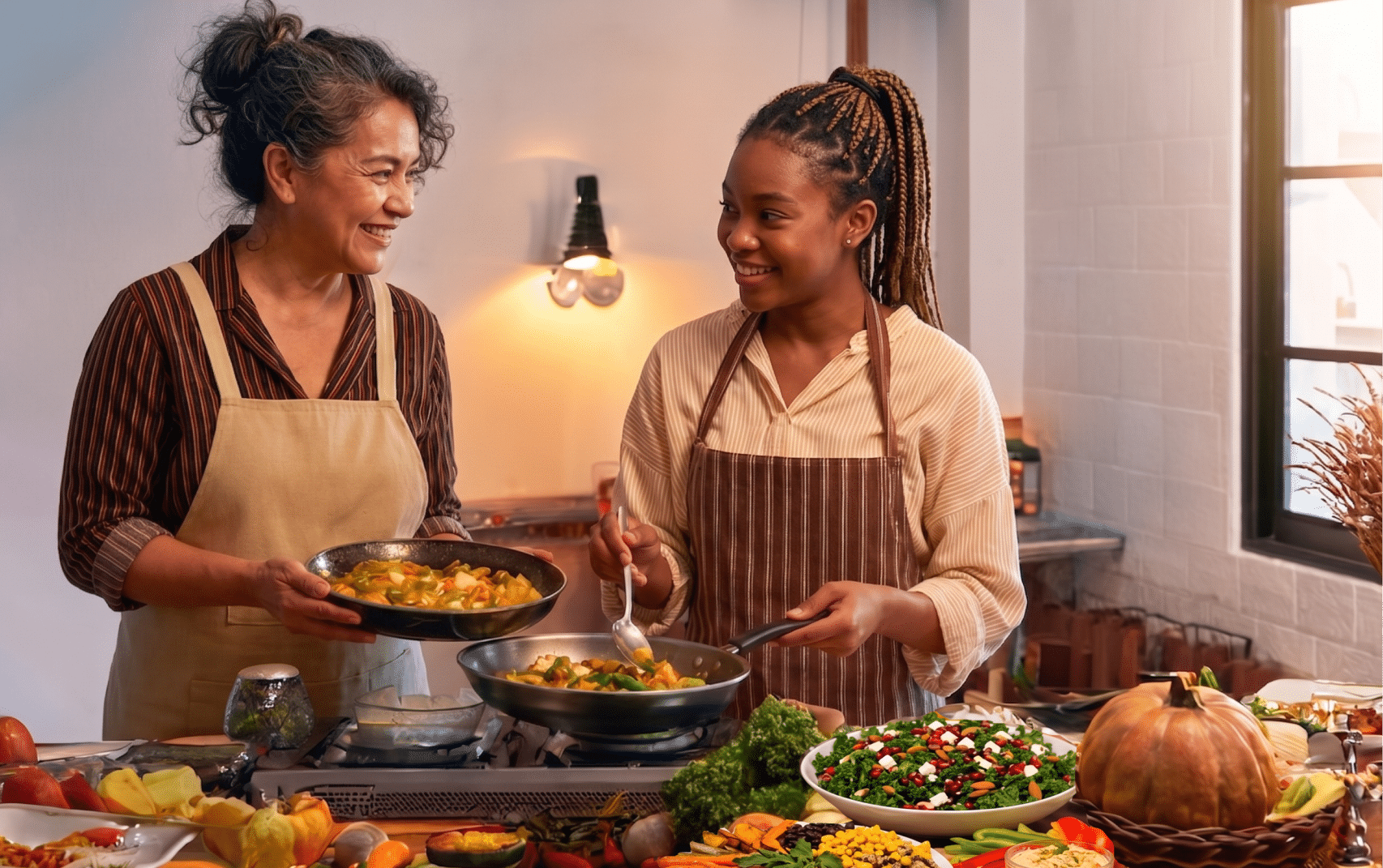
You can make holiday recipes healthier by adjusting portions, adding nutritious ingredients, and balancing richer foods with lighter options.
Tweak the Recipe, Keep the Tradition
Traditional recipes are often about more than food—they represent family history and shared memories.
Rather than completely replacing a beloved dish, consider making small changes such as:
- Preparing a smaller batch.
- Adding vegetables to savory dishes.
- Reducing added sugar where appropriate.
- Serving a fresh salad or vegetable dish alongside heavier foods.
- Offering fruit as another dessert option.
Celebrate Family and Cultural Favorites
Every family has foods that make the holidays special. There is no need to remove these dishes simply because you are trying to eat healthier.
Enjoy the foods that matter to you while paying attention to portions and balancing your meal with other nutritious choices.
Cook Together
Preparing meals as a family can make healthy eating more enjoyable.
Invite children, relatives, or friends to help prepare a vegetable side, salad, soup, or another nutritious dish. Cooking together can also create an opportunity to pass family traditions on to the next generation.
How Can You Stay Active During the Holidays?
You do not need to spend hours at the gym to stay active during the holidays. Simple activities throughout the day can help you maintain movement while spending time with family and friends.
Try:
- Taking a walk after a holiday meal.
- Dancing to holiday music.
- Playing an outdoor game with family.
- Walking while visiting with friends or relatives.
- Helping with household activities.
- Hiking or exploring local outdoor areas.
For families living in rural communities, everyday activities such as walking, yard work, outdoor recreation, or other physically active tasks can also provide opportunities to move.
The most important thing is to choose activities you enjoy and can safely participate in.
How Can People With Chronic Conditions Manage Holiday Meals?
If you have diabetes, high blood pressure, kidney disease, high cholesterol, or another chronic condition, your dietary needs may be different from those of other family members.
You do not necessarily have to avoid every holiday food, but you may need to pay closer attention to portions, ingredients, sodium, added sugars, carbohydrates, or other dietary factors depending on your condition.
If you are unsure which foods are appropriate for you, talk with your healthcare provider or a qualified nutrition professional.
Rural Health Network can help you discuss your health concerns and develop an approach that fits your individual needs.
Why Are Wellness Exams Important During the Holiday Season?
A wellness exam is an opportunity to review your overall health and discuss preventive care with your healthcare provider.
Depending on your individual needs, a wellness visit may include:
- A review of your health history.
- Health assessments.
- Recommended preventive screenings.
- Discussion of lifestyle habits.
- Review of medications.
- Personalized health recommendations.
- Follow-up for existing health concerns.
If you are due for a routine checkup, you can also review our guide to the importance of annual checkups.
How Can Rural Health Network Support Your Wellness Goals?
Healthy eating is one part of maintaining your overall health. Preventive care, regular checkups, physical activity, and appropriate management of health conditions are also important.
Rural Health Network is committed to helping individuals and families access healthcare services and trusted health information.
If you need help staying on track with your health goals, Family Medicine services can provide ongoing care for individuals and families.
You can also explore our health and wellness resources for additional information.
This holiday season, give yourself permission to enjoy the foods and traditions you love while making choices that support your health.
This Holiday, Choose Wellness