

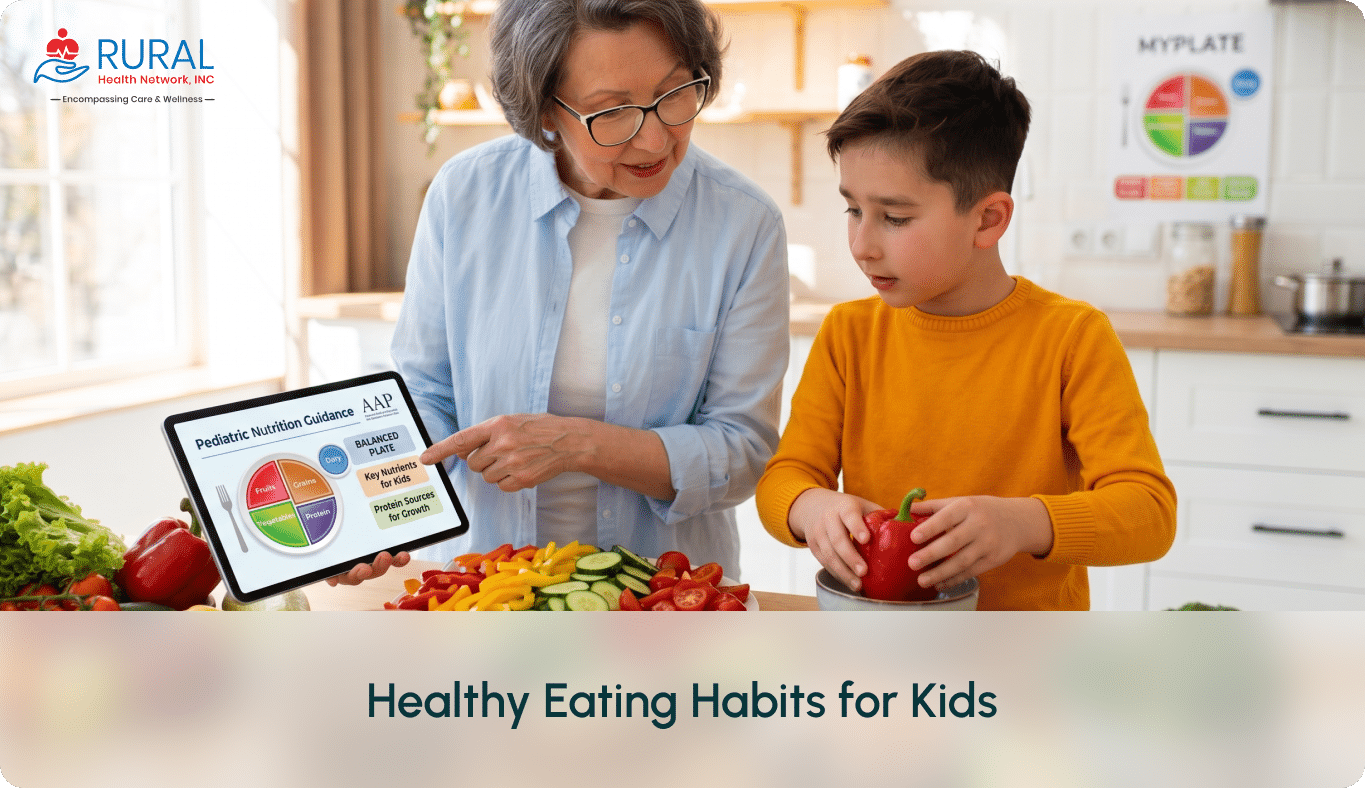
Helping your child develop healthy eating habits can sometimes feel like a daily challenge. Picky eating, snack preferences, busy schedules, and changing appetites can make mealtimes stressful for parents.
The good news is that healthy eating does not have to mean making every meal perfect. Children benefit from regular meals and snacks, a variety of nutritious foods, positive mealtime routines, and parents who model healthy eating behaviors.
Pediatric guidance can also help parents understand whether a child’s eating habits are appropriate for their age and development and when additional support may be needed.
Why Are Healthy Eating Habits Important for Children?
Good nutrition provides children with the nutrients they need for growth, development, learning, and overall health. A healthy eating pattern generally includes a variety of fruits and vegetables, whole grains, protein foods, dairy or appropriate fortified alternatives, and healthy fats.
Healthy eating habits developed during childhood can also help establish eating patterns that continue as children grow.
Good nutrition supports:
- Growth and development: Children need adequate energy, protein, vitamins, and minerals as their bodies grow.
- Brain development: A varied, nutrient-dense diet provides nutrients needed for healthy brain development.
- Bone and muscle health: Calcium, vitamin D, protein, and other nutrients support growing bones and muscles.
- Overall wellness: A balanced eating pattern can help children maintain a healthy weight and reduce the risk of nutrition-related health problems.
The goal is not to make children eat perfectly. Instead, focus on creating a healthy food environment and helping children gradually develop a positive relationship with food.
What Are Common Eating Challenges for Children?
Every child is different, and eating habits can change with age and development.
Parents commonly have questions such as:
“Why is my child such a picky eater?”
Picky or selective eating is common during childhood, particularly among toddlers and preschoolers. Some children may refuse unfamiliar foods or prefer only a small number of familiar foods.
Rather than turning mealtimes into a battle, continue offering a variety of foods and give your child opportunities to become familiar with new foods over time.
“My child only wants snacks.”
Frequent grazing throughout the day can make it harder for children to recognize hunger and fullness cues.
Regular meal and snack times can provide structure while still allowing children to respond to their appetite.
“My child refuses vegetables.”
A child refusing a vegetable once does not necessarily mean they will never eat it.
Continue offering vegetables alongside foods your child already enjoys. It can take repeated exposure before children accept a new food.
“I don’t have much time to prepare meals.”
Healthy eating does not require complicated recipes.
Frozen or canned fruits and vegetables can be nutritious alternatives to fresh produce. When choosing canned options, look for vegetables with low sodium and fruits without added sugars.
How Can Parents Improve Their Child’s Eating Habits?
Small, consistent changes can make healthy eating easier for the entire family.
1. Establish Regular Meal and Snack Times
Children often benefit from predictable meal and snack routines.
Instead of allowing children to snack continuously throughout the day, establish regular opportunities to eat. During meals and snacks, minimize distractions such as television and electronic devices.
A structured routine can help children develop healthy eating behaviors while allowing them to respond to their own hunger and fullness cues.
2. Offer a Variety of Nutritious Foods
Try to include foods from different food groups throughout the day.
Examples include:
- Fruits such as bananas, berries, oranges, apples, or melons
- Vegetables such as carrots, peas, spinach, beans, or sweet potatoes
- Whole grains such as oatmeal, whole-grain bread, or brown rice
- Protein foods such as eggs, beans, poultry, fish, tofu, or lean meats
- Dairy or appropriate fortified alternatives
- Healthy fats such as avocado, nuts, seeds, or nut butters when age-appropriate
Children’s nutritional needs vary by age, growth, activity level, and individual health needs, so portion sizes and specific recommendations should be personalized.
3. Include One Familiar Food at Meals
If your child is selective with food, serve at least one food they already enjoy along with other foods.
For example, if your child likes rice, you could serve rice alongside vegetables and a protein source.
This can make trying unfamiliar foods feel less overwhelming without creating a completely separate meal.
4. Avoid Pressuring Your Child to Eat
Forcing a child to finish food or repeatedly pressuring them to try something can make mealtimes more stressful.
A responsive approach allows parents to decide what, when, and where food is offered while allowing children to determine whether and how much they eat from the foods provided.
5. Keep Offering Foods Your Child Rejects
Children may need multiple opportunities to become comfortable with a new food.
If your child refuses broccoli today, you can offer it again another day without forcing them to eat it.
Repeated exposure can gradually increase familiarity and acceptance.
6. Let Children Help With Food Preparation
Age-appropriate involvement can make meals more engaging.
Depending on their age, children can:
- Choose between two healthy foods
- Wash fruits and vegetables
- Mix ingredients
- Help pack a lunch
- Plant or pick vegetables
- Help set the table
Children may be more interested in trying foods when they participate in selecting or preparing them.
7. Be a Healthy Eating Role Model
Children often learn by watching the adults around them.
Instead of simply telling your child to eat vegetables or drink water, demonstrate those habits yourself.
Enjoy balanced meals together when possible and make healthy foods a normal part of family life.
8. Choose Healthy Drinks
Water and unsweetened milk are generally better everyday choices than sugary drinks.
Regular consumption of sugar-sweetened beverages can contribute to excess added sugar intake and is associated with health concerns such as weight gain and tooth decay.
For young children, beverage recommendations are age-specific. For example, children younger than 12 months should not receive juice, and the AAP recommends no more than 4 ounces of 100% fruit juice per day for children ages 1–3.
9. Don’t Make Healthy Eating About Weight
Children need adequate nutrition for normal growth and development.
Instead of focusing on dieting or restricting food, focus on nutritious choices, regular meals, physical activity, sleep, and positive family habits.
Your child’s pediatrician can monitor growth over time and help determine whether their growth pattern is appropriate.
How Can a Pediatrician Help With Children’s Eating Habits?
Pediatricians can help parents understand whether a child’s eating habits and growth are appropriate for their developmental stage.
During routine well-child visits, your child’s healthcare provider may discuss:
Growth and Development
Your pediatrician tracks growth over time and considers factors such as height, weight, development, and overall health.
A single measurement does not tell the whole story. Looking at growth patterns over time provides more useful information.
Nutrition
Your pediatrician can discuss your child’s eating pattern and identify areas where the diet may need improvement.
Depending on your child’s age and circumstances, they may discuss nutrients such as iron, calcium, vitamin D, protein, and other important nutrients.
Picky or Selective Eating
If your child eats a very limited variety of foods, a pediatrician can help determine whether this is typical picky eating or whether additional evaluation may be appropriate.
Individual Health Needs
Children with allergies, chronic health conditions, developmental concerns, feeding difficulties, or growth concerns may need more individualized nutrition guidance.
A pediatrician may recommend working with a registered dietitian or another appropriate specialist when necessary.
When Should Parents Talk to a Pediatrician About Eating Habits?
Picky eating is common, but some eating concerns deserve professional attention.
Talk with your child’s pediatrician if you notice:
- Poor weight gain or unexpected weight loss
- Significant changes in eating habits
- Persistent fatigue or low energy
- Difficulty chewing or swallowing
- Frequent choking or coughing while eating
- A very limited range of accepted foods
- Avoidance of entire food groups
- Signs of nutritional deficiency
- Ongoing stomach or digestive problems
- Significant anxiety, distress, or conflict around eating
- Concerns about your child’s growth or development
Your pediatrician can help determine whether further evaluation is needed.
Healthy Eating Tips for Rural Families
Families living in rural communities may face additional challenges when it comes to accessing certain foods or healthcare services.
Longer distances to grocery stores, transportation limitations, seasonal availability, and household budgets can all influence food choices.
Healthy eating does not have to depend on having access to expensive specialty foods.
Consider practical options such as:
- Buying seasonal fruits and vegetables
- Choosing frozen vegetables when fresh produce is unavailable
- Selecting canned vegetables with lower sodium
- Choosing canned or frozen fruit without added sugars
- Buying beans, lentils, eggs, and other affordable protein sources
- Planning meals around foods already available at home
- Preparing larger portions and using leftovers for another meal
Frozen and canned produce can still provide nutritious options when fresh foods are difficult to access.
How Rural Health Network Supports Children’s Health
Rural Health Network can help families make informed decisions about their child’s health through preventive pediatric care.
General pediatric care can support:
- Routine well-child visits
- Growth and development monitoring
- Age-appropriate nutrition guidance
- Preventive health education
- Identification of potential health concerns
- Guidance for parents and caregivers
If you have concerns about your child’s eating habits, growth, or development, talking with a pediatric healthcare provider can be a helpful first step.
Build Healthy Eating Habits One Step at a Time
Helping your child develop healthy eating habits is a gradual process. You do not need to transform your family’s meals overnight.
Start with small changes:
- Offer more variety.
- Establish regular meal and snack times.
- Keep healthy foods available.
- Involve your child in food preparation.
- Model balanced eating.
- Avoid mealtime battles.
- Talk with your pediatrician when you have concerns.
With patience, consistency, and age-appropriate guidance, parents can help children develop a healthier relationship with food.
If you have questions about your child’s nutrition, growth, or eating habits, schedule a pediatric visit with your healthcare provider to discuss your child’s individual needs.
This article is for educational purposes only and does not replace personalized medical advice, diagnosis, or treatment. Nutrition recommendations may vary based on a child’s age, growth, medical history, developmental needs, allergies, and individual health factors.