

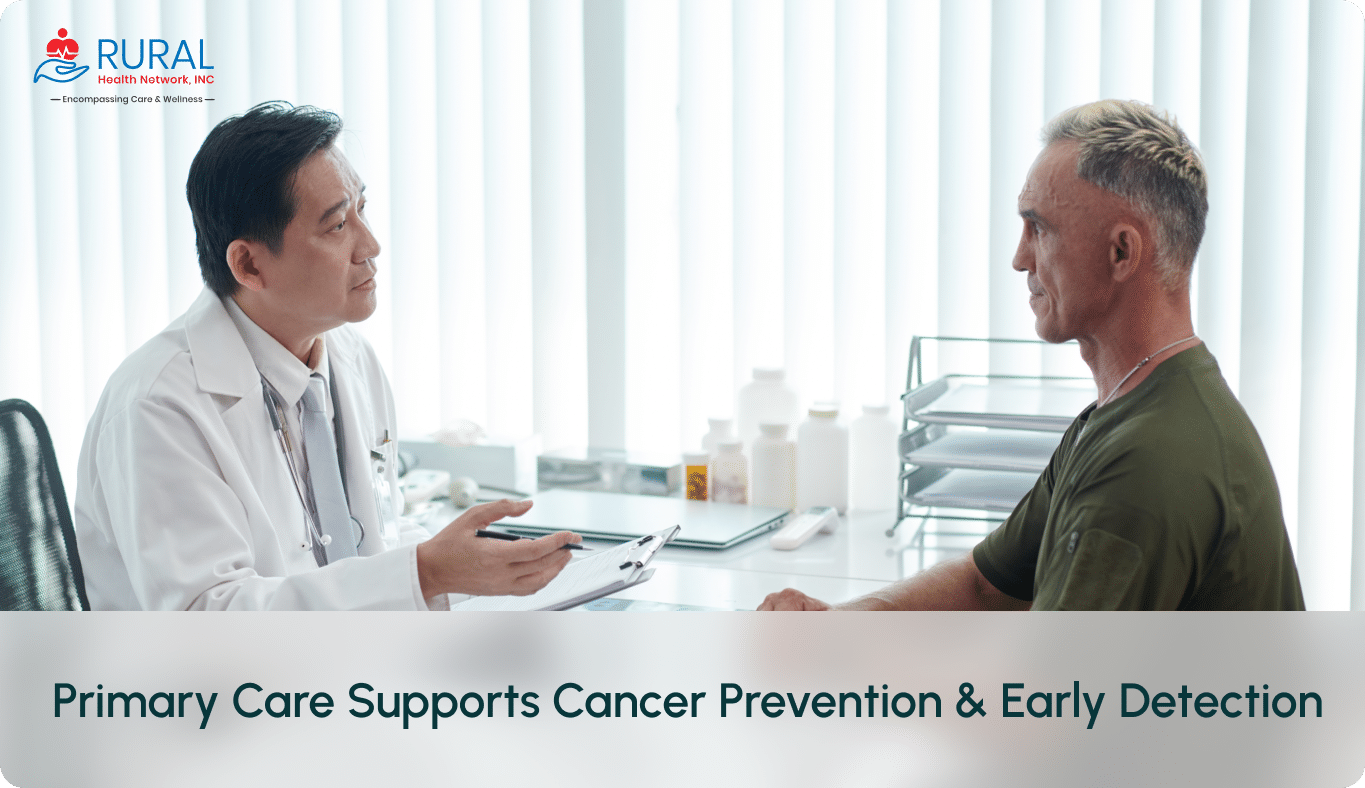
Cancer prevention and early detection often begin with something simple: regular primary care.
For people living in rural communities, a primary care provider can become a trusted partner who understands your health history, lifestyle, family history, and changing health needs over time. That ongoing relationship can make it easier to identify cancer risk factors, stay up to date with recommended screenings, recognize concerning symptoms, and get additional care when needed.
Cancer prevention does not mean that every cancer can be prevented. However, many cancer risks can be reduced through evidence-based lifestyle changes, vaccination, avoiding tobacco, limiting alcohol, and other preventive measures. The World Health Organization estimates that approximately 38% of cancers can currently be prevented by avoiding risk factors and using proven prevention strategies.
For rural families, primary care can help make these preventive steps more accessible and easier to understand.
What Is Cancer Prevention?
Cancer prevention means taking steps to reduce your risk of developing cancer and following recommended screening guidelines to identify certain cancers or precancerous changes early.
Primary care plays an important role because prevention can be incorporated into routine healthcare visits rather than treated as a separate task.
Your provider may discuss:
- Tobacco use and smoking cessation
- Alcohol consumption
- Physical activity
- Healthy eating and maintaining a healthy weight
- HPV and hepatitis B vaccination when recommended
- Sun and ultraviolet (UV) protection
- Occupational or environmental exposures
- Family history of cancer
- Personal health history
- Age- and risk-appropriate cancer screenings
The right prevention plan depends on your age, health history, risk factors, and family history.
How Does Primary Care Help Prevent Cancer?
Primary care providers can support primary prevention, which focuses on reducing cancer risk before cancer develops.
1. Helping You Quit Tobacco
Tobacco use is one of the leading preventable causes of cancer. Smoking and other tobacco products are associated with several cancers, including lung, mouth, throat, esophageal, pancreatic, bladder, kidney, and other cancers.
Your primary care provider can help you:
- Understand your tobacco-related health risks
- Create a smoking cessation plan
- Discuss evidence-based cessation treatments
- Manage withdrawal symptoms
- Connect you with additional cessation resources
Even if you have used tobacco for many years, quitting can still provide important health benefits.
2. Supporting Healthy Lifestyle Habits
Primary care visits provide an opportunity to discuss everyday habits that may affect long-term cancer risk.
Your provider may help you develop realistic goals related to:
- Physical activity
- Nutrition
- Healthy weight management
- Alcohol use
- Sleep and overall wellness
- Sun protection
These conversations should be personalized to your health needs rather than based on a one-size-fits-all approach.
3. Recommending Cancer-Preventing Vaccines
Certain infections can increase the risk of cancer.
For example, HPV is associated with several cancers, while hepatitis B can increase the risk of liver cancer. Vaccination against HPV and hepatitis B, when recommended for you, can help reduce the risk of certain cancers.
Your primary care provider can review your vaccination history and determine which vaccines may be appropriate.
4. Understanding Your Family History
Family history can help identify people who may have a higher risk for certain cancers.
During a primary care visit, tell your provider if close relatives have had cancers such as:
- Breast cancer
- Colorectal cancer
- Ovarian cancer
- Prostate cancer
- Pancreatic cancer
- Certain other cancers that may occur in families
Depending on your history, your provider may recommend earlier or more frequent screening, genetic counseling, or referral to a specialist.
How Does Primary Care Support Early Cancer Detection?
Early detection includes both screening people who do not have symptoms and evaluating symptoms or findings that could require further investigation.
Screening recommendations are not the same for everyone. They depend on the type of cancer, age, sex, risk factors, personal and family history, and current medical guidelines.
Your primary care provider can help determine which screenings are appropriate for you.
Common Cancer Screenings
Depending on your age and risk factors, your provider may discuss screenings such as:
- Breast cancer screening: Mammography is recommended every two years for women ages 40 to 74 under current USPSTF guidance.
- Colorectal cancer screening: For adults at average risk, USPSTF recommends screening from ages 45 to 75, with several testing options available.
- Cervical cancer screening: Screening recommendations depend on age and the screening method used.
- Lung cancer screening: Certain adults with a significant smoking history may qualify for low-dose CT screening based on age and smoking history.
- Prostate cancer screening: PSA-based screening involves individualized decision-making because potential benefits and harms vary between patients.
Your provider can explain the benefits, limitations, timing, and follow-up requirements for recommended screenings.
Important: Screening is different from diagnostic testing. If you have symptoms, you may need diagnostic evaluation even if you are not due for a routine screening test.
What Signs Should You Discuss With Your Primary Care Provider?
Primary care providers also help evaluate symptoms that may require further testing.
Talk with your healthcare provider if you notice persistent or unexplained changes such as:
- Unexplained weight loss
- A persistent change in bowel or bladder habits
- Blood in the stool or urine
- Unexplained or persistent fatigue
- A new lump or swelling
- A skin lesion or mole that changes
- Persistent cough or hoarseness
- Difficulty swallowing
- Unexplained or persistent pain
- Unusual bleeding or discharge
These symptoms do not automatically mean you have cancer. Many can have other causes. However, persistent or concerning symptoms deserve appropriate medical evaluation.
Why Your Primary Care Provider Matters in Cancer Detection

They Know Your Health History
Primary care is built around continuity. Your provider can consider your medical history, medications, family history, lifestyle, previous test results, and risk factors when deciding what preventive care you may need.
They Track Changes Over Time
A single appointment provides only a snapshot of your health. Regular visits allow your provider to identify changes over time and determine whether additional evaluation is appropriate.
They Help You Understand Screening Recommendations
Cancer screening guidelines can be confusing. Your primary care provider can explain:
- Which screenings may apply to you
- When screening should begin
- How often screening may be needed
- Which test options are available
- What happens if a screening result is abnormal
They Coordinate Follow-Up Care
If a screening test or symptom requires additional evaluation, your primary care team can help coordinate diagnostic testing, referrals, and follow-up care.
This is particularly valuable when patients need to travel to another community to see a specialist.
Cancer Prevention in Rural Communities
Access to preventive healthcare can be more challenging in rural areas.
Patients may face barriers such as:
- Long travel distances
- Transportation challenges
- Limited availability of specialists
- Longer appointment wait times
- Limited health education resources
- Difficulty taking time away from work or family responsibilities
Primary care can help address some of these barriers by providing preventive services closer to home, identifying screening needs during routine visits, coordinating referrals, and helping patients understand their next steps.
Telehealth can also help connect patients with certain specialists and healthcare services when appropriate.
For rural families, having a consistent primary care relationship can make preventive healthcare more manageable.
The Patient-Provider Relationship Can Make Prevention Easier
Cancer prevention is not just about tests. It is also about communication.
You may have questions that feel uncomfortable or difficult to ask:
- “Do I really need this screening?”
- “What happens during a colonoscopy?”
- “Does my family history increase my risk?”
- “Should I be worried about this mole?”
- “How can I quit smoking?”
- “What happens if my screening test is abnormal?”
There are no “stupid” questions when it comes to your health.
A trusted primary care provider can explain your options, discuss your concerns, and help you make informed decisions about preventive care.
5 Steps You Can Take to Reduce Your Cancer Risk
You do not have to change everything at once. Start with practical steps that fit your health and lifestyle.
1. Keep Up With Routine Primary Care Visits
Regular visits give you an opportunity to review your overall health, risk factors, vaccinations, and recommended preventive services.
2. Know Your Family History
Tell your provider about cancer diagnoses among close relatives, including the type of cancer and approximately when they were diagnosed.
3. Follow Recommended Screening Guidelines
Ask your provider which cancer screenings are appropriate for your age, sex, personal history, and risk factors.
4. Reduce Modifiable Cancer Risks
Avoid tobacco, limit alcohol, stay physically active, maintain a healthy weight, eat a balanced diet, and protect your skin from excessive UV exposure. These are among the evidence-based strategies recommended to reduce cancer risk.
5. Don’t Ignore Persistent Symptoms
If something changes and does not go away, talk with your primary care provider. Early evaluation can help determine whether additional testing is needed.
Take the First Step With Rural Health Community Center
Cancer prevention starts with everyday healthcare.
At Rural Health Community Center, primary care and preventive healthcare can help patients understand their health risks, stay current with recommended screenings, and receive guidance based on their individual needs.
Whether you are due for a routine wellness visit, have questions about cancer screening, or want to discuss your family history, starting the conversation with a primary care provider is a practical first step.
Explore our wellness exams and preventive care services to learn more.
You can also explore our family medicine services for comprehensive primary care throughout different stages of life.
Prevention starts with a conversation.