

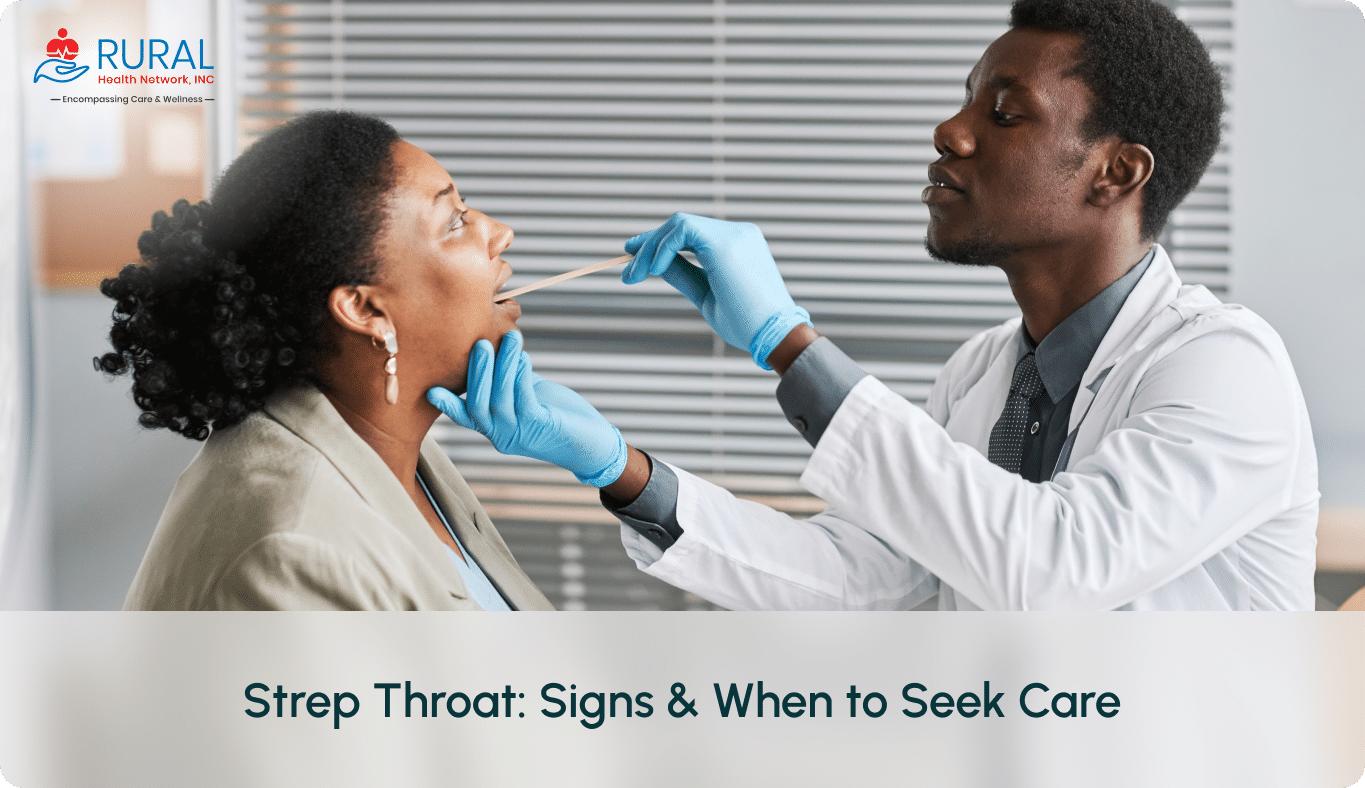
A sore throat can be caused by many conditions, including the common cold, flu, allergies, and bacterial infections. Strep throat is a bacterial infection caused by group A Streptococcus bacteria and can require antibiotic treatment when confirmed.
So, how can you tell if a sore throat might be strep?
Common signs of strep throat include a sudden sore throat, pain when swallowing, fever, swollen or red tonsils, swollen lymph nodes in the neck, and sometimes white patches on the tonsils. Cough, runny nose, and congestion are more commonly associated with viral infections.
However, symptoms alone cannot reliably confirm strep throat. A healthcare professional may use a rapid strep test and, in some situations, a throat culture to determine whether treatment is needed.
At Rural Health Community Center, we help patients and families understand their symptoms and receive appropriate evaluation and care.
Know the Signs. Get the Right Care.
What Is Strep Throat?
Strep throat is a bacterial infection of the throat and tonsils caused by group A Streptococcus bacteria, also known as Streptococcus pyogenes.
Strep throat is different from most sore throats, which are caused by viruses. Because strep is bacterial, antibiotics may be prescribed when testing confirms the infection.
Strep throat can spread from person to person through respiratory droplets and close contact. It can also spread when people come into contact with infected saliva or nasal secretions.
Strep throat is particularly common among school-aged children, although people of any age can become infected.
What Are the Symptoms of Strep Throat?
The most common symptoms of strep throat include:
- Sudden sore throat
- Pain or difficulty when swallowing
- Fever
- Red and swollen tonsils
- White patches or streaks of pus on the tonsils
- Swollen and tender lymph nodes in the front of the neck
- Small red spots on the roof of the mouth
- Headache
Children may also experience:
- Nausea
- Vomiting
- Stomach pain
- Headache
Not everyone with strep throat will have all of these symptoms.
Strep Throat vs. a Viral Sore Throat: What Is the Difference?
Strep throat is more likely when a sore throat begins suddenly and occurs with fever, swollen lymph nodes, and inflamed tonsils without a cough. Viral infections are more likely to cause symptoms such as cough, runny nose, congestion, or hoarseness.
| Strep Throat | Viral Sore Throat |
| Sudden sore throat | Sore throat may develop gradually |
| Fever may occur | Fever may be absent or mild |
| Painful swallowing | Sore throat with cold symptoms |
| Swollen tonsils | Cough may be present |
| White patches may appear on tonsils | Runny or stuffy nose may occur |
| Tender neck lymph nodes | Congestion is common |
| Cough is usually absent | Cough is common |
These differences can provide clues, but symptoms alone cannot confirm whether you have strep throat. Testing may be necessary.
How Is Strep Throat Diagnosed?

A healthcare professional may examine your throat and ask about your symptoms before deciding whether testing is appropriate.
Common tests include:
Rapid Strep Test
A rapid antigen detection test (RADT) uses a throat swab to look for evidence of group A Streptococcus.
Results are typically available relatively quickly. A positive rapid test can help confirm strep throat.
Throat Culture
A throat culture involves collecting a sample from the throat and allowing bacteria to grow in a laboratory.
A culture can take longer than a rapid test but may be used in certain situations, particularly when a rapid test is negative but clinical suspicion remains.
For children and adolescents, follow-up testing after a negative rapid test may be recommended in some circumstances. Your healthcare professional can determine the appropriate testing approach.
When Should You See a Doctor for a Sore Throat?
You should contact a healthcare professional if a sore throat is severe, persistent, or accompanied by concerning symptoms.
Consider seeking medical care if you or your child has:
- A severe or persistent sore throat
- Fever
- Difficulty swallowing
- Swollen or tender lymph nodes
- White patches on the tonsils
- A rash
- Repeated episodes of sore throat
- Symptoms that are getting worse rather than improving
When Is a Sore Throat an Emergency?
Difficulty breathing, inability to swallow liquids or saliva, severe dehydration, significant swelling of the neck or throat, or rapidly worsening symptoms require urgent medical evaluation.
If symptoms are severe or potentially life-threatening, seek emergency medical care.
Why Is It Important to Treat Confirmed Strep Throat?
When strep throat is confirmed, your healthcare professional may prescribe antibiotics.
Treatment can help:
- Shorten the duration of symptoms
- Reduce transmission to others
- Lower the risk of certain complications
Possible complications of untreated strep throat can include:
- Rheumatic fever
- Post-streptococcal glomerulonephritis, a type of kidney inflammation
- Peritonsillar abscess
- Spread of infection to nearby areas
Antibiotics should only be taken when prescribed by a healthcare professional. Do not use leftover antibiotics or medication prescribed for someone else.
How Does Strep Throat Spread?
Strep throat can spread through close contact with an infected person.
Transmission can occur through:
- Respiratory droplets
- Contact with saliva or nasal secretions
- Sharing food, drinks, or utensils
- Close contact with someone who is infected
Because strep throat can spread easily in households, schools, and other close-contact settings, good hygiene is important.
How Can You Prevent the Spread of Strep Throat?
If you or someone in your household has strep throat, practical steps can help reduce transmission.
Wash Your Hands
Wash your hands frequently with soap and water, especially after coughing, sneezing, or caring for someone who is sick.
Avoid Sharing Personal Items
Do not share:
- Cups
- Plates
- Eating utensils
- Towels
- Other items that may come into contact with saliva
Cover Coughs and Sneezes
Use a tissue or your elbow when coughing or sneezing and dispose of tissues properly.
Avoid Close Contact While Sick
Limit close contact with others while you are contagious and follow your healthcare professional’s guidance about returning to school, work, or other activities.
Follow Your Treatment Plan
If antibiotics are prescribed for confirmed strep throat, take them exactly as directed by your healthcare professional.
What Should You Do If You Think You Have Strep Throat?
If you have a sudden, severe sore throat with fever, swollen lymph nodes, or red and swollen tonsils—especially without a cough—contact a healthcare professional for evaluation.
Do not try to diagnose strep throat based only on symptoms. A healthcare professional can determine whether testing is appropriate and recommend treatment based on the results and your symptoms.
Strep Throat Care at Rural Health Community Center
At Rural Health Community Center, we provide healthcare services designed to support individuals and families in rural communities.
Our healthcare team can help evaluate symptoms, recommend appropriate testing, explain treatment options, and provide guidance on preventing the spread of infections.
Our healthcare services include:
- Routine checkups
- Preventive healthcare
- Wellness exams
- Health screenings
- Evaluation of common illnesses
- Personalized healthcare guidance
Regular healthcare visits can also help you stay up to date with preventive care. Learn more about the importance of routine checkups in rural healthcare.
For broader preventive care, explore our family medicine services.
If you or your child has symptoms that may be strep throat, contact Rural Health Community Center to discuss your concerns and determine the appropriate next step.
Take Sore Throat Symptoms Seriously
A sore throat does not always mean strep throat. Colds, flu, allergies, and other conditions can cause similar symptoms.
The key is to pay attention to how quickly symptoms develop, what other symptoms occur, and whether symptoms improve or worsen. If strep throat is suspected, a healthcare professional can determine whether testing is needed and recommend appropriate treatment.