

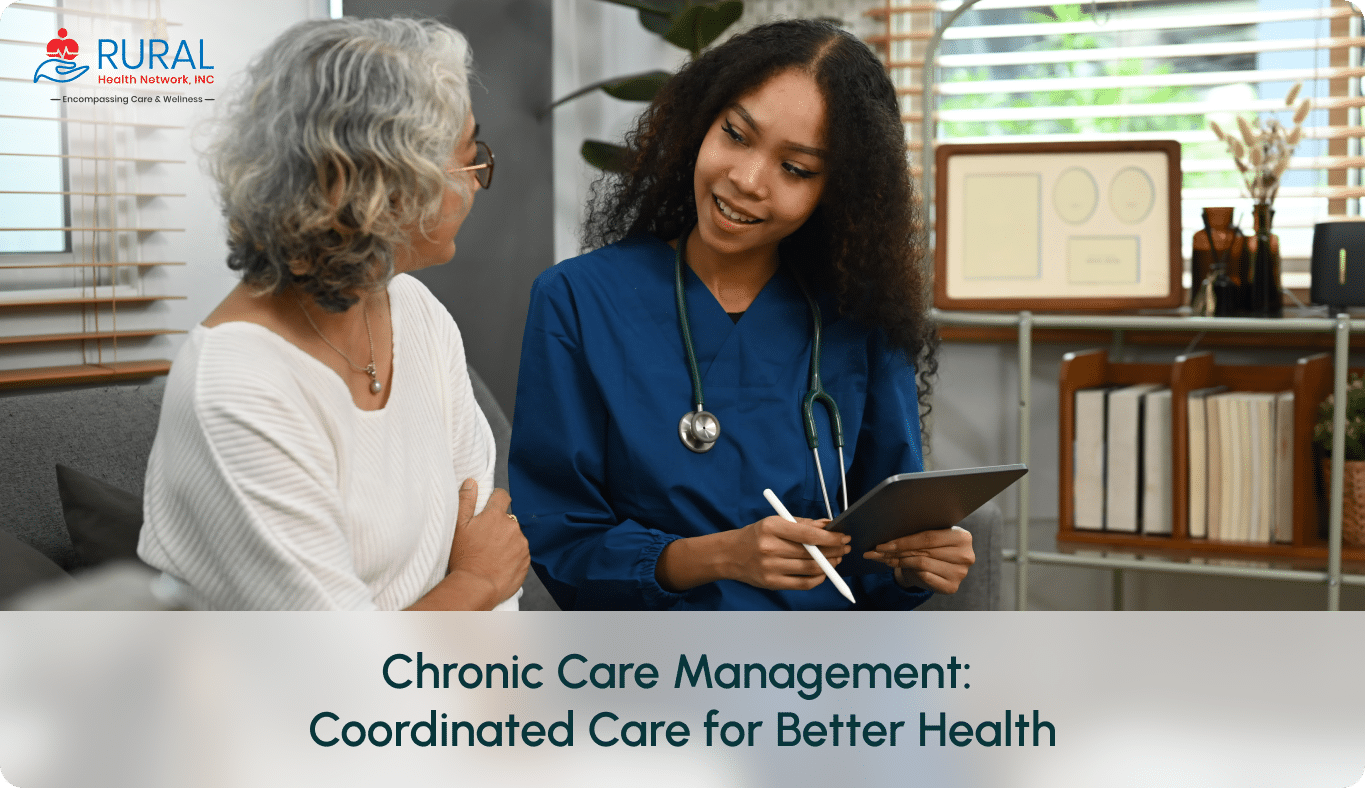
Living with a chronic health condition can affect nearly every part of daily life. Managing medications, keeping track of appointments, monitoring symptoms, and coordinating care between multiple healthcare providers can quickly become overwhelming.
For people living with one or more long-term health conditions, Chronic Care Management (CCM) provides an organized approach to coordinating healthcare and supporting ongoing disease management.
At Rural Health Network, we understand that managing chronic conditions involves more than treating symptoms during an occasional appointment. Effective chronic care management focuses on ongoing communication, personalized care planning, medication management, patient education, and coordination between members of your healthcare team.
What Is Chronic Care Management?
Chronic Care Management (CCM) is a coordinated healthcare service that helps people manage two or more chronic conditions expected to last at least 12 months. The goal is to help patients stay on track with their treatment plans, coordinate healthcare services, manage medications, and address health concerns before they become more serious.
CCM can be particularly helpful for people who regularly interact with multiple healthcare providers or need ongoing support managing complex health needs.
Depending on the patient’s needs and the program available, chronic care management may include:
- Personalized Care Planning: Your healthcare team develops a care plan based on your conditions, treatment goals, medications, and personal health needs.
- Care Coordination: Your healthcare team helps coordinate appointments, treatments, referrals, and communication between healthcare providers.
- Medication Management: Your medications can be reviewed to help identify potential problems, support adherence, and keep your treatment plan organized.
- Regular Check-Ins: Ongoing communication allows the care team to monitor your progress and address questions or concerns.
- Patient Education: You receive information and resources to better understand your conditions and participate in your healthcare decisions.
- Health Monitoring: Your care team may track relevant symptoms, health information, or measurements to help identify changes that require attention.
- Support With Healthcare Transitions: CCM can help coordinate care when you move between healthcare settings, such as after a hospital or specialist visit.
The specific services provided depend on your healthcare needs, provider, and the CCM program in which you participate.
Why Is Chronic Care Management Important?
Chronic conditions often require ongoing attention rather than a one-time treatment. Without coordinated care, patients may have difficulty keeping track of medications, appointments, specialist recommendations, and lifestyle changes.
Chronic care management creates a more organized approach by bringing these elements together.
For eligible patients, CCM can help:
- Improve coordination between healthcare providers
- Make it easier to follow a personalized care plan
- Support medication adherence
- Provide ongoing health education
- Help patients better understand their chronic conditions
- Identify changes in health that may require follow-up
- Reduce gaps between primary and specialty care
- Give patients a consistent point of contact for care coordination
The overall goal is to make chronic disease management more manageable while helping patients remain actively involved in their healthcare.
What Conditions Can Chronic Care Management Help Manage?
CCM may support people living with many different chronic health conditions. Some examples include:
- Diabetes
- High blood pressure
- Heart disease
- Chronic obstructive pulmonary disease (COPD)
- Asthma
- Chronic kidney disease
- Arthritis
- Depression and other behavioral health conditions
- Alzheimer’s disease and other forms of dementia
- High cholesterol
- Other long-term conditions requiring ongoing management
Having a particular condition does not automatically mean that someone qualifies for Medicare-covered CCM. Eligibility depends on the patient’s overall health needs and the requirements of the specific program.
Who Can Benefit From Chronic Care Management?
Chronic care management can be especially useful for people who need ongoing support managing multiple health conditions.
1. People Managing Multiple Chronic Conditions
People living with two or more long-term conditions may need to coordinate multiple medications, providers, appointments, and treatment recommendations.
CCM can provide a central framework for keeping their care organized.
2. Older Adults
Older adults are more likely to experience multiple chronic health conditions at the same time. Coordinated care can make it easier to manage complex treatment plans and communicate with different healthcare providers.
3. People Taking Multiple Medications
Managing several prescriptions can be challenging. Medication reviews and ongoing care coordination can help patients understand their treatment plans and take medications as directed.
4. People Who See Multiple Healthcare Providers
Patients who visit primary care physicians, specialists, hospitals, pharmacies, and other healthcare professionals may benefit from better communication and coordination across their care team.
5. People Living in Rural Communities
Accessing healthcare can be more difficult for people living in rural communities because of longer travel distances, fewer healthcare providers, transportation challenges, and limited access to certain services.
Chronic care management can help connect patients with their healthcare team and support ongoing communication and coordination.
Who Qualifies for Medicare Chronic Care Management?
For Medicare-covered Chronic Care Management, eligibility generally includes people who have two or more chronic conditions expected to last at least 12 months, or until the patient’s death.
The conditions must also place the patient at significant risk of death, acute exacerbation or decompensation, or functional decline.
Other Medicare requirements may apply, including having a qualifying provider, establishing a comprehensive care plan, and providing patient consent.
Because Medicare coverage and billing requirements can change, patients should speak with their healthcare provider to determine whether they qualify for CCM and whether there may be any out-of-pocket costs.
How Does Chronic Care Management Work?
Getting started with CCM typically involves several steps.
Step 1: Talk With Your Healthcare Provider
Ask your primary care provider whether chronic care management may be appropriate for you.
Your provider can review your health conditions, medications, treatment needs, and eligibility.
Step 2: Determine Your Eligibility
If you have multiple chronic conditions, your healthcare provider can determine whether you meet the requirements for a CCM program.
For Medicare-covered CCM, specific eligibility and documentation requirements apply.
Step 3: Create a Comprehensive Care Plan
Your care team develops a personalized care plan that may include:
- Your chronic health conditions
- Treatment goals
- Medications
- Healthcare providers
- Recommended screenings and appointments
- Self-management strategies
- Follow-up plans
- Your personal health priorities
The care plan can be reviewed and updated as your healthcare needs change.
Step 4: Stay Connected With Your Care Team
CCM involves ongoing communication between you and your healthcare team. Depending on the program, communication may take place by telephone, electronic communication, telehealth, or other appropriate methods.
Regular communication gives you an opportunity to discuss changes in your health, medications, appointments, or treatment plan.
Step 5: Coordinate Your Care
Your care team can help coordinate information between healthcare providers and assist with referrals, appointments, medication-related concerns, and transitions between healthcare settings.
What Services Are Included in Chronic Care Management?

The services included in a CCM program depend on the patient’s needs and the specific program. They may include:
Care Coordination
Your care team helps connect the different parts of your healthcare so that important information does not get overlooked.
Medication Support
Medication-related support can help you understand your prescriptions and stay organized with your treatment plan.
Health Education
Understanding your condition can help you make informed decisions about your health. Your care team may provide education about medications, lifestyle changes, symptoms, and self-management.
Appointment and Referral Coordination
Your care team may help coordinate appointments and referrals with other healthcare professionals.
Personalized Care Planning
Your care plan provides a structured approach to managing your chronic conditions and can be updated as your needs change.
Ongoing Communication
Regular communication allows your healthcare team to stay informed about your progress and concerns.
What Are the Benefits of Chronic Care Management?
The benefits of CCM can vary depending on a person’s health conditions and care needs. A coordinated approach may help patients:
- Better understand their chronic conditions
- Stay organized with medications and appointments
- Follow their individualized care plans
- Communicate more effectively with their healthcare providers
- Coordinate primary and specialty care
- Recognize changes in their health that may require medical attention
- Become more confident participating in healthcare decisions
- Receive ongoing support between routine appointments
CCM is not a replacement for emergency care or necessary medical treatment. Instead, it is designed to complement regular healthcare by providing ongoing coordination and support.
How Can Chronic Care Management Help Caregivers?
Chronic illness can affect the entire family, particularly when a loved one needs help managing several health conditions.
Care coordination may help caregivers by providing a clearer understanding of the patient’s care plan and helping organize appointments, medications, referrals, and communication with healthcare providers.
Caregivers should also communicate with the healthcare team about changes in the patient’s health or difficulties following the treatment plan.
Why Chronic Care Management Matters in Rural Communities
For rural patients, managing chronic conditions can involve additional challenges.
Long travel distances, limited transportation, provider shortages, and fewer nearby specialty services can make consistent healthcare more difficult.
A coordinated chronic care program can help rural patients stay connected with their healthcare team while making better use of available local, telehealth, and community resources.
At Rural Health Network, our goal is to help rural patients receive accessible, coordinated, and patient-centered healthcare.
Our approach focuses on understanding each patient’s individual needs rather than treating every patient the same way.
How Rural Health Network Supports Patients With Chronic Conditions
Managing a chronic condition is an ongoing process. Our healthcare team can help patients understand their treatment plans, coordinate care, and stay connected with the healthcare services they need.
Our chronic care management approach may include:
Personalized Care
Your care plan is based on your health conditions, treatment goals, and individual needs.
Ongoing Support
Regular communication can help you stay informed and address healthcare concerns between routine visits.
Care Coordination
We help connect the different aspects of your healthcare so you can better navigate appointments, medications, referrals, and treatment recommendations.
Rural Healthcare Access
We understand the unique challenges faced by patients living in rural communities and work to make healthcare more accessible and coordinated.
If you are managing multiple chronic conditions and want to learn whether chronic care management may be appropriate for you, talk with your healthcare provider about your options.
Take the Next Step Toward Better-Organized Chronic Care
Managing chronic conditions can be challenging, but you do not have to navigate every part of your healthcare journey alone.
With the right care plan and ongoing coordination, you can better understand your conditions, stay organized with treatment, and remain connected with your healthcare team.
Rural Health Network is committed to providing accessible, patient-centered healthcare for rural communities.
If you are managing multiple chronic conditions, speak with your healthcare provider to find out whether Chronic Care Management may be right for you.
Your health deserves a coordinated plan. Let Rural Health Network help you take the next step.