

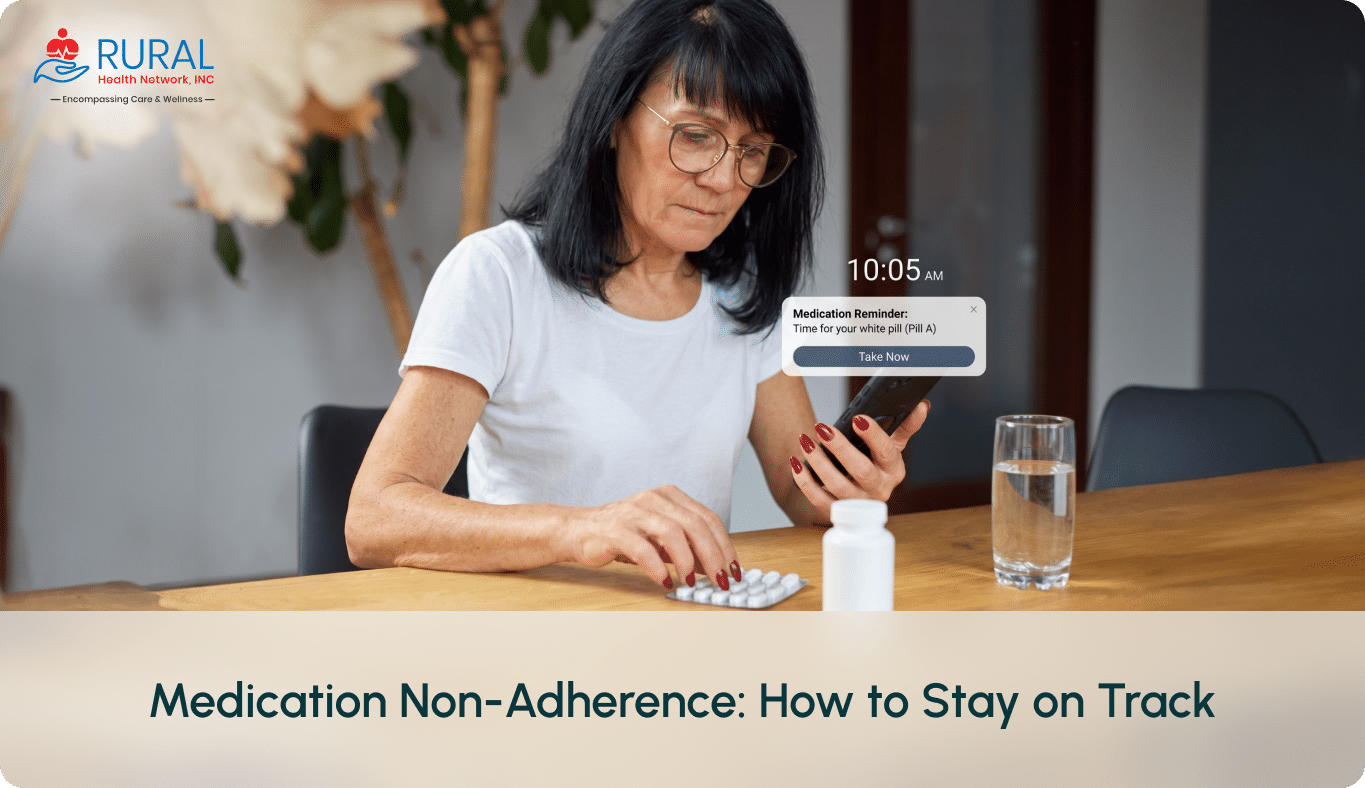
Taking medication exactly as prescribed can play an important role in managing chronic conditions, preventing complications, and improving overall health. Yet, many people have difficulty taking their medications consistently.
Medication non-adherence occurs when a person does not take medication according to the instructions provided by their healthcare professional. This can include missing doses, taking the wrong dose, taking medication at the wrong time, stopping treatment early, or not refilling a prescription.
Medication non-adherence can happen for many reasons, including forgetfulness, medication side effects, cost, complicated treatment schedules, or uncertainty about why a medication is needed. The good news is that many of these barriers can be addressed with support from healthcare professionals, caregivers, pharmacies, and practical reminder strategies.
At Rural Health Community Center, our healthcare professionals help patients better understand their treatment plans and take an active role in managing their health.
What Is Medication Non-Adherence?
Medication non-adherence means not taking a prescribed medication as recommended by a healthcare professional. It may involve missing doses, changing the prescribed dosage without medical guidance, stopping medication when symptoms improve, or failing to refill a prescription.
Non-adherence may be:
- Intentional: A person chooses not to take medication because of side effects, cost, concerns about the treatment, or other personal reasons.
- Unintentional: A person wants to follow the treatment plan but forgets doses, misunderstands instructions, or has difficulty managing a complicated medication schedule.
Understanding why medication non-adherence happens is the first step toward finding a practical solution.
How Common Is Medication Non-Adherence?
Medication non-adherence is a widespread healthcare challenge, particularly among people managing chronic diseases that require long-term treatment.
The World Health Organization has reported that adherence to long-term therapy for chronic diseases can be around 50% in developed countries. The exact rate varies depending on the condition, medication, patient population, and how adherence is measured.
Poor medication adherence can contribute to uncontrolled symptoms, treatment failure, avoidable complications, and increased use of healthcare services.
Because adherence can directly influence treatment outcomes, healthcare professionals often consider medication-taking behavior an important part of chronic disease management.
Why Is Medication Adherence Important?
Taking medication as prescribed helps patients receive the intended benefits of their treatment. When medications are taken inconsistently, the treatment may not work as expected.
Medication non-adherence can contribute to:
- Worsening symptoms
- Poor control of chronic conditions
- Increased risk of complications
- Treatment failure
- Emergency department visits or hospitalizations
- Additional healthcare costs
- Reduced quality of life
For example, patients managing conditions such as diabetes, high blood pressure, heart disease, or mental health conditions may need consistent medication use as part of their broader treatment plan.
Medication should always be taken according to the instructions provided by your healthcare professional. If you are experiencing side effects or have concerns about a medication, talk with your healthcare provider rather than stopping treatment on your own.
What Causes Medication Non-Adherence?

There is rarely one reason why someone has difficulty taking medication consistently. Common causes include:
1. Forgetfulness
Busy schedules, travel, changes in daily routines, and taking multiple medications can make it easy to forget a dose.
2. Complex Medication Schedules
Taking several medications at different times of the day can make treatment plans difficult to manage.
3. Medication Side Effects
Some medications can cause unwanted effects. Patients may skip doses or stop treatment if they are uncomfortable or concerned about these effects.
If you experience side effects, speak with your healthcare professional. They may be able to adjust the treatment plan or discuss alternatives.
4. Medication Costs
The cost of prescriptions can create a significant barrier to medication adherence. Some patients may delay refills, reduce doses, or stop taking medications because they cannot afford them.
Talk with your healthcare provider or pharmacist if medication costs are making it difficult to follow your treatment plan. There may be lower-cost alternatives, assistance programs, or other options.
5. Lack of Understanding
Patients may be less likely to follow a treatment plan if they do not understand what a medication does, how it should be taken, or why continuing treatment is important.
Ask your healthcare provider to explain your medications in simple terms, including:
- What the medication is for
- How and when to take it
- How long you may need to take it
- What to do if you miss a dose
- Which side effects should be reported
6. Concerns About Long-Term Medication Use
Some people worry about becoming dependent on medication, experiencing long-term side effects, or taking medications unnecessarily. These concerns should be discussed openly with a healthcare professional.
How Does Medication Non-Adherence Affect Chronic Conditions?
Medication adherence is particularly important for people managing chronic health conditions.
Diabetes
For people with diabetes, taking prescribed medications consistently can be part of maintaining appropriate blood glucose levels and reducing the risk of complications. Medication adherence should be combined with appropriate nutrition, physical activity, monitoring, and regular medical care.
Learn more about diabetes care for farmers and early signs and symptoms of diabetes.
High Blood Pressure and Heart Health
Consistently taking prescribed blood pressure or cardiovascular medications can help patients manage their condition and reduce the risk of serious complications.
Regular checkups can also help identify changes in blood pressure and overall cardiovascular health. Read more about the importance of annual physical exams.
High Cholesterol
Patients prescribed cholesterol-lowering medication may need long-term treatment alongside lifestyle changes. Stopping medication without discussing it with a healthcare professional can interfere with the treatment plan.
Learn more about high cholesterol and liver disease.
Kidney Health
Some chronic conditions can affect both the heart and kidneys. Following a prescribed treatment plan can be an important part of managing these interconnected health risks.
Explore more about the heart and kidney connection and healthy foods for kidney health.
How Can You Improve Medication Adherence?
Improving medication adherence does not have to be complicated. Small changes to your daily routine can make medications easier to manage.
1. Create a Medication Routine
Take your medication at the same time each day when appropriate and as directed by your healthcare professional.
Connecting medication-taking with an established daily habit, such as breakfast or brushing your teeth, may make it easier to remember.
2. Use Medication Reminders
Consider using:
- Smartphone alarms
- Calendar reminders
- Medication reminder apps
- Pill organizers
- Pharmacy refill reminders
- Written medication schedules
Choose a reminder system that fits naturally into your daily routine.
3. Keep an Updated Medication List
Maintain a current list of all prescription medications, over-the-counter medications, vitamins, and supplements you take.
Bring this list to medical appointments so your healthcare team can review your medications and identify potential issues.
4. Ask Questions About Your Medication
Do not hesitate to ask your doctor or pharmacist questions. Understanding your treatment can make it easier to follow.
If instructions are confusing, ask your healthcare professional to explain them in simpler terms or write them down.
5. Talk About Side Effects
Never assume that unpleasant side effects are something you simply have to tolerate.
If a medication causes problems, tell your healthcare provider. They can determine whether the symptoms are expected and whether your treatment plan needs to be adjusted.
6. Address Medication Costs
If prescription costs are affecting your ability to take medication as prescribed, tell your healthcare provider or pharmacist.
Ask whether a generic medication, alternative treatment, assistance program, or other cost-saving option may be appropriate.
7. Involve Family Members or Caregivers
For people who need additional support, family members and caregivers can help with reminders, prescription refills, medication organization, and appointments.
8. Attend Regular Medical Appointments
Regular appointments give healthcare professionals an opportunity to review medications, monitor progress, discuss concerns, and make appropriate treatment adjustments.
Learn more about the importance of routine checkups in rural healthcare.
9. Use Technology When Helpful
Technology can make medication management easier. Depending on your needs, you may use smartphone reminders, medication management apps, electronic pharmacy notifications, or telehealth appointments.
Technology should support—not replace—communication with your healthcare team.
What Should You Do If You Miss a Dose?
If you miss a dose, follow the instructions provided with your medication or contact your pharmacist or healthcare professional for guidance. Do not automatically take a double dose unless your healthcare professional specifically tells you to do so.
Different medications have different instructions for missed doses, so the safest approach depends on the specific medication.
When Should You Talk to Your Healthcare Provider?
Contact your healthcare provider if:
- You frequently forget your medication.
- You are experiencing side effects.
- You cannot afford your prescriptions.
- You are unsure how or when to take your medication.
- Your treatment schedule is difficult to manage.
- You are considering stopping a medication.
- You do not understand why you need a medication.
- You have difficulty obtaining prescription refills.
Open communication can help your healthcare team identify barriers and find solutions that fit your needs.
Medication Adherence Starts With Better Communication
Medication adherence is not simply about remembering to take a pill. It involves understanding your treatment, having access to medications, managing side effects, and working with your healthcare team to overcome barriers.
If you are struggling with medication adherence, you do not have to manage the problem alone. Your doctor, pharmacist, family members, and caregivers can help you develop practical strategies that make your treatment plan easier to follow.
At Rural Health Community Center, we provide primary and family healthcare services designed to support patients throughout their healthcare journey. Our family medicine services can help with preventive care, chronic condition management, routine checkups, and ongoing healthcare needs.
Ready to take a more active role in your healthcare? Contact Rural Health Community Center to schedule an appointment.
Take the Next Step Toward Better Medication Management
Staying consistent with prescribed medications can be challenging, but identifying the barriers is an important first step. Whether the problem is forgetfulness, side effects, cost, or an overly complicated treatment schedule, talking with your healthcare team can help you find a solution.
For more healthcare resources, visit the Rural Health Community Center blog or explore our family medicine services.