

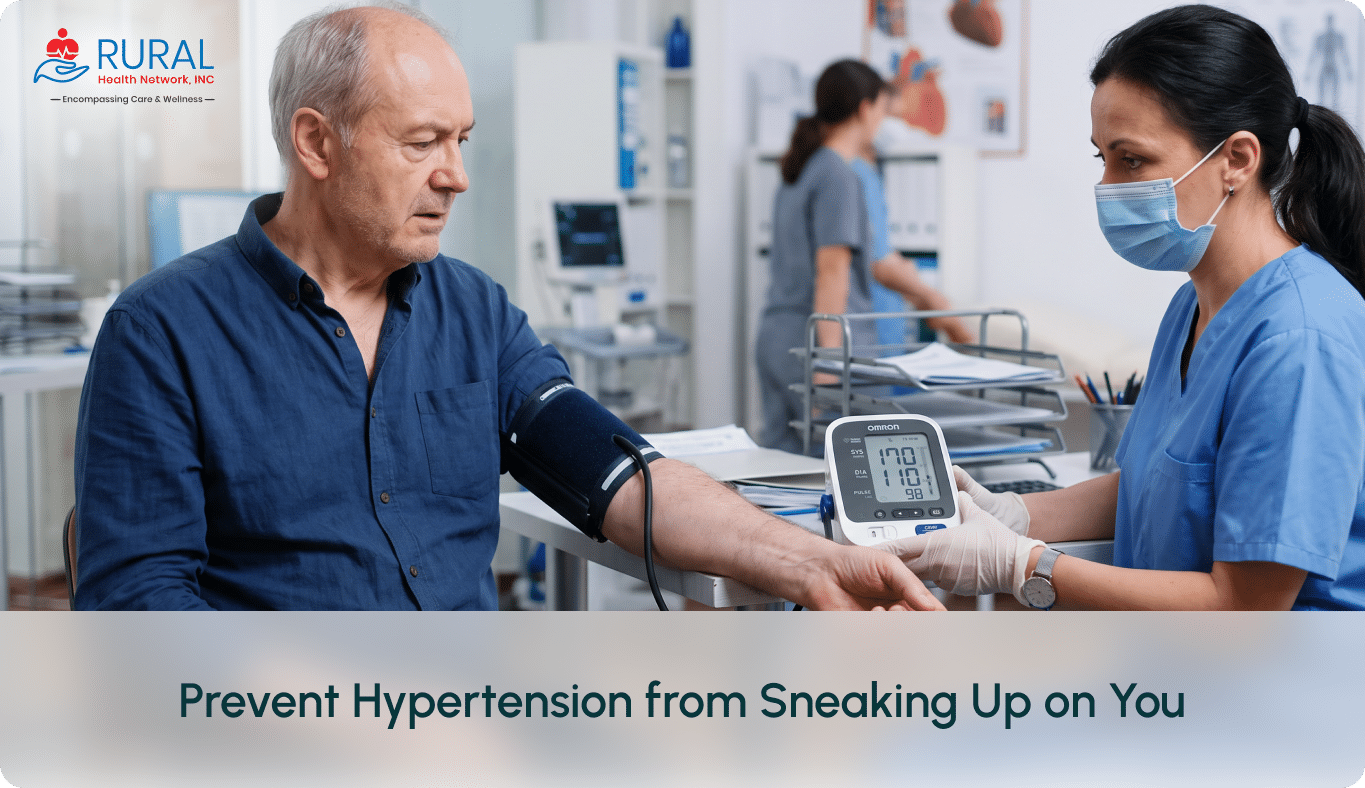
Drive through California’s Central Valley, and you’ll pass field after field of strawberries. Behind that scenery is a harder reality: rural life comes with its own set of health challenges, and hypertension symptoms are among the most common. The American Heart Association reports that hypertension is more prevalent in rural areas than in urban ones, and it’s a major driver of heart disease and death in these communities.
Men are hit harder than women. About 50% of men have high blood pressure, compared to 42.1% of women.
Hypertension symptoms are easy to miss. Most people only find out about their blood pressure at a regular check-up, which is why Rural Health Network prioritizes screening and treating you and your family on time. Contact us for a check-up at your earliest convenience.
What Is Hypertension?
Blood moves through your body with a certain amount of force. Some pressure is normal and necessary. It’s what keeps everything flowing. But when that pressure stays too high for too long, it starts to wear on your arteries, as water pressure wears on a hose. That’s hypertension, or high blood pressure.
Doctors measure it with two numbers: systolic (the pressure when your heart beats) over diastolic (the pressure when it rests). A healthy reading is below 120/80 mmHg. Once you’re regularly at 130/80 or higher, you could experience hypertension symptoms.
Hypertension is more common than most people think. About 50% of adults in the U.S. have it. Because it usually has no clear symptoms, a checkup is often the only way to catch it. If left untreated for long enough, it damages your blood vessels and heart and can lead to serious complications like cardiovascular disease.
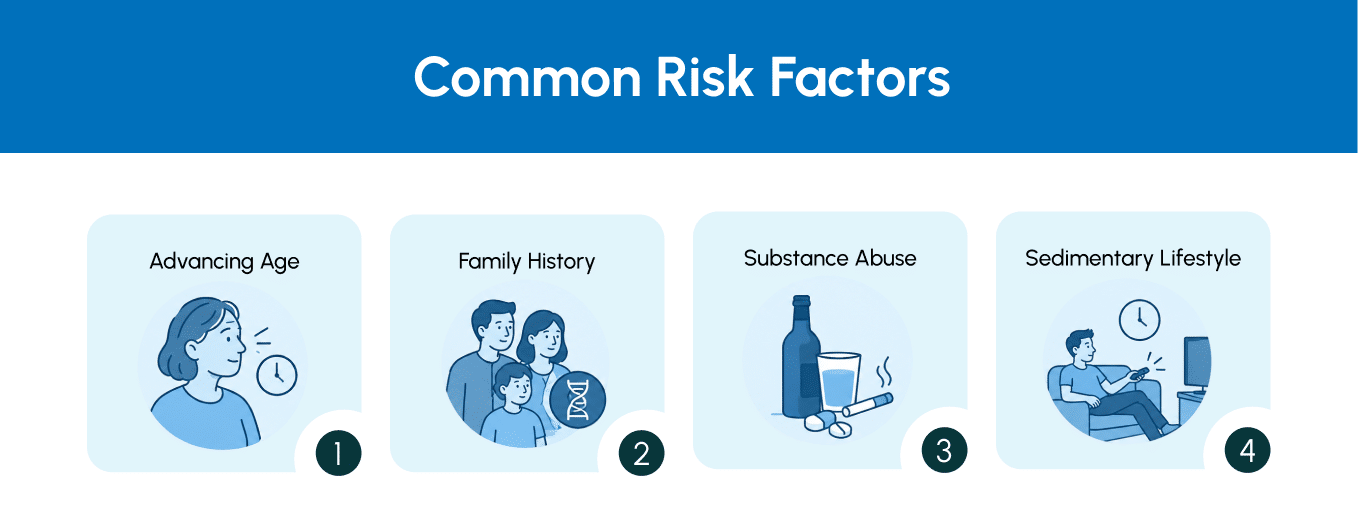
A few things that raise your risk:
- Advancing Age – blood pressure tends to creep up slightly as we get older.
- Family History – if it runs in your family, your risk is higher.
- Substance Abuse – consuming a lot of alcohol, caffeine, or other drugs
- Lifestyle – less activity means more risk.
The good news is that hypertension is very manageable if you catch it early and stay on top of it.
Health Risks and Warning Signs of Untreated Hypertension
Chronic hypertension symptoms wear down your organs: your kidneys, heart, brain, and eyes all take the hit.
- Heart attack – years of pressure on artery walls can lead to blockages that cut off blood flow to the heart.
- Stroke – high pressure can weaken or rupture blood vessels in the brain.
- Kidney disease – kidneys rely on healthy blood vessels to filter waste, and sustained pressure wears them down.
- Vision loss – the small blood vessels in your eyes aren’t built for constant high pressure, and over time, your vision can suffer.
- Heart failure – the heart muscle weakens from years of working overtime.
Hypertension usually doesn’t give you a clear warning, but there are signs worth knowing so you can add two and two and act fast:
- Sudden, severe headaches
- Shortness of breath, even during light activity
- Chest pain or tightness
- Dizziness or lightheadedness
- Blurred or double vision
- Nosebleeds that are frequent or hard to stop
- Numbness or tingling in the face, arms, or legs
- Confusion or trouble speaking
If you or a family member deals with any of these regularly, reach out to us. Rural Health Network supports farmworkers with the care they need.
Why Are Farmworkers at Higher Risk for Hypertension?
Farm work is essential and hard: long hours, physically demanding, often in tough conditions. Those conditions are exactly why farmworkers face a higher risk of having hypertension symptoms than people working in urban jobs.
Heat and heavy labor.
Long hours under the California sun put real strain on the heart. Add in dehydration and repeated heat exposure, and blood pressure has every reason to rise.
Healthcare that’s far away.
Many farmworker communities lack nearby clinics, transportation is unreliable, and work schedules leave little room for a doctor’s visit.
Insurance and immigration barriers.
Many farmworkers are undocumented or have unstable immigration status, which limits their access to insurance and makes some hesitant to seek care at all.
Financial stress.
Seasonal work, unpredictable pay, and job insecurity are constant sources of stress, and stress is a well-known contributor to high blood pressure. It’s hard to focus on your health when you’re worried about next month’s paycheck.
Diet on the go.
Long days and limited access to affordable fresh food often mean more processed, sodium-heavy meals.
How Farmworkers Can Manage Hypertension Symptoms
Even with limited time and resources, you can do a lot to manage hypertension symptoms.
Hydrate.
Water throughout the day helps your heart and blood vessels do their job.
Take breaks when you can.
Even a few minutes in the shade help your body recover from heat stress.
Go easy on sodium.
Choose fresh food over processed food when you can.
Get checked.
Free blood pressure screenings at community clinics and health fairs are quick and can catch problems early. Or contact the Rural Health Network for a full consultation.
Cut back on alcohol and tobacco.
Both raise blood pressure.
Manage your stress.
Worker advocacy groups and local organizations can offer both practical help and support when things feel heavy.
Why Preventive Care Matters in Rural Communities
In rural areas, preventive care is often the difference between catching a problem early and facing an emergency. A simple blood pressure check can flag an issue years before it becomes serious and open the door to bigger conversations about diet, stress, and daily habits.
The challenge is that rural areas simply have fewer healthcare providers, and for many farmworkers, healthcare takes a back seat to more immediate needs. That’s why convenience and trust matter so much. Rural Health Network is built on one idea: affordable, prompt care so a small issue never becomes a medical emergency.
Conclusion
Hypertension symptoms among California’s farmworkers are not random. They result from demanding labor, tough conditions, financial pressure, and a healthcare system that’s often out of reach. If left unaddressed, it can lead to serious, life-changing consequences.
With better access to preventive care and a few daily habits, rural communities can close this gap. The people who grow our food deserve a health system that looks out for them as reliably as they look out for the harvest. That’s where the Rural Health Network comes in. Rural Health Network prioritizes farm workers’ health so they can lead a better quality of life.