

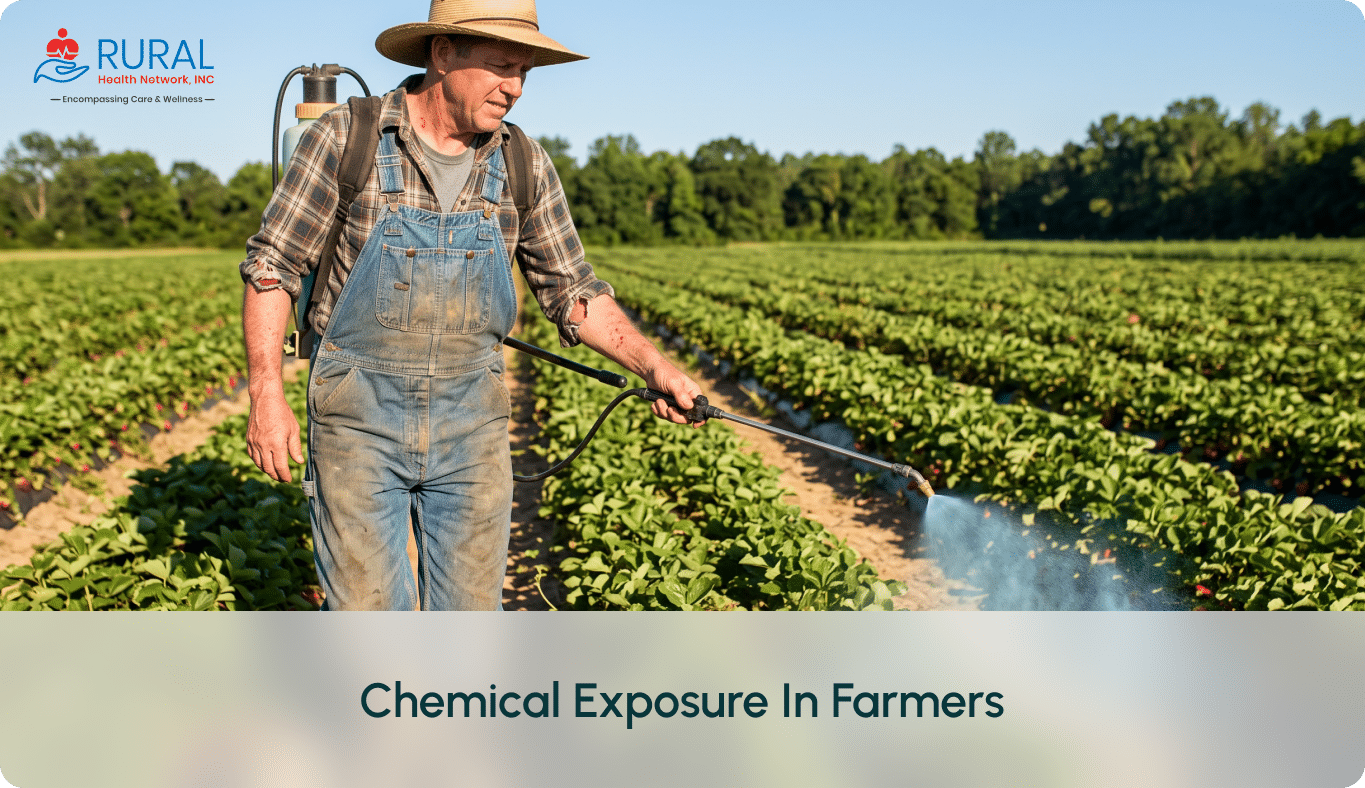
Farmwork grants you obscure knowledge and the power to produce food from nothing. Farmers know exactly what to add to crops and how to treat them so that the fruits and vegetables come out scrumptious and juicy. Farmers know which crops need spraying, how long to wait before walking back into a treated row, and why their hands smell a certain way by lunchtime.
However, you might not realize how much that knowledge matters in a doctor’s office. A headache, a strange rash, a cough that won’t quit — these can look like ‘nothing’ until they connect to what you were breathing in or handling at work.
The Rural Health Network deeply values the nation’s agricultural community, which underpins our economy. To protect your well-being and support your occupational health, we encourage you to schedule a visit to our clinic for routine testing and checkups.
Chemical Exposure and Farmworkers’ Occupational Health
Chemical exposure creeps up gradually, sometimes in headaches, other times in random rashes and bruises. Because pesticides can affect farmers in unpredictable ways, it’s important to pay attention to yourself. Chemicals can affect your occupational health in various ways.
How does chemical exposure happen?
- Direct contact and skin absorption: Being in or near a field during or right after spraying, or touching treated plants, soil, or gear with unprotected skin
- Breathing it in: Chemical dust, fumes, or drift, especially in greenhouses or enclosed spaces
- Contaminated hands: Eating, drinking, or smoking without washing up first
- Take-home residue: Chemicals hitching a ride home on your clothes or boots, putting your family at risk too
- Worn-out gear: Cracked gloves or a mask
Your body might not react immediately to any of these. But constant exposure adds up over time and can contribute to major health concerns, which is why it is essential to ensure pesticide safety.
Occupational Health Concerns Linked to Pesticide Exposure
Our body has a wonderful mechanism. Most of the time, it warns us when something is wrong; we just have to be attentive enough to catch it.
Some signs that you can look out for that could be chemical exposure symptoms:
- Headaches or feeling dizzy
- Nausea, vomiting, or stomach cramps
- Skin that’s irritated, rashy, or burning
- Eyes that sting or vision that blurs
- Coughing or trouble catching your breath
- Being unusually tired and weak, even after rest
- Trouble focusing or frequent brain fog
The catch is that symptoms of chemical exposure often resemble a cold or the flu. So your doctor needs details about your work life to get a fuller picture of your health and provide a more accurate diagnosis. Prioritize your occupational health for your and your family’s well-being.
What Farmworkers Should Tell Their Doctor
Your doctor should hear every detail of your work life, given the nature of your profession. Your occupational health depends on details like:
- What does your routine look like?
- What crops do you tend, and what actions do you perform?
- How close do you get to spraying when you use pesticides and fertilizers?
- When did you first start feeling uneasy? What had you done earlier?
- Try to get all the details of the chemical products you’re using.
- How do you think you were exposed?
- Did you have protective gear on at the time?
- Is anyone else around you experiencing similar symptoms to you
- Past exposures
Why This Information Helps Us
This conversation is not just for small talk. The information you provide is valuable for your diagnosis and will also impact your future occupational health. Pesticide safety matters more than one would think. When you provide the exact chemical exposure symptoms and the material you use, it helps the doctor to:
- Zero in on which chemical is likely involved
- Order the right tests
- Rule out illnesses that look similar
- Decide if emergency treatment or an antidote is needed
- Flag risks to your family from take-home exposure
- Plan the follow-up, if needed
What to Do Immediately After Suspected Exposure
If you feel uneasy after exposure to harmful chemicals, do the following:
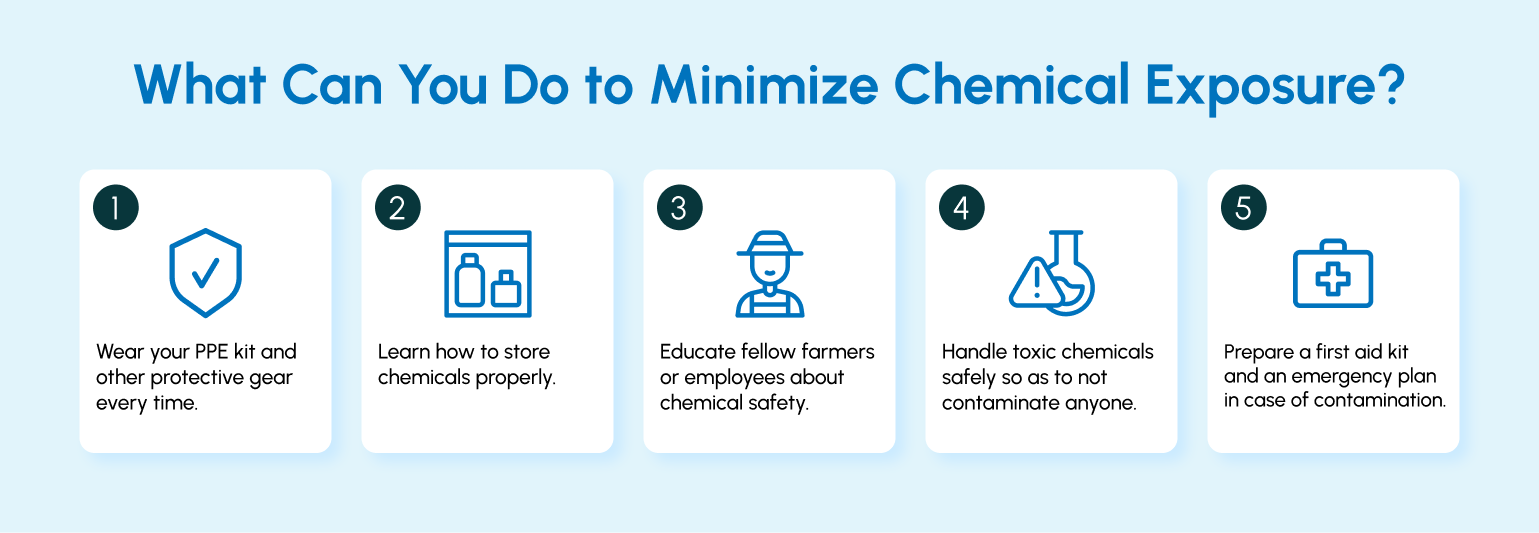
- Step away from the source immediately
- Strip off contaminated clothing
- Wash exposed skin with soap and water thoroughly
- Flush your eyes with clean water if they’re affected
- Get medical help right away. Do not tough it out
- Remember what chemical you’re exposed to.
A few minutes of quick action can make a real difference later. Ensure thoroughness for the best outcome. Do not take chemical exposure symptoms lightly.
Your Occupational Health and the Importance of Regular Health Checkups
Routine visits let your doctor keep an eye on:
- Your liver and heart
- Your lungs and breathing
- Your skin
- Any subtle nerve or brain-related changes over time
Catching small changes early beats discovering a big problem later. A checkup today can save you a lot of trouble down the road. Regular check-ups should be a part of your pesticide safety routine.
How Rural Health Clinics Support Farmworkers
Rural Health Network works to support the occupational health of California’s farming community. Our values are:
Patient-Centered Care
We create care plans according to each patient’s unique needs, and listening carefully is always the first step toward effective treatment.
Respect & Compassion
We treat patients with respect, empathy, and kindness, creating a welcoming, supportive environment.
Community Commitment
We proudly serve rural communities, providing care that is close, reliable, and truly supportive.
Excellence in Care
Our team delivers evidence-based, professional healthcare that patients can trust for every stage of life.
Accessibility & Affordability
We offer flexible options and transparent pricing so everyone can access quality healthcare.
Flexible Access
We make receiving care convenient, timely, and easy for every patient with same-day appointments and walk-ins.
At Rural Health Network, we provide care at your comfort level for every member of your family.
In Conclusion
Your body always talks to you. You just have to listen and make sure your doctor hears the full story, not just symptoms of chemical exposure. Sharing what you do, which chemicals you’re around, and when your symptoms started is essential to diagnosing your condition. This information helps your provider act fast and get it right. Pair that honesty with a few smart pesticide safety habits and regular checkups, and you’ll stay on top of your occupational health.