

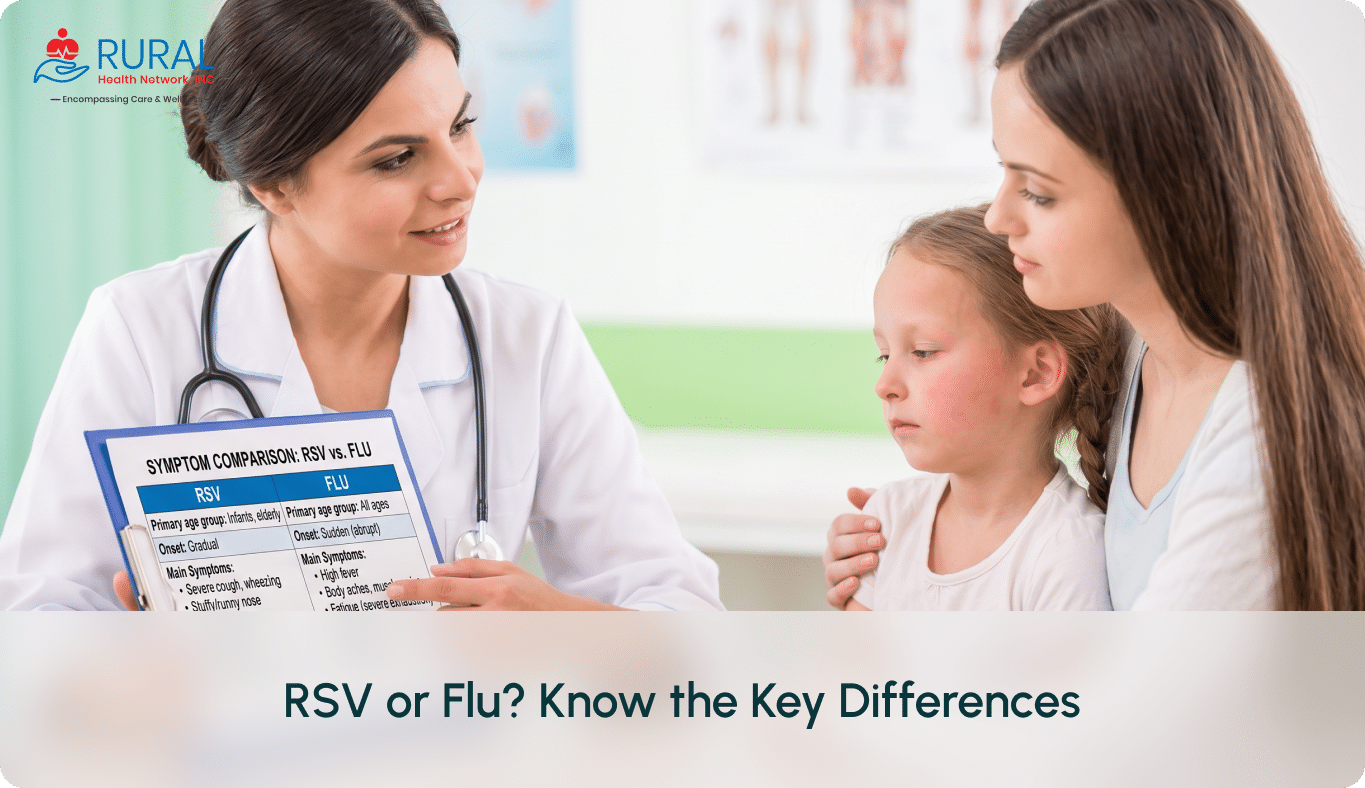
RSV and the flu are both contagious respiratory infections that can cause coughing, fever, congestion, and fatigue. However, they are caused by different viruses and can affect people differently. RSV is particularly concerning for infants and young children, while influenza can cause serious complications in people of any age, especially older adults, young children, pregnant people, and those with certain chronic health conditions.
Knowing the differences between RSV and the flu can help you recognize symptoms, understand when medical care may be needed, and take steps to reduce the spread of infection.
What Is the Difference Between RSV and the Flu?
RSV (respiratory syncytial virus) is a common respiratory virus that usually causes mild, cold-like symptoms. In infants, young children, older adults, and people with certain medical conditions, RSV can sometimes lead to more serious respiratory illness, including bronchiolitis or pneumonia.
Influenza (flu) is caused by influenza viruses and can affect the nose, throat, and lungs. Flu symptoms often begin suddenly and may include fever, chills, cough, body aches, headache, and significant fatigue.
Although RSV and the flu can have similar symptoms, their typical patterns and risks are different.
RSV vs. Flu: Key Differences
| Feature | RSV | Flu |
| Cause | Respiratory syncytial virus | Influenza viruses |
| Common symptoms | Runny nose, congestion, cough, wheezing, decreased appetite, fever | Fever, cough, sore throat, body aches, headache, chills, fatigue |
| Onset | Symptoms often develop gradually | Symptoms often begin suddenly |
| Highest-risk groups | Infants, young children, older adults, and people with certain health conditions | Young children, older adults, pregnant people, and people with certain chronic health conditions |
| Common complications | Bronchiolitis and pneumonia, particularly in vulnerable people | Pneumonia and worsening of certain chronic medical conditions |
| Treatment | Mainly supportive care; severe illness may require medical treatment | Supportive care; antiviral medication may be recommended for some patients |
| Prevention | Hygiene, avoiding exposure when sick, and recommended RSV prevention options for eligible groups | Annual flu vaccination, hygiene, and avoiding exposure when sick |
What Are the Symptoms of RSV and the Flu?
RSV and flu symptoms can overlap, so you cannot always tell which infection you have based on symptoms alone. Testing may be recommended when knowing the specific infection would affect treatment or medical decisions.
Common RSV Symptoms
RSV may cause:
- Runny or stuffy nose
- Cough
- Sneezing
- Fever
- Decreased appetite
- Wheezing
- Irritability or decreased activity in young children
- Difficulty breathing in more serious cases
In infants, signs of RSV can sometimes be less obvious. Parents and caregivers should pay attention to changes in feeding, activity, breathing, and hydration.
Common Flu Symptoms
Flu symptoms commonly include:
- Fever or feeling feverish
- Chills
- Cough
- Sore throat
- Runny or stuffy nose
- Muscle or body aches
- Headache
- Fatigue
- Occasionally vomiting or diarrhea, particularly in children
One of the key differences is that flu symptoms often appear more suddenly and may cause more pronounced body aches, fever, and fatigue than a typical RSV infection.
Can RSV and the Flu Cause Serious Illness?
Yes. Both RSV and influenza can cause complications, particularly in people at higher risk.
RSV can become serious in infants and young children, especially those who were born prematurely or have certain underlying health conditions. Older adults and people with certain medical conditions may also experience severe RSV illness.
Influenza can lead to complications such as pneumonia and can worsen some underlying medical conditions. Young children, older adults, pregnant people, and people with certain chronic health conditions may have a higher risk of complications.
If someone has a weakened immune system or an underlying health condition, contact a healthcare professional if respiratory symptoms develop.
How Are RSV and the Flu Diagnosed?

Healthcare providers diagnose RSV and influenza by considering a person’s symptoms, medical history, exposure, and current circulation of respiratory viruses. Testing may be used to determine whether RSV or influenza is causing the illness.
Depending on the situation, healthcare providers may use rapid antigen tests or molecular tests. Molecular tests, including PCR-based tests, can be more sensitive than some rapid antigen tests.
A healthcare professional can determine whether testing is appropriate based on the patient’s symptoms and risk factors.
For other common respiratory illnesses, see our guide to the differences between a cold, flu, strep throat, and sinus infection.
How Can You Prevent RSV and the Flu?
Many prevention strategies are helpful for reducing the spread of both RSV and influenza.
1. Wash Your Hands Regularly
Wash your hands frequently with soap and water, particularly after coughing, sneezing, using the restroom, or caring for someone who is sick. Use an alcohol-based hand sanitizer when soap and water are unavailable.
2. Cover Coughs and Sneezes
Cover your mouth and nose with a tissue or your elbow when coughing or sneezing. Dispose of used tissues promptly and wash your hands afterward.
3. Clean Frequently Touched Surfaces
Regularly clean commonly touched objects and surfaces, especially when someone in the household is sick.
4. Improve Indoor Airflow
Good ventilation can help reduce the concentration of respiratory viruses in indoor spaces. When appropriate, open windows or use ventilation and air filtration systems.
5. Stay Home When You Are Sick
Avoid close contact with others when you have respiratory symptoms. Follow current public health and healthcare guidance about returning to normal activities.
6. Stay Up to Date on Recommended Vaccines and Prevention
Flu vaccination: Annual flu vaccination is recommended for most people 6 months and older, with certain exceptions and considerations.
RSV prevention: RSV prevention options are available for certain groups, including some infants and older adults. Recommendations depend on age, pregnancy status, and individual risk factors. Ask your healthcare provider which RSV prevention option is appropriate for you or your child.
Parents can also learn more about what to do after RSV exposure.
How Are RSV and the Flu Treated?
There is no single treatment that cures every RSV or flu infection. Treatment depends on the illness, age, symptoms, risk factors, and severity.
RSV Treatment
For most people with mild RSV, treatment focuses on supportive care, such as:
- Getting adequate rest
- Drinking enough fluids
- Managing fever and discomfort with appropriate medications
- Using a humidifier to help relieve congestion
- Using saline nasal drops or sprays when appropriate
Severe RSV infection may require medical care, particularly when breathing or hydration becomes a concern.
Antibiotics do not treat RSV because RSV is a virus. They may be prescribed only when a healthcare provider identifies a bacterial infection.
Flu Treatment
Many people recover from the flu with rest and supportive care. However, prescription antiviral medications may be recommended for people with severe illness or those at increased risk of complications.
Antiviral treatment generally works best when started early, often within 48 hours of symptom onset, although treatment may still be beneficial later for certain high-risk or seriously ill patients.
Talk with a healthcare provider promptly if you or your child has flu symptoms and is at higher risk for complications.
When Should You Seek Medical Care for RSV or the Flu?
Most respiratory infections can be managed at home, but some symptoms require prompt medical attention.
Seek medical care if symptoms are severe, worsening, or causing concerns about breathing or hydration.
Seek urgent medical attention for signs such as:
- Difficulty breathing or shortness of breath
- Bluish or gray lips, face, or skin
- Severe or worsening chest pain
- Severe dehydration or inability to keep fluids down
- Significant confusion, unusual sleepiness, or difficulty waking
- Symptoms that improve and then suddenly become worse
For infants and young children, seek medical advice if there are signs of breathing difficulty, poor feeding, dehydration, or unusual lethargy.
When in doubt, contact a healthcare professional rather than trying to determine the cause based only on symptoms.
Protect Your Family During Respiratory Virus Season
Understanding the differences between RSV and the flu can help you recognize symptoms and know when to seek medical guidance. While many infections are mild, respiratory viruses can cause serious illness in infants, older adults, and people with certain health conditions.
Preventive care is an important part of protecting your family’s health. Regular visits with a healthcare professional can help you stay current on recommended vaccinations, screenings, and preventive health measures. Learn more about family medicine services at Rural Health Network.
If you or a family member develops concerning respiratory symptoms, contact your healthcare provider for guidance.
Contact Rural Health Network to learn more about available healthcare services.