

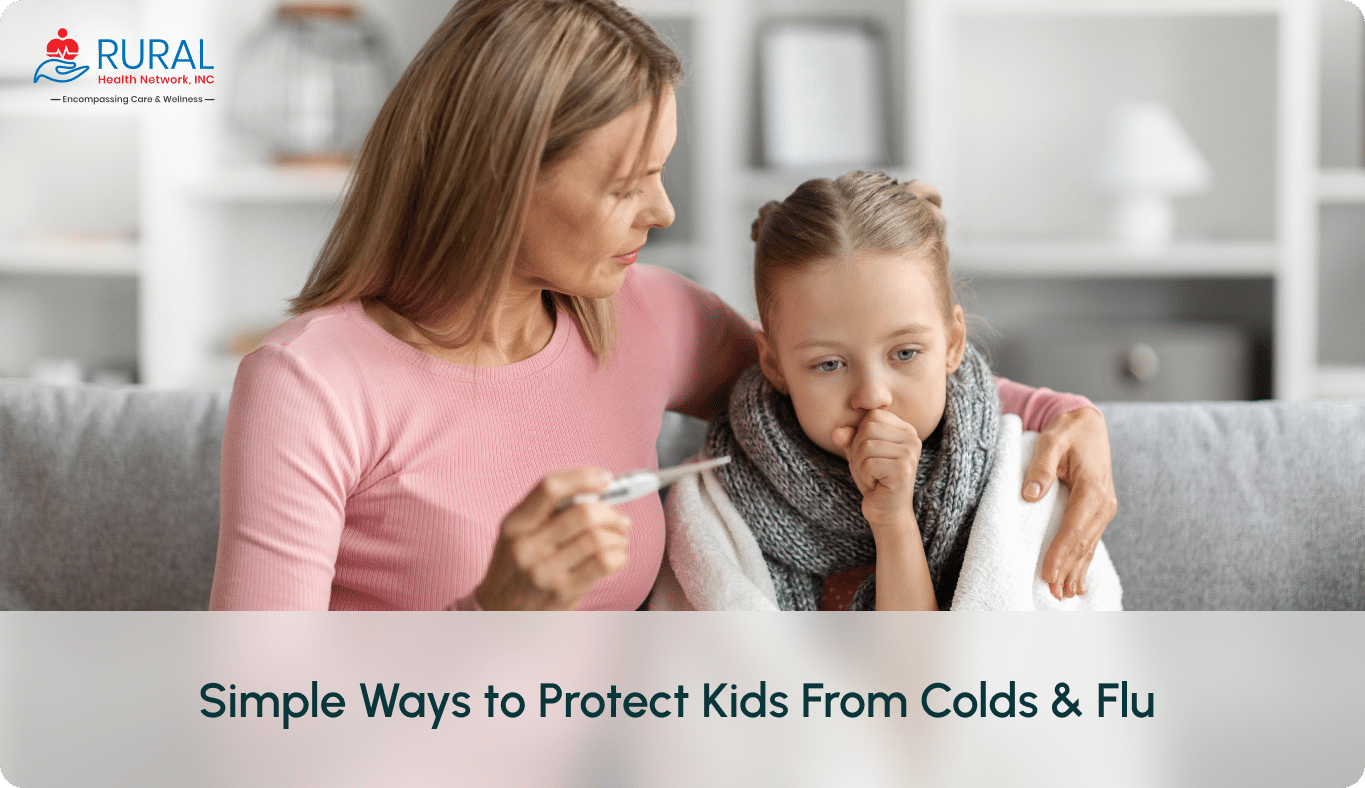
When fall and winter arrive, colds and flu become more common, especially among children. Kids are exposed to viruses at school, daycare, activities, and home, making it difficult to prevent every illness.
The best ways to help keep your child healthy during cold and flu season are practicing good hand hygiene, teaching proper cough and sneeze etiquette, keeping vaccinations up to date, encouraging healthy sleep and nutrition, and knowing when your child needs medical care.
For families in rural communities, having access to trusted healthcare and preventive services can make managing cold and flu season easier. Rural Health Network is here to support families with healthcare guidance and services throughout the year.
For more information about healthcare services for the whole family, explore our Family Medicine services.
You Don’t Have To Figure It All Out Alone
What Is the Difference Between a Cold and the Flu in Children?
The common cold and flu can cause similar symptoms, but they are different respiratory illnesses. Colds usually develop gradually and tend to cause milder symptoms, while flu symptoms often appear suddenly and can be more severe.
For a more detailed comparison of respiratory illnesses, read our guide on Cold, Flu, Strep Throat, or Sinus Infection: Understanding the Differences.
| Symptom | Common Cold | Flu |
| Onset | Gradual | Sudden |
| Fever | Rare or mild | Often high (100–104°F) |
| Body Aches | Mild | Moderate to severe |
| Fatigue | Slight | Strong, can last weeks |
| Runny/Stuffy Nose | Common | Sometimes |
| Sneezing | Common | Sometimes |
| Vomiting/Diarrhea | Rare | More common in children |
The flu can sometimes lead to complications, including dehydration, ear infections, or more serious respiratory problems. Children with certain underlying health conditions may be at greater risk of complications.
If your child has severe symptoms, difficulty breathing, signs of dehydration, or symptoms that are getting worse, contact a healthcare provider promptly.
How Can Parents Prevent Colds and Flu in Children?
You cannot prevent every cold or case of flu, but several everyday habits can reduce the spread of respiratory viruses.
1. Teach Your Child to Wash Their Hands
Encourage children to wash their hands with soap and water for at least 20 seconds, particularly:
- Before eating or preparing food
- After using the bathroom
- After coughing, sneezing, or blowing their nose
- After playing outside
- After coming home from school or daycare
If soap and water are unavailable, an alcohol-based hand sanitizer can be used when appropriate.
2. Teach Proper Cough and Sneeze Etiquette
Teach your child to cough or sneeze into a tissue or the inside of their elbow instead of their hands. Used tissues should be thrown away, followed by handwashing.
3. Encourage Children to Avoid Touching Their Face
Children frequently touch their eyes, nose, and mouth. Encouraging them to keep their hands away from their face can help reduce opportunities for germs to enter the body.
4. Clean Frequently Touched Surfaces
Regularly clean commonly touched household items and surfaces, such as:
- Door handles
- Light switches
- Remote controls
- Toys
- Phones and tablets
- Kitchen and bathroom surfaces
5. Keep Sick Children Home
If your child is sick, keeping them home when appropriate can help them recover and reduce the chance of spreading illness to classmates, teachers, friends, and family members.
Parents can also review our Back-to-School Health Tips for Kids for additional ways to help children stay healthy during the school year.
How Do Nutrition, Hydration, and Sleep Help Keep Kids Healthy?

Healthy daily habits support your child’s overall health and help their body function properly while fighting infections.
Offer Balanced Meals
Provide a variety of foods, including fruits, vegetables, whole grains, protein sources, and other nutritious foods. If your child has a reduced appetite while sick, focus on offering small, manageable meals and fluids.
Warm foods such as soups and stews may also be comforting when a child has a cold or flu.
Encourage Plenty of Fluids
Children can become dehydrated when they have a fever, vomiting, or diarrhea. Offer water and other appropriate fluids regularly.
Watch for signs of dehydration, including:
- Dry mouth
- Fewer wet diapers or trips to the bathroom
- Dark urine
- Lack of tears when crying
- Unusual sleepiness or weakness
If you are concerned about dehydration, contact your child’s healthcare provider.
Make Sleep a Priority
Adequate sleep supports children’s overall health and well-being.
General sleep recommendations vary by age. The American Academy of Pediatrics recommends approximately:
- Infants: 12–16 hours per day, including naps
- Toddlers: 11–14 hours per day, including naps
- Preschoolers: 10–13 hours per day, including naps
- School-age children: 9–12 hours per day
- Teenagers: 8–10 hours per day
For more information about children’s sleep needs, parents can visit KidsHealth.org.
Should Children Get a Flu Vaccine?
Yes. Annual flu vaccination is one of the most effective ways to reduce the risk of influenza and its complications.
The CDC recommends routine annual flu vaccination for everyone 6 months and older, with limited exceptions.
Vaccination can help protect your child and reduce the chance of spreading influenza to other family members and people in the community.
Talk with your child’s healthcare provider about the flu vaccine, especially if your child is at higher risk for complications from influenza.
What About RSV in Children?
Respiratory syncytial virus (RSV) is another common respiratory virus that can cause illness in children. Some children, particularly infants and young children, can develop more serious respiratory symptoms.
If your child has been exposed to RSV or you are concerned about symptoms, learn more about What to Do After RSV Exposure.
How Often Should Children Have Routine Checkups?
Regular pediatric checkups help healthcare providers monitor your child’s growth, development, immunizations, and overall health.
Well-child visits also give parents an opportunity to discuss concerns about:
- Nutrition
- Sleep
- Behavior
- Development
- School performance
- Vaccinations
- Recurrent illnesses
- Other changes in your child’s health
Learn more about why preventive visits matter in our guide to Regular Pediatric Checkups for Child Health and Development.
You can also learn more about Pediatric Health Screenings for Children to understand which preventive screenings may be recommended as your child grows.
The American Academy of Pediatrics provides recommendations for preventive pediatric healthcare from infancy through adolescence. Parents can review the AAP preventive care schedule.
When Should a Sick Child Stay Home?
A child should generally stay home when they are too sick to comfortably participate in normal activities or when they may spread an infection to others.
Consider keeping your child home if they have:
- A fever
- Significant fatigue or weakness
- Frequent coughing or sneezing that interferes with normal activities
- Vomiting or diarrhea
- Symptoms that prevent them from participating comfortably in school or daycare
Because school and childcare policies vary, check the specific illness guidelines for your child’s school or daycare.
When Should You Call a Doctor for Your Child’s Cold or Flu Symptoms?
Contact your child’s healthcare provider if symptoms are severe, worsening, persistent, or concerning to you.
Seek medical advice if your child has:
- Difficulty breathing, rapid breathing, or wheezing
- Signs of dehydration
- A fever that concerns you or persists
- Symptoms that improve and then suddenly become worse
- Significant or worsening pain
- Unusual sleepiness or difficulty waking
- Confusion or behavior that is significantly different from normal
When Is Emergency Care Needed?
Some symptoms require immediate medical attention. Seek emergency care if your child has serious difficulty breathing, bluish or gray lips or face, is difficult to wake, is not responding normally, or has other severe or rapidly worsening symptoms.
When in doubt, trust your instincts as a parent and contact a healthcare professional for guidance.
How Can You Care for a Child With a Cold or Flu at Home?
Most children with uncomplicated viral respiratory illnesses can be cared for at home with supportive measures.
Encourage Rest and Fluids
Let your child rest and offer fluids frequently. If they have little appetite, focus on keeping them hydrated and offer small amounts of food as tolerated.
Keep Your Child Comfortable
Provide a comfortable, quiet environment and check on your child regularly. Extra reassurance and comfort can go a long way when children are sick.
Use Children’s Medicines Safely
Some over-the-counter medicines can help relieve symptoms, but medications should be selected and dosed based on your child’s age, weight, and medical needs.
Never give a child medication intended for adults unless specifically directed by a healthcare professional.
Always follow the product label or ask your child’s healthcare provider or pharmacist if you are unsure about a medication or dosage.
Do Antibiotics Treat Colds and Flu?
No. Antibiotics do not treat viral infections such as the common cold or influenza.
Antibiotics are used to treat certain bacterial infections. A healthcare provider can determine whether your child’s symptoms may be caused by a bacterial infection that requires antibiotic treatment.
Never give your child leftover antibiotics or antibiotics prescribed for someone else.
How Can Rural Health Network Help During Cold and Flu Season?
Cold and flu season can be stressful for families, particularly when access to healthcare may be more challenging in rural communities.
Rural Health Network is committed to helping families access healthcare services, preventive care, and trusted health information.
Our Family Medicine services can provide ongoing healthcare support for children and adults, including preventive care and evaluation of common illnesses.
Whether you have questions about your child’s symptoms, need preventive care, or want guidance about when to seek medical attention, our healthcare team is here to help you navigate your child’s health needs.
When you need support, guidance, or trusted healthcare information:
Frequently Asked Questions
For additional information, read Cold, Flu, Strep Throat, or Sinus Infection: What’s the Difference?.