

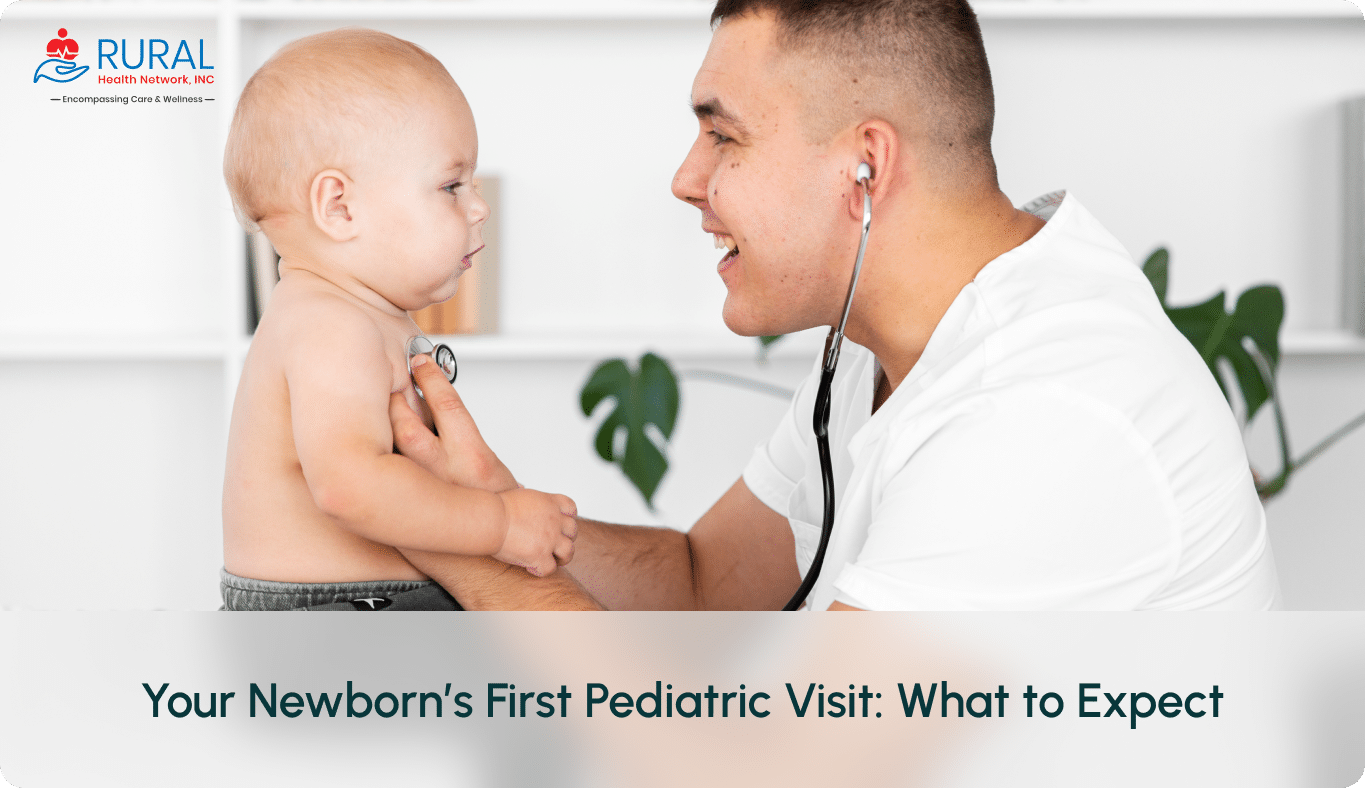
Bringing your newborn home is an exciting milestone, but it can also come with plenty of questions. Is your baby feeding enough? Is the baby sleeping normally? How many wet diapers should you expect? When should you call the pediatrician?
Your baby’s first pediatric visit is an opportunity to ask these questions, check your newborn’s health, and make sure you have the information and support you need during the first days and weeks at home.
During this visit, your pediatrician or healthcare provider will assess your baby’s growth and overall health, review feeding and elimination, discuss newborn care and safety, and determine whether additional follow-up is needed.
At Rural Health Community Center, we understand that caring for a newborn can feel overwhelming. Our pediatric care team is here to help families understand what to expect, answer questions, and support healthy growth from the very beginning.
Explore our general pediatric services to learn more about pediatric care for children at every stage.
When Should a Newborn Have Their First Pediatric Visit?
The timing of a newborn’s first visit depends on factors such as when the baby was discharged from the hospital, feeding and weight concerns, and the baby’s overall health.
The American Academy of Pediatrics recommends that newborns receive an initial evaluation after discharge, with follow-up scheduled based on the baby’s individual needs. Your pediatrician or hospital discharge team will tell you when your baby should be seen.
A first newborn visit may be especially important if your baby:
- Was born prematurely
- Had difficulty feeding
- Has experienced excessive weight loss
- Has jaundice or other health concerns
- Was hospitalized after birth
- Has difficulty waking for feeds
- Has fewer wet diapers than expected
- Has another condition requiring close monitoring
If you are unsure when your newborn should be seen, contact your pediatric healthcare provider for guidance.
What Happens at a Newborn’s First Pediatric Visit?
Many parents wonder, “What does a pediatrician check during a newborn visit?”
The appointment typically includes a physical examination, growth assessment, feeding discussion, review of your baby’s medical history, and guidance on newborn care.
Your pediatrician may evaluate the following:
1. Your Baby’s Weight and Growth
Your baby’s weight is an important part of the first visit.
The provider may measure:
- Weight
- Length
- Head circumference
These measurements are tracked over time to evaluate your baby’s growth pattern.
Newborns commonly lose some weight during the first days after birth. Your pediatrician will consider your baby’s overall health, feeding, hydration, and weight trend when determining whether additional monitoring is needed.
2. A Complete Physical Examination
The pediatrician will perform a newborn physical exam to look for signs of health concerns.
Depending on your baby’s age and circumstances, the examination may include checking the:
- Heart and lungs
- Eyes
- Ears
- Mouth
- Skin
- Abdomen
- Hips
- Muscle tone
- Reflexes
- Umbilical cord area
The provider may also look for signs of jaundice, dehydration, infection, or other conditions that require follow-up.
3. Feeding and Nutrition
Feeding is one of the most important topics during the first newborn appointment.
Your pediatrician may ask:
- Is your baby breastfeeding, formula feeding, or both?
- How often is your baby feeding?
- Does your baby latch effectively?
- How long does each feeding take?
- Does your baby seem satisfied after feeding?
- Are there concerns about vomiting or frequent spit-up?
If feeding is difficult, your pediatrician may recommend additional support, such as a lactation consultant or another appropriate healthcare professional.
4. Wet and Dirty Diapers
Diaper patterns provide useful information about feeding and hydration.
Your provider may ask how many wet and dirty diapers your baby has each day and whether there have been changes in stool color or consistency.
Because diaper patterns change during the first days of life, your pediatrician can explain what is expected for your baby’s age.
5. Jaundice Assessment
Newborn jaundice is common, but some babies need closer monitoring or treatment.
Your pediatrician may check your baby’s skin and eyes for yellow discoloration and review whether bilirubin testing was performed before discharge.
If your baby develops increasing yellowing, is difficult to wake for feeds, or is not feeding well, contact your healthcare provider promptly.
6. Newborn Screening and Hospital Records
Your pediatrician may review screening tests and information from the hospital.
Depending on your baby’s circumstances, this may include:
- Newborn metabolic screening
- Hearing screening
- Critical congenital heart disease screening
- Bilirubin or jaundice assessment
- Immunization records
- Other tests or follow-up recommendations
Your pediatrician can explain any results that require additional testing or monitoring.
Will My Baby Receive Vaccines at the First Visit?
Your pediatrician will review your baby’s immunization history and discuss any vaccines that are due.
The hepatitis B vaccine is routinely recommended for newborns, with the timing of the first dose based on current immunization guidance and circumstances such as the mother’s hepatitis B status.
Your pediatrician can explain which vaccines your baby needs and when future doses are recommended.
Keeping your child’s vaccinations up to date is an important part of preventive pediatric care.
For ongoing child health monitoring, you can also learn more about pediatric health screenings for children.
Questions to Ask at Your Baby’s First Pediatric Visit
Your newborn appointment is not only about the physical examination. It is also an opportunity to ask questions and learn how to care for your baby at home.
Consider asking your pediatrician:
- Is my baby gaining enough weight?
- How often should my baby feed?
- How can I tell if my baby is getting enough milk?
- How many wet diapers should my baby have?
- What should my baby’s stool look like?
- How should I safely put my baby to sleep?
- What should I know about tummy time?
- How should I care for the umbilical cord?
- How should I care for my baby’s skin?
- What signs mean I should call the pediatrician?
- When should my baby have the next appointment?
- Are there any vaccines or screenings my baby needs?
Writing your questions down before the appointment can help you remember what you want to discuss.
How Should Parents Prepare for the First Pediatric Visit?
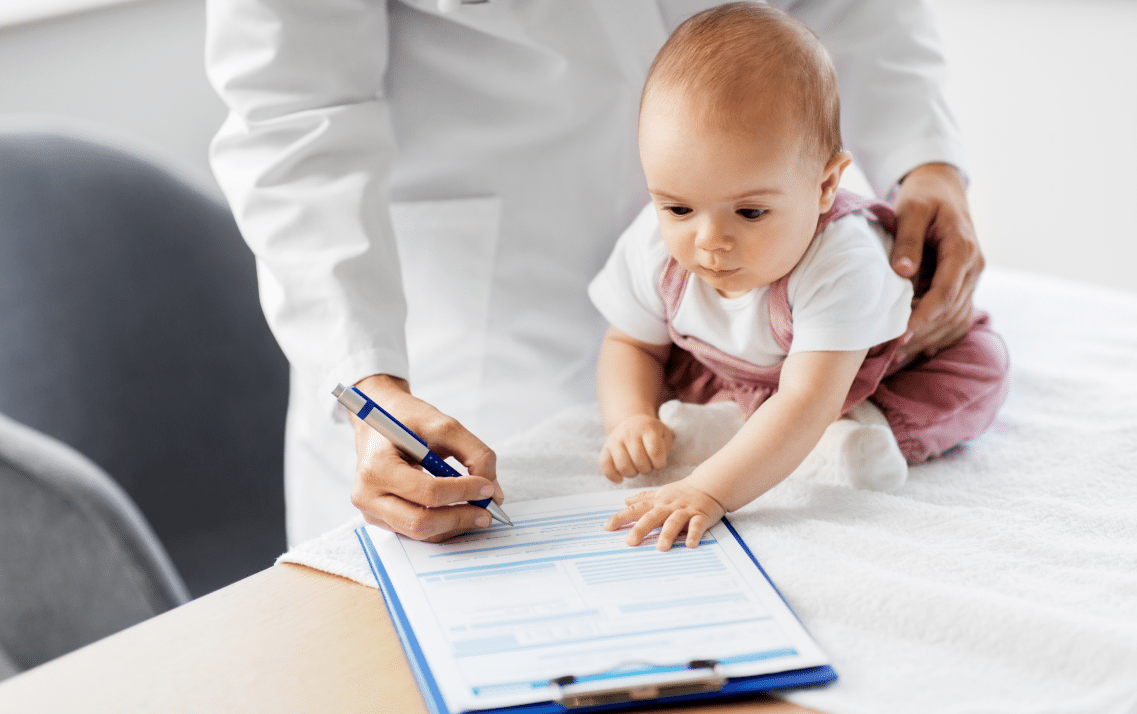
Knowing what to bring can make the appointment easier.
Bring Your Baby’s Medical Information
If available, bring:
- Hospital discharge paperwork
- Newborn screening information
- Immunization records
- Medication information
- Information about any complications during pregnancy or delivery
- Your baby’s feeding and diaper information
If your baby’s medical records have already been sent to the pediatric practice, you may not need to bring everything.
Track Feeding and Diapers
During the first days at home, keep track of:
- Feeding frequency
- Breastfeeding or formula intake
- Wet diapers
- Bowel movements
- Any vomiting or feeding difficulties
This information can help your pediatrician understand how your baby is adjusting at home.
Bring Your Questions
New parents often have many questions, and that is completely normal.
Keep a note on your phone or write down questions as they come up so you can discuss them during the appointment.
Dress Your Baby Comfortably
Choose clothing that is easy to remove because your baby may need to be weighed and examined.
A familiar blanket can also help comfort your newborn during the appointment.
What Newborn Care Topics Will the Pediatrician Discuss?
Your pediatrician may provide guidance on several areas of newborn care.
Safe Sleep
Your provider can discuss safe sleep practices, including placing your baby on their back for sleep and creating a safe sleep environment.
Feeding
Your pediatrician can help you understand your baby’s feeding needs and identify signs that your baby may need additional feeding support.
Tummy Time
When your baby is awake and supervised, tummy time supports motor development. Your pediatrician can explain how and when to introduce it.
Car Seat Safety
Newborns should travel in an appropriate rear-facing car seat that is installed according to the manufacturer’s instructions.
Illness Prevention
Your pediatrician may discuss hand hygiene, limiting exposure to sick individuals, and other ways to reduce your newborn’s risk of infection.
When Should You Call the Pediatrician?
Newborns can become sick quickly, so parents should know when to seek medical advice.
Contact your pediatrician promptly if your newborn:
- Is feeding poorly or refuses feeds
- Is difficult to wake or unusually sleepy
- Has significantly fewer wet diapers than expected
- Has repeated vomiting
- Has difficulty breathing
- Develops worsening jaundice
- Has a significant change in behavior
- Has a fever
A rectal temperature of 100.4°F (38°C) or higher in a baby younger than 3 months requires prompt medical evaluation. Contact your baby’s healthcare provider immediately for guidance.
If your baby has severe difficulty breathing, becomes unresponsive, has a seizure, or appears seriously ill, seek emergency medical care.
Why Regular Pediatric Visits Matter After the First Checkup
The first newborn appointment is only the beginning of your child’s healthcare journey.
Regular well-child visits allow your pediatrician to monitor:
- Growth
- Development
- Feeding and nutrition
- Hearing and vision
- Immunizations
- Developmental milestones
- Physical and emotional health
- Safety and injury prevention
These visits also give parents an opportunity to discuss concerns before they become bigger problems.
Learn more about regular pediatric checkups and child development and how pediatricians can support your child’s health as they grow.
You can also learn about how pediatricians support child development.
Newborn Care in Rural Communities
Families in rural communities can face additional challenges when accessing pediatric healthcare, including transportation, distance, scheduling, and limited access to specialists.
Having a local pediatric care team can make routine preventive care more convenient and can help families establish a consistent healthcare relationship close to home.
When specialized care is necessary, your primary care or pediatric provider can help coordinate referrals and follow-up.
At Rural Health Community Center, our goal is to help families receive compassionate pediatric care while supporting healthy growth and development.
Explore our general pediatric services to learn more.
Your Baby’s First Visit Is the Beginning of a Partnership
Your newborn’s first pediatric visit may feel like one more appointment on an already busy schedule, but it is an important opportunity to establish a healthcare relationship and make sure your baby is starting life with appropriate medical support.
You do not need to have all the answers before your appointment.
Bring your questions, share your concerns, and let your pediatric care team guide you through the next steps.
With regular checkups, preventive care, healthy routines, and open communication with your pediatrician, you can build a strong foundation for your child’s health.
Start Your Baby’s Healthcare Journey With Rural Health Community Center
Your baby’s first pediatric visit is an important opportunity to ask questions, understand your newborn’s needs, and establish ongoing preventive care.
At Rural Health Community Center, we are committed to supporting families with compassionate pediatric care close to home.
If you are looking for pediatric care for your newborn or child, learn more about our general pediatric services.
A healthy start begins with the right care, guidance, and support.