

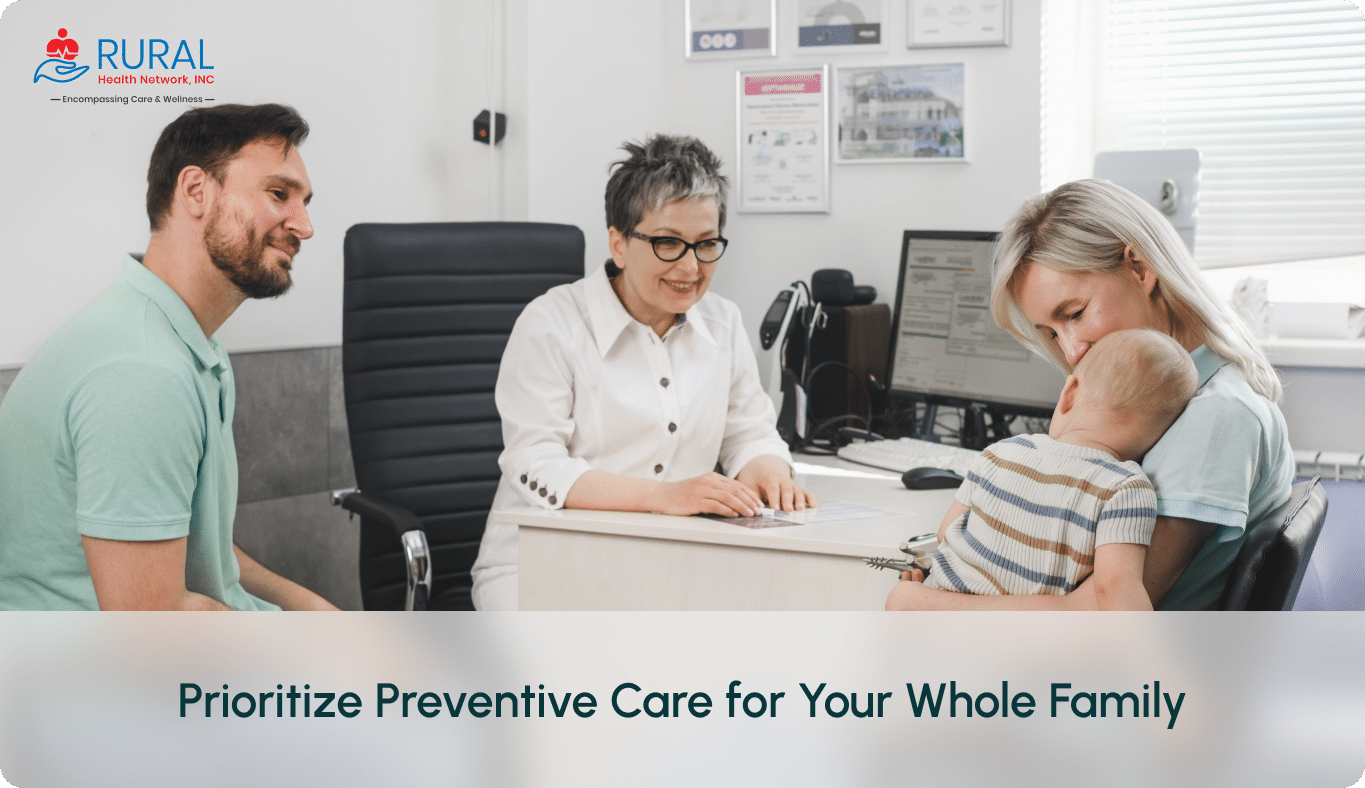
Life gets busy, especially for families balancing work, school, appointments, and everyday responsibilities. As a result, healthcare can sometimes take a back seat until someone becomes sick or develops a health concern.
Family wellness exams provide an opportunity to stay ahead of potential health problems through preventive care, routine screenings, health assessments, and personalized guidance.
A wellness exam is not just about treating an illness. It gives you and your healthcare provider a chance to review your health, identify potential risks, update preventive care, and create a plan for maintaining your well-being.
For families, making routine healthcare a priority can help establish healthy habits and ensure that each family member receives care appropriate for their age and individual needs.
If you are due for a checkup, contact Rural Health Network to learn more about available healthcare services.
What Is a Family Wellness Exam?
A family wellness exam is a preventive healthcare visit that focuses on maintaining health, identifying potential health risks, and addressing concerns before they become more serious.
During a wellness exam, a healthcare provider may review your medical history, medications, lifestyle habits, vaccinations, and preventive care needs. Depending on your age, health history, and individual risk factors, your provider may also recommend screenings, laboratory tests, or other preventive services.
Wellness exams are different from appointments specifically scheduled to diagnose or treat an illness. If you have symptoms or an urgent health concern, you may need a separate medical evaluation.
What Are the Benefits of Family Wellness Exams?
The main benefits of family wellness exams include early identification of potential health concerns, personalized preventive care, routine health monitoring, and an opportunity to build an ongoing relationship with your healthcare provider.
1. Early Identification of Health Concerns
Routine healthcare visits can help identify potential health concerns before they become more serious.
Depending on your age and risk factors, your provider may monitor areas such as:
- Blood pressure
- Cholesterol
- Blood sugar
- Weight and overall health
- Mental well-being
- Development in children
- Other age-appropriate health risks
Early identification does not necessarily mean that you will develop a particular condition, but it gives you and your healthcare provider an opportunity to discuss appropriate next steps.
Learn more about the importance of annual physical exams.
2. Personalized Health Guidance
Every family member has different healthcare needs.
During a wellness visit, your provider can offer guidance based on factors such as:
- Age
- Medical history
- Family history
- Lifestyle
- Current medications
- Existing health conditions
- Preventive care needs
This personalized approach can help you make informed decisions about your health.
3. Stronger Patient-Provider Relationships
Regular visits allow families to establish an ongoing relationship with a trusted healthcare provider.
When your provider knows your medical history and understands your health concerns, it can be easier to communicate openly and make informed decisions about preventive and ongoing care.
4. Monitoring Children’s Growth and Development
Wellness visits are particularly important for children and adolescents because their health needs change as they grow.
Pediatric visits may include monitoring:
- Physical growth
- Developmental milestones
- Nutrition
- Physical activity
- Behavioral concerns
- School and social development
- Immunizations
- Age-appropriate screenings
Learn more about the importance of regular pediatric checkups for child health and development.
Parents can also review our guide to pediatric health screenings for children.
5. Preventive Care Planning
A wellness exam gives you an opportunity to discuss preventive services that may be appropriate for your age and health history.
Your provider may recommend:
- Vaccinations
- Routine screenings
- Laboratory tests
- Lifestyle changes
- Follow-up appointments
- Other preventive services
The recommendations will vary from person to person.
6. Better Management of Ongoing Health Conditions
For family members living with chronic health conditions, routine appointments can help monitor their health and treatment plan.
Regular communication with your healthcare team can help you stay on track with medications, lifestyle recommendations, monitoring, and follow-up care.
You can also learn more about the role of family medicine doctors in chronic illness care.
What Is Included in a Family Wellness Exam?

What happens during a wellness exam depends on your age, health history, risk factors, and healthcare needs.
Your provider may:
Review Your Medical History
Your provider may discuss your personal and family medical history, previous illnesses, surgeries, allergies, medications, and other relevant health information.
Check Vital Signs
Depending on the visit, your provider may check measurements such as:
- Blood pressure
- Heart rate
- Height and weight
- Body mass index (BMI), when appropriate
Perform a Physical Examination
A physical examination may be performed when appropriate based on the patient’s age, health concerns, and type of visit.
Your provider may assess different parts of your body and discuss any concerns you have.
Recommend Preventive Screenings
Screenings vary based on age, sex, personal health history, family history, and other risk factors.
Depending on your individual needs, your provider may discuss screenings related to:
- Blood pressure
- Cholesterol
- Diabetes
- Certain cancers
- Bone health
- Other health conditions
Read our guide to essential screening and diagnostic tests for more information.
Review Vaccinations
Your healthcare provider can review your vaccination history and discuss recommended immunizations based on your age and individual health needs.
Discuss Lifestyle Habits
Your appointment is also an opportunity to discuss areas such as:
- Nutrition
- Physical activity
- Sleep
- Stress
- Tobacco use
- Alcohol use
- Other lifestyle factors
Your provider can help you identify realistic changes that support your overall health.
Discuss Mental and Emotional Well-Being
Mental health is an important part of overall wellness. Depending on the patient and visit, your provider may ask about stress, mood, anxiety, sleep, or other concerns.
If you have concerns about your mental or emotional well-being, share them with your healthcare provider so you can discuss appropriate support.
How Often Should Your Family Have Wellness Exams?
The appropriate frequency of wellness exams depends on age, health history, risk factors, and individual healthcare needs.
Children and adolescents generally need regular preventive visits as they grow and develop. Adults may also benefit from routine preventive visits based on their individual healthcare needs.
Your healthcare provider can recommend an appropriate schedule for each family member.
For additional information, read our guide on the importance of annual checkups.
You can also review our annual physical exam checklist by age to prepare for your next appointment.
How Should You Prepare for a Family Wellness Exam?
Preparing ahead of time can make your family’s healthcare visit more productive.
1. Gather Important Health Information
Bring or have access to:
- Current medication lists
- Allergies
- Vaccination records
- Previous medical records, if relevant
- Family medical history
- Information about existing health conditions
- Questions or concerns you want to discuss
2. Write Down Your Questions
It is easy to forget questions during an appointment.
Before your visit, make a list of anything you want to discuss, such as:
- Nutrition
- Sleep
- Physical activity
- Medications
- Preventive screenings
- Vaccinations
- Children’s development
- Ongoing health concerns
3. Prepare Children for Their Visit
For younger children, explain what will happen in simple, reassuring language.
Let them know that the healthcare provider may ask questions about how they feel, check their growth, and perform appropriate health assessments.
For more information about children’s preventive healthcare, explore how pediatricians support child development.
4. Schedule Appointments in Advance
Families often have busy schedules, so planning preventive visits ahead of time can make it easier to stay on top of routine healthcare.
If multiple family members need appointments, ask your healthcare provider whether visits can be coordinated.
What Is the Difference Between a Wellness Exam and a Sick Visit?
A wellness exam focuses primarily on preventive care and maintaining overall health, while a sick visit focuses on evaluating and treating a specific illness, injury, or symptom.
For example, a wellness exam may involve reviewing preventive screenings and vaccinations.
A sick visit may be appropriate when you have symptoms such as a persistent cough, fever, injury, or other acute health concern.
If you are unsure which type of appointment you need, contact your healthcare provider for guidance.
Why Are Wellness Exams Important for Rural Families?
Access to preventive healthcare can be especially important for people living in rural communities.
Distance, transportation, work schedules, and limited healthcare availability can sometimes make routine care more difficult to access.
Making preventive appointments a priority can help families stay connected with their healthcare providers and address concerns before they become more difficult to manage.
Rural Health Network is committed to providing accessible healthcare services and resources for individuals and families in rural communities.
Family Wellness Exams at Rural Health Network
Preventive healthcare is an important part of keeping your family healthy at every stage of life.
At Rural Health Network, our healthcare services are designed to support individuals and families with preventive care, routine health needs, and ongoing healthcare management.
Our Family Medicine services can help families access healthcare for different stages of life.
Whether you are scheduling a routine checkup, discussing a health concern, or looking for preventive care guidance, our team is here to help.
Make preventive care part of your family’s healthcare routine.