

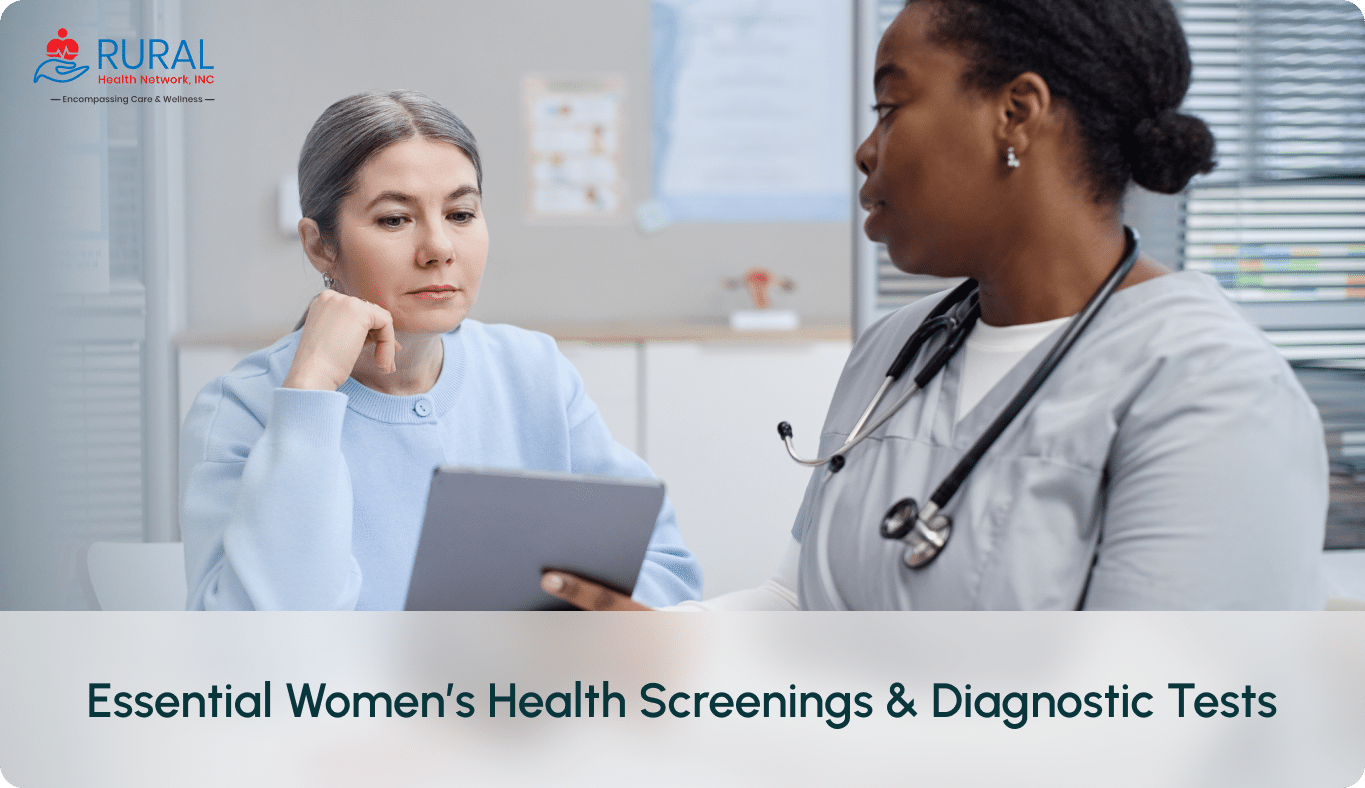
Women’s health needs change throughout life, from adolescence and reproductive years to pregnancy, menopause, and beyond. Regular health screenings and diagnostic tests help detect potential health problems early, monitor existing conditions, and support informed healthcare decisions.
The right screenings depend on factors such as age, family history, personal health history, symptoms, pregnancy status, and individual risk factors. Not every woman needs every test at the same time.
At Rural Health Community Center, we support women through preventive care, routine checkups, health screenings, and personalized healthcare guidance. Our goal is to help you understand which screenings may be appropriate for your stage of life and health needs.
Prevention starts with knowing your health risks and staying up to date with recommended care.
Why Are Women’s Health Screenings Important?
Women’s health screenings can help identify certain diseases and risk factors before symptoms develop. Early detection may make some conditions easier to treat and can help healthcare professionals recommend appropriate preventive care.
Regular preventive care can help identify or monitor:
- Breast cancer
- Cervical cancer
- Colorectal cancer
- High blood pressure
- High cholesterol
- Diabetes
- Osteoporosis
- Certain sexually transmitted infections (STIs)
- Mental health concerns
- Other conditions based on individual risk factors
Screening recommendations are not identical for every woman. Your healthcare provider can help determine which tests are appropriate based on your age, health history, family history, and risk factors.
What Are the Most Important Health Screenings for Women?
Some of the most common preventive screenings for women include breast cancer screening, cervical cancer screening, colorectal cancer screening, blood pressure and cholesterol testing, diabetes screening, osteoporosis screening, and STI testing when appropriate.
1. Breast Cancer Screening
Breast cancer screening is designed to identify breast cancer before symptoms may become apparent.
Common screening test: Mammogram
A mammogram uses X-rays to create images of breast tissue and can help detect abnormalities that may require further evaluation.
Your recommended screening schedule depends on factors such as age and individual risk. Women with a higher risk of breast cancer may need a different screening approach.
Important: If you notice a new breast lump, nipple changes, skin changes, or other unusual breast symptoms, contact a healthcare professional rather than waiting for your next routine screening.
2. Cervical Cancer Screening
Cervical cancer screening can detect abnormal cervical cells and certain types of human papillomavirus (HPV) associated with cervical cancer.
Depending on age and medical history, screening may involve:
- HPV testing
- A Pap test
- HPV and Pap testing together
Your healthcare provider can recommend the appropriate screening schedule based on current guidelines and your individual circumstances.
3. Colorectal Cancer Screening
Colorectal cancer screening helps detect colorectal cancer or precancerous growths before they cause symptoms.
Screening options can include stool-based tests and visual examinations of the colon, such as colonoscopy.
The appropriate test and screening interval depend on your age, personal history, family history, and risk factors.
4. Blood Pressure Screening
High blood pressure often does not cause noticeable symptoms, which makes regular blood pressure checks an important part of preventive healthcare.
A blood pressure screening can help identify hypertension and allow your healthcare provider to recommend lifestyle changes, monitoring, or treatment when appropriate.
Regular annual physical exams can provide an opportunity to monitor blood pressure and other important health indicators.
5. Cholesterol Screening
Cholesterol testing can help assess cardiovascular risk. Your healthcare provider may consider cholesterol levels along with factors such as age, blood pressure, diabetes, smoking history, and family history when evaluating heart disease risk.
Women with certain health conditions or risk factors may need cholesterol testing more frequently.
You can also learn more about high cholesterol and liver disease.
6. Diabetes Screening
Diabetes screening can help identify elevated blood glucose levels and conditions such as prediabetes before more serious complications develop.
Your healthcare provider may recommend blood glucose testing or an A1C test depending on your age and risk factors.
Learn more about understanding prediabetes and diabetes symptoms and early warning signs.
7. Bone Density Screening
A bone density test, commonly called a DEXA or DXA scan, measures bone mineral density and can help identify osteoporosis or low bone density.
The need for screening depends on age, sex, fracture history, and other risk factors.
Women who are at increased risk of osteoporosis should discuss bone health with their healthcare provider.
8. STI Screening
Sexually transmitted infection (STI) screening may be recommended based on sexual activity, age, pregnancy status, symptoms, and individual risk factors.
Depending on the infection being evaluated, testing may involve blood, urine, or other samples.
Being open and honest with your healthcare provider about your sexual health helps them recommend appropriate screening and preventive care.
What Diagnostic Tests Are Used in Women’s Health?

Diagnostic tests are different from screening tests. Screening is generally performed when there are no symptoms to look for possible health problems, while diagnostic testing is typically used when symptoms, an abnormal screening result, or another concern requires further evaluation.
Common diagnostic tests in women’s healthcare include:
Diagnostic Mammogram and Breast Ultrasound
If a screening mammogram identifies an area that needs further evaluation, or if you have a breast lump or other concerning symptoms, your healthcare provider may recommend additional breast imaging.
Depending on the situation, this may include a diagnostic mammogram or breast ultrasound.
Pelvic Ultrasound
A pelvic ultrasound uses sound waves to create images of reproductive organs and surrounding structures.
It may be used to evaluate:
- Pelvic pain
- Abnormal vaginal bleeding
- Ovarian cysts
- Uterine fibroids
- Other reproductive health concerns
- Certain pregnancy-related concerns
Genetic Testing
Genetic testing can identify certain inherited genetic changes that may increase the risk of particular diseases.
For example, testing for changes in BRCA1 and BRCA2 genes may be considered for some women with a strong personal or family history of breast or ovarian cancer.
Genetic testing is not appropriate for everyone. A healthcare professional or genetic counselor can help determine whether testing may be useful.
Hormone Testing
Hormone testing measures levels of specific hormones in the blood or other samples.
Depending on symptoms and medical history, hormone testing may be used as part of an evaluation for concerns involving:
- Menstrual irregularities
- Fertility
- Thyroid function
- Menopause
- Certain endocrine conditions
Hormone testing should be interpreted in the context of symptoms, medical history, medications, and other clinical information.
Biopsy
A biopsy involves removing a small sample of tissue so it can be examined under a microscope.
A healthcare provider may recommend a biopsy when imaging or another test identifies an area that requires further evaluation. A biopsy can help determine whether abnormal tissue is benign, precancerous, or cancerous.
When Should Women Seek Additional Medical Care?
Routine screening is important, but you should not wait for your next screening appointment if you develop new or concerning symptoms.
Talk with your healthcare provider if you notice:
- A new breast lump or thickening
- Changes in breast skin or nipple appearance
- Unusual or persistent vaginal bleeding
- Persistent pelvic or abdominal pain
- Changes in your menstrual cycle
- Unexplained weight loss or significant weight changes
- Persistent or unexplained fatigue
- A new or changing mole or skin lesion
- Changes in bowel or bladder habits
- Other symptoms that concern you
Some symptoms may require prompt medical evaluation. Chest pain, severe shortness of breath, fainting, sudden weakness, or other severe or rapidly developing symptoms may require emergency medical attention.
Which Factors Can Affect Women’s Screening Needs?
There is no single screening schedule that applies to every woman. Your healthcare provider may consider:
- Age
- Family medical history
- Personal medical history
- Previous abnormal screening results
- Pregnancy or plans for pregnancy
- Menstrual and reproductive health
- Genetic risk factors
- Smoking history
- Weight and metabolic health
- Medications
- Lifestyle factors
- Existing medical conditions
For this reason, discussing your individual health history during regular appointments is an important part of preventive care.
How Can Women Stay on Top of Preventive Health?
Staying proactive about your health does not mean having every possible test. Instead, focus on receiving the right preventive care at the right time.
Keep a Record of Your Screenings
Maintain a record of important screenings, test results, vaccinations, and medical appointments. This can help you and your healthcare provider identify when follow-up care may be needed.
Schedule Regular Checkups
Routine appointments provide an opportunity to discuss preventive care, lifestyle habits, medications, symptoms, and recommended screenings.
Learn more about the importance of routine checkups in rural healthcare.
Know Your Family History
Tell your healthcare provider about family members who have had conditions such as breast cancer, ovarian cancer, colorectal cancer, heart disease, diabetes, or osteoporosis.
Family history may affect when or how frequently certain screenings are recommended.
Discuss Changes in Your Health
Don’t ignore persistent or unusual symptoms simply because you recently had a normal screening. Screening tests do not replace medical evaluation when symptoms develop.
Prioritize Preventive Care at Every Stage of Life
Women’s healthcare needs change over time. Preventive care during adolescence may look different from care during the reproductive years, pregnancy, menopause, or later adulthood.
Your healthcare provider can help create a preventive care plan that evolves with you.
Women’s Health Care at Rural Health Community Center
At Rural Health Community Center, we believe preventive healthcare should be accessible, understandable, and personalized.
Our healthcare team can help you understand recommended screenings and determine what preventive care may be appropriate based on your health history and individual needs.
Our services can support:
- Routine wellness examinations
- Preventive health screenings
- Chronic condition management
- Women’s health concerns
- Health risk assessments
- Personalized healthcare guidance
Explore our family medicine services to learn more about the healthcare support available to you.
Your health deserves attention at every stage of life. If you are due for a checkup or have questions about a screening, contact Rural Health Community Center to schedule an appointment.
Take Control of Your Women’s Health
Taking care of your health is an ongoing process. Regular checkups, recommended screenings, healthy lifestyle choices, and open communication with your healthcare provider can help you stay informed and proactive.
You know your body best. If something changes or concerns you, speak with a healthcare professional rather than waiting for your next routine screening.
Explore the Rural Health Community Center blog for more practical healthcare information and resources, or contact us to schedule an appointment.
Your health matters. Your questions matter. And preventive care can help you take an active role in your well-being.